


When investors across Los Angeles, San Diego, San Francisco, and Sacramento suffer significant losses in a brokerage account, the first question is often whether the decline resulted from market conditions or from something the broker did wrong.
California’s position as one of the largest financial markets in the country means millions of residents entrust brokers and advisory firms with retirement savings, business proceeds, and long-term wealth-building goals. FINRA, the self-regulatory organization overseeing broker-dealers in the United States, maintains an active enforcement program that bars, suspends, and fines brokers found to have violated industry rules. For California investors who lost money because of a broker’s misconduct, understanding how these enforcement actions connect to individual recovery options is a practical first step.
If you are a California investor who suffered significant losses and believe a broker or financial advisor may have contributed to that harm, the broker misconduct attorneys at Meyer Wilson Werning are reviewing claims now. Contact us today for a free and confidential consultation, and you pay nothing unless we recover for you.
How FINRA Enforces Broker Conduct Rules in California
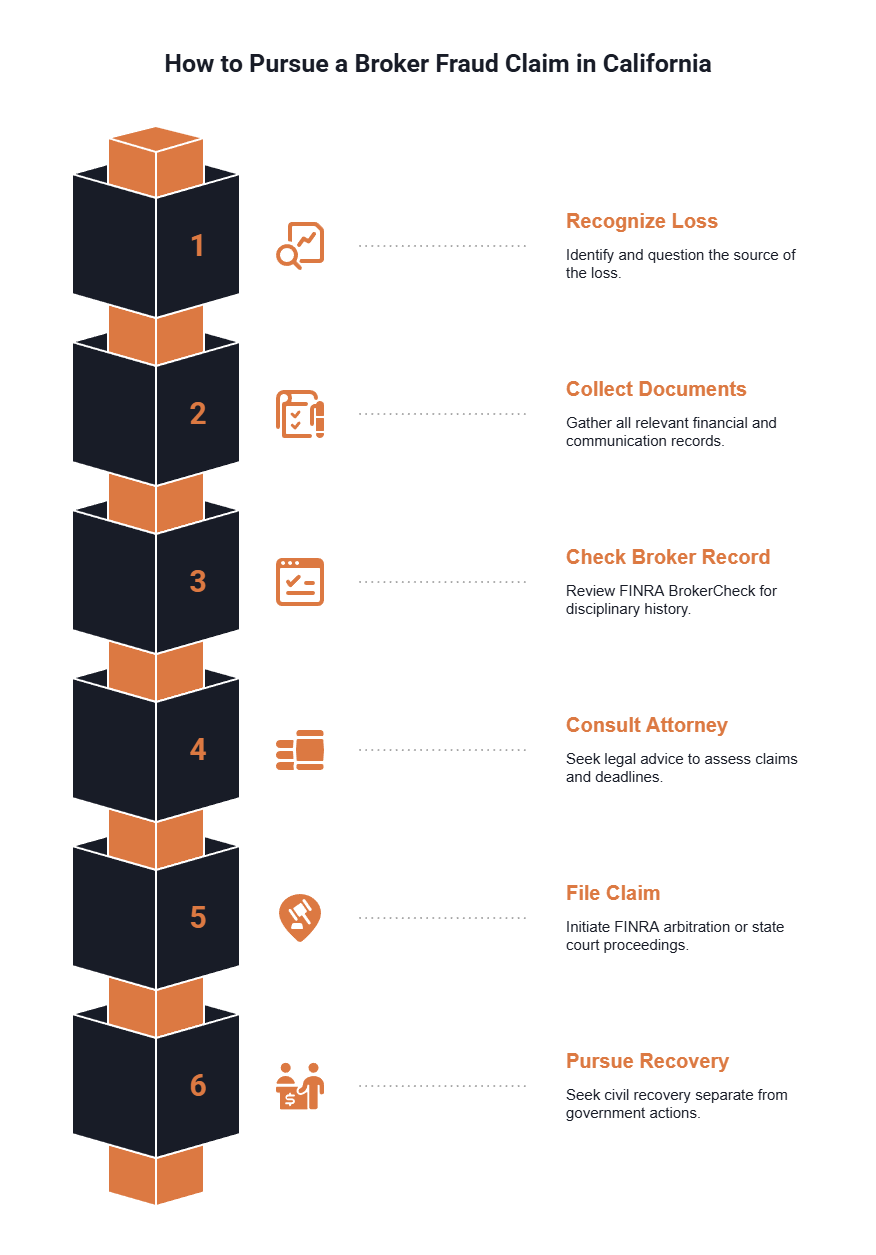
FINRA publishes its disciplinary actions online, providing a searchable database of proceedings against brokers and firms nationwide, including those operating in California. The database includes enforcement outcomes such as bars, suspensions, fines, and restitution orders. These proceedings address a range of alleged misconduct affecting California investors.
The types of violations that appear most frequently in FINRA enforcement actions against California-based brokers include:
- Excessive trading (churning): Brokers allegedly execute a high volume of transactions in a customer’s account primarily to generate commissions, eroding the account’s value over time.
- Unsuitable recommendations: Brokers allegedly recommend products that do not match an investor’s stated objectives, risk tolerance, or investment timeline, such as placing a retiree’s savings in high-risk speculative instruments.
- Unauthorized discretionary trading: Brokers allegedly execute trades without obtaining the customer’s prior consent, sometimes restructuring entire portfolios without the investor’s knowledge.
- Supervisory failures: Broker-dealer firms allegedly fail to monitor their representatives’ sales practices, allowing patterns of misconduct to continue unchecked.
When FINRA bars or suspends a broker, affected customers may use the disciplinary record as supporting evidence in a FINRA arbitration claim seeking to recover losses. A FINRA enforcement finding does not guarantee recovery, but it can strengthen an investor’s case by establishing that the broker’s conduct violated industry standards.


We Have Recovered Over
$350 Million for Our Clients Nationwide.
Deadlines and Filing Options
Statute of limitations deadlines vary by claim type. Arbitration generally requires that claims be filed within six years of the event giving rise to the dispute. California state law may impose shorter windows for certain causes of action, including fraud and breach of fiduciary duty claims. The discovery rule, which starts the clock when an investor knew or should have known about the misconduct, can extend some deadlines, but waiting to organize evidence creates risk.
California investors should also be aware that the filing forum affects strategy and cost. Most brokerage account agreements include a pre-dispute arbitration clause directing claims to FINRA arbitration, but some investors may also have state or federal court options depending on the claim type and the parties involved.
How Meyer Wilson Werning Can Help
Meyer Wilson Werning represents investors nationwide who have suffered losses due to broker misconduct, fiduciary breaches, and other forms of investment fraud. With over 25 years of experience and over $350 million recovered, the firm helps investors evaluate their claims, organize their evidence, and select the right forum for recovery.
If you are a California investor who suspects that a broker or financial professional caused you to suffer investment losses, Contact us today for a free and confidential consultation to discuss your options.
Our lawyers are nationwide leaders in investment fraud cases.
Frequently Asked Questions
What do FINRA enforcement actions against California brokers mean for investors?
FINRA enforcement actions confirm that a broker or firm engaged in conduct the regulator considers a violation of industry rules. While these proceedings may bar or suspend a broker, they do not compensate investors directly. Affected investors must file separate recovery claims through FINRA arbitration or other legal channels.
How can investors check whether their broker faces FINRA disciplinary action?
Investors can search a broker’s record on FINRA BrokerCheck, which lists current and past disciplinary actions, customer complaints, and regulatory proceedings. The Investor Claims broker complaint database also provides information that can help investors evaluate a broker’s history.
How long do I have to file a broker fraud claim in California?
FINRA arbitration generally requires claims to be filed within six years of the event at issue. California state law may impose shorter deadlines for certain claims, including fraud and breach of fiduciary duty. Because the discovery rule and tolling provisions can affect these deadlines, investors in Los Angeles, San Diego, San Francisco, Sacramento, and throughout California should seek legal guidance early.
Does Meyer Wilson Werning offer free consultations for California broker fraud claims?
Yes. Meyer Wilson Werning offers free and confidential consultations for investors nationwide. The firm has recovered over $350 million for clients and works on a contingency fee basis, meaning if the firm is not able to recover losses, its services are at no cost to the client.
Recovering Losses Caused by Investment Misconduct.