

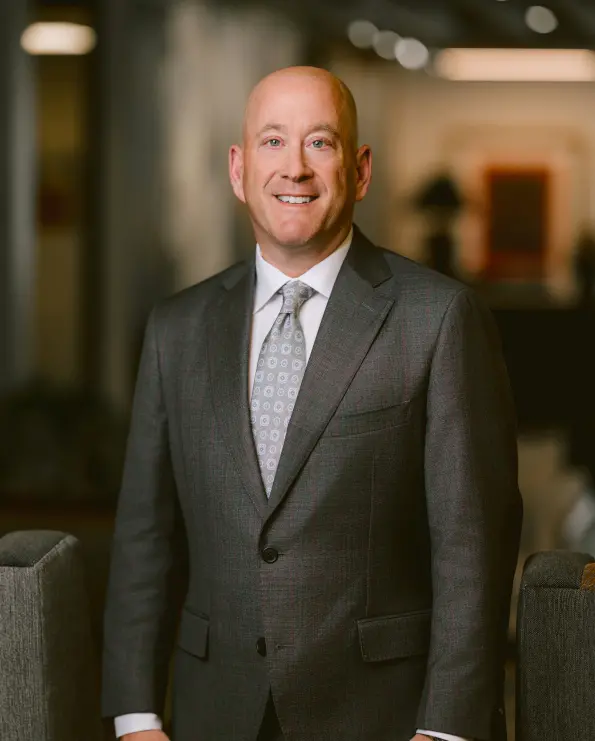
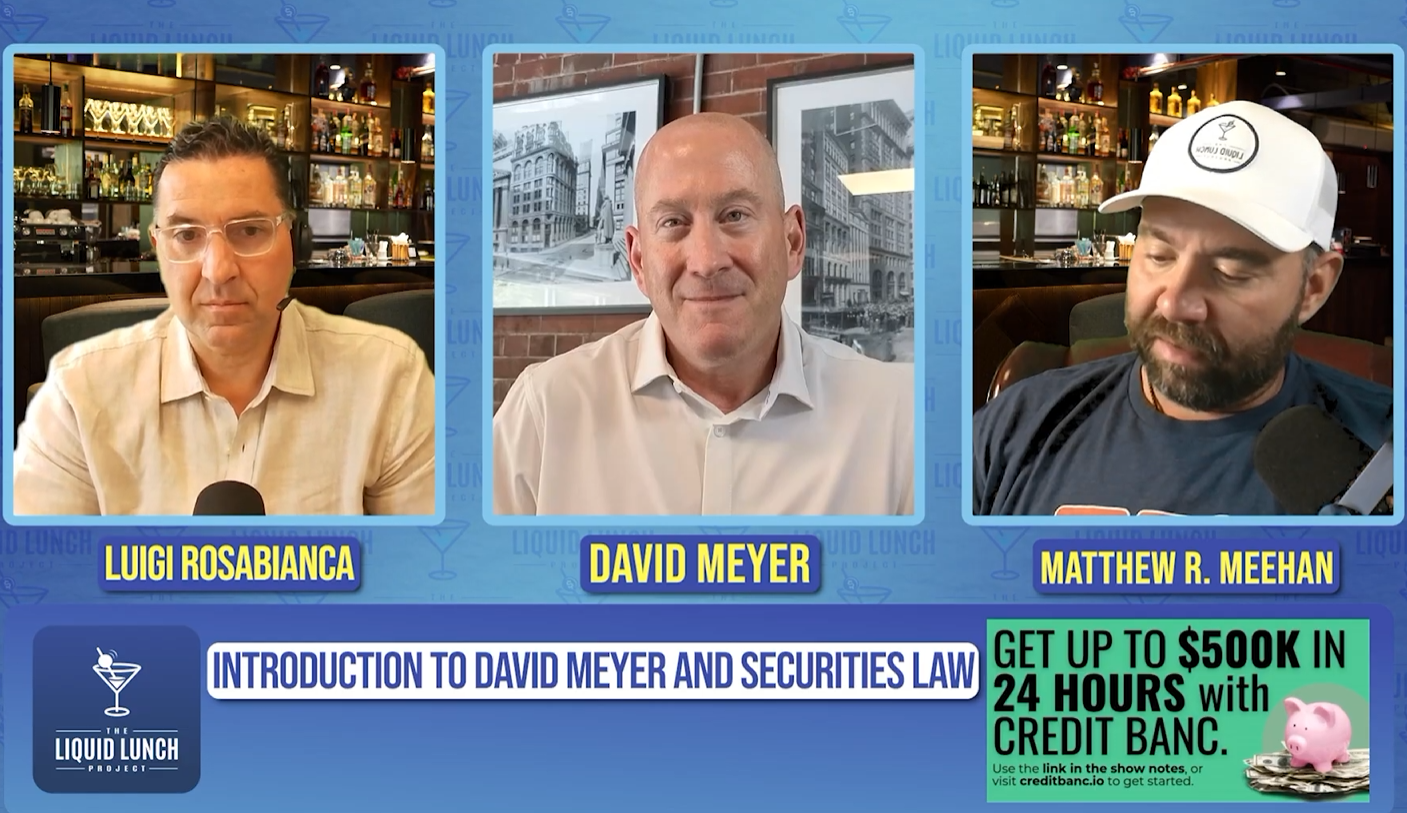
Investment fraud has always preyed on trust. But in a world where artificial intelligence can clone a face, mimic a voice, and construct an official-looking website in hours, the stakes for everyday investors have never been higher. David Meyer, founding partner of Meyer Wilson Werning, sat down with hosts Matthew R. Meehan and Luigi Rosabianca on The Liquid Lunch Project to pull back the curtain on where financial fraud stands today and what investors can do right now to protect themselves.
If you have suffered investment losses and believe fraud or misconduct may be the cause, contact us today for a free and confidential consultation.
How David Meyer Built America’s Investor Advocacy Firm From a Single Hallway Conversation
Thirty years ago, David Meyer was a 28-year-old associate at a small Ohio tax firm when a stranger walked out the door after being turned away. Meyer stopped him in the hallway. The man had visited three lawyers and found no one willing to help. He had a broker who had sold his investments without authorization and friends with the same problem.
That conversation led to a room of 50 to 75 retirees, all with the same story. Meyer took the case, filed a class action against Prudential Securities representing 250 clients, and tried it to a Marion County jury four years later. The verdict was $262 million, at the time the largest civil jury verdict against a financial institution in Ohio history. Every client got their money back.
That result, still hanging on Meyer’s office wall, became the foundation of Meyer Wilson Werning, which has since recovered over $350 million for more than 1,500 clients nationwide.

We Have Recovered Over
$350 Million for Our Clients Nationwide.
Why Smart, Successful People Get Targeted
On the show, Meyer pushed back directly against a common misconception about investment fraud victims being somehow unsophisticated or careless. In his experience, the opposite is true.
“Fraud chases money,” he told the hosts. “If you don’t have any money, no one’s going to try to steal it from you.” The people targeted by today’s most sophisticated scams are typically smart, savvy business owners and entrepreneurs. They have accumulated wealth, they are active online, and they are exactly who fraudsters are hunting.
Meyer drew on a sharp analogy he has used with clients for years. People will drive across town to save ten cents on a can of soup, but they will hand their life savings to someone with a nice suit and a firm handshake without a second thought. Building in that same level of scrutiny for financial decisions, he argued, would stop a significant portion of fraud before it starts. Shield Advisory’s recap of the episode, “Before You Trust Another ‘Can’t-Miss’ Investment,” captures exactly why that scrutiny matters.
Pig Butchering: How the Scam Actually Works
When the hosts asked Meyer to explain pig butchering, he walked through the mechanics clearly.
It starts with an unsolicited contact through LinkedIn, Instagram, or WhatsApp. A fraudster poses as a crypto expert, builds rapport, and shows the victim small but convincing fake returns on a polished-looking platform. Once the victim is sufficiently “fattened up,” the real ask arrives. The scammer instructs them to transfer $100,000 to $200,000 from their brokerage account to an outside crypto platform.
Meyer shared a case where a family discovered the fraud at a dinner table. The parents mentioned the FBI was now protecting their money. Their son pressed them. They had been conned into wiring funds to someone posing as a federal agent, and their brokerage firm had let the transfer go through without asking a single question.
That failure is exactly what Meyer’s firm targets legally. Brokerage firms are trained and required to flag these situations. When they do not, they bear responsibility.
“Usually once the money’s gone, it’s gone”
Our lawyers are nationwide leaders in investment fraud cases.
A Deepfake on YouTube During the Super Bowl
Meyer shared one of the most alarming stories of the conversation near the end of the interview.
During the Super Bowl, an investor watching on YouTube saw what appeared to be a prominent political figure promoting a cryptocurrency investment. The ad was polished and official-looking. The associated website, a domain similar to Trump2026.org, was completely fraudulent. The figure was a deepfake AI. None of it was real.
One investor, a lawyer, called his brokerage firm to wire $500,000 to the fake platform. Minutes later he called back and told them it might be a scam. The firm acknowledged the concern. Then it executed the transfer anyway.
Meyer told the hosts his firm received a call on a Monday following the Super Bowl. Both the investor and Meyer notified the FBI. The site stayed up for 30 to 60 days after that notification.
“Can you imagine how much money was ripped off from people who were watching that and thought it was legitimate?” Meyer said. “It was all deep fake AI. That’s how crazy this is.”
Voice cloning is following the same path. Elderly relatives now receive voicemails that sound exactly like a grandchild in distress asking for money. The technology is advancing faster than most people realize.
We Are The firm other lawyers
call for support.
The Crypto Landscape
On the subject of cryptocurrency, Meyer was direct about both the regulatory gap and his own perspective. The framework governing crypto in the United States remains unsettled. Prior administrations sought to bring digital assets under securities regulation. The current environment is moving in a different direction, with proposed legislation such as the Clarity Act still taking shape.
Meyer acknowledged that plenty of people have made money in crypto. His concern is that retail investors often do not understand what they are walking into. Without a uniform regulatory framework, without decades of case law, and without a clear standard of care for exchanges, investors who suffer losses face a far more difficult legal path than they would in traditional securities cases.
MWW pursues claims against crypto exchanges based on what the firm believes constitutes reasonable industry standards and best practices, through the firm’s dedicated Crypto.court platform, led by principal Courtney Werning. But Meyer did not sugarcoat the challenge, “We are in the wild wild west.”
His recommendation for anyone considering meaningful crypto investment mirrors his advice on any complex private transaction. Consult a lawyer who genuinely understands the space before committing capital.

The Fee Problem Nobody Is Talking About
One of the sharpest segments of the interview addressed something most investors never think to question, whether they actually know what they are paying.
Meyer described building an application specifically designed to calculate total, all-in investment management fees, because, in his experience, no retail investor currently knows that number. A client who believes they are paying 80 basis points in AUM fees is typically paying far more. Embedded inside many managed accounts are mutual fund fees, ETF fees, trading fees, and platform fees that never appear on the primary statement. The real total is often double what investors assume.
Over a 20-year period, that hidden cost does not just reduce returns. It erodes the compounding engine that builds wealth over time. According to Meyer, investors who do not know what they are paying can lose up to 20% of their portfolio over two decades from compounding drag alone.
“There’s nothing else you buy that you don’t know what it costs,” Meyer told the hosts. “Except your investment management.”
David Meyer on Liquid Lunch: a deepfake Super Bowl ad, $500K wired, and the broker who sent it anyway.
byu/MeyerWilsonCo ininvestorclaims
If Something Has Gone Wrong, You Have Options
The firm Meyer built operates entirely on a contingency fee basis. Clients pay nothing unless Meyer Wilson Werning recovers money on their behalf. As Meyer explained on the show, that model is self-regulating. A firm that gets paid only when it wins has no reason to take weak cases and every reason to fight hard for the ones it does take.
For investors who have experienced losses tied to pig butchering, a deepfake scheme, unauthorized trading, an adviser selling away, or a brokerage firm’s failure to protect them, the path forward begins with a conversation.
Contact us today for a free and confidential consultation.
Frequently Asked Questions
What is pig butchering and how do I know if I have been targeted?
Pig butchering is a long-con investment fraud that begins with an unsolicited message through social media or messaging platforms. The scammer builds a relationship over weeks or months, introduces a fake crypto investment, shows fabricated returns, and eventually convinces the victim to transfer significant funds. Warning signs include unsolicited contact from a stranger claiming investment expertise, pressure to move money to an unfamiliar crypto platform, and account “balances” that appear profitable but cannot actually be withdrawn.
Can I recover money lost through a pig butchering scam?
Potentially yes, particularly if the funds were transferred through a brokerage account. Brokerage firms are required under many circumstances to identify warning signs of elder financial exploitation and intervene before executing suspicious transfers. If your brokerage firm failed to ask questions, failed to contact a trusted person, or proceeded with a transaction despite clear red flags, it may bear legal responsibility. An experienced securities attorney can evaluate whether a claim exists.
What is BrokerCheck.org and how do I use it?
BrokerCheck.org is a free resource operated by FINRA that allows anyone to verify whether a financial professional is properly licensed and review their regulatory history, including any complaints or disciplinary actions. Search by the broker’s name before transferring any money to confirm they are licensed and in good standing.
Is cryptocurrency investing protected by securities law?
Not consistently, and that gap is the core risk. There is no uniform federal regulatory framework for crypto equivalent to what governs traditional securities. Proposed legislation such as the Clarity Act may eventually establish clearer rules, but the landscape remains unsettled. Investors considering significant crypto positions are strongly advised to consult a lawyer familiar with digital asset law before proceeding.
What does “selling away” mean and why does it matter?
Selling away refers to a broker who recommends investments to clients outside of, and without the knowledge or approval of, their employing brokerage firm. These are often fictitious or unregistered products. The brokerage firm may still bear legal responsibility for failing to supervise its broker’s activities, even if the firm had no direct role in the fraudulent investment.
Recovering Losses Caused by Investment Misconduct.