

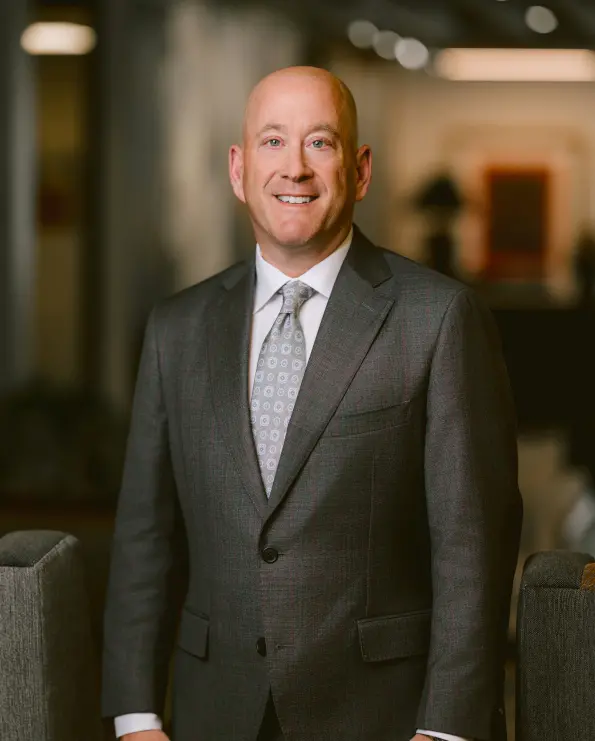
John Marcheso has been in the securities industry since 1983 and registered with Centaurus Financial, Inc. since approximately 2000. That is a long career built on client trust. The complaint record that has accumulated since 2020 raises serious questions about whether that trust was warranted.
If you or a family member experienced significant investment losses involving unsuitable or illiquid investment recommendations, you may have legal options. Because John Marcheso is no longer a registered broker, claims cannot be pursued against him directly through arbitration. However, if a licensed brokerage firm or financial professional played any role in facilitating your losses, including through supervisory failures at Centaurus Financial, the broker misconduct attorneys at Meyer Wilson Werning are reviewing claims now. Contact us today for a free and confidential consultation, and you pay nothing unless we recover for you.
What Do Current Disclosures Report About John Marcheso?
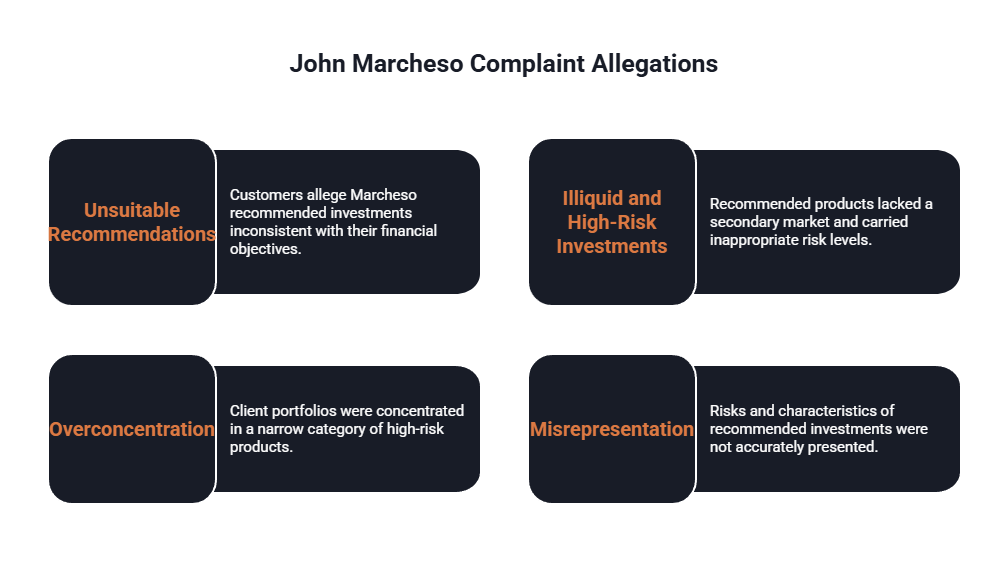
According to his FINRA BrokerCheck profile, John Marcheso (CRD# 869337) has five customer complaint disclosures on record, all filed since 2020. The allegations across these disputes are strikingly consistent:
- Unsuitable recommendations: Across multiple complaints, customers allege Marcheso recommended investments that were inconsistent with their stated financial objectives, risk tolerance, and investment profile.
- Illiquid and high-risk investments: Several complaints allege that recommended products lacked a ready secondary market and carried risk levels inappropriate for the customers’ financial situations, trapping investors in positions they could not exit without significant losses.
- Overconcentration: At least one complaint alleges that Marcheso concentrated client portfolios too heavily in a narrow category of high-risk products, amplifying exposure without adequate justification.
- Misrepresentation: Multiple complaints allege that the risks and characteristics of the recommended investments were not accurately presented to clients.
Three of the five disputes have settled. One was closed with no action. One remains pending. The most recent complaint, filed in June 2025, alleges that Marcheso recommended unsuitable, illiquid, and high-risk investments and seeks $650,000 in damages. That dispute is currently pending.
Marcheso entered the securities industry in 1983, giving him more than four decades of experience, which makes a recurring pattern of suitability allegations particularly significant. Experienced brokers are held to a high standard precisely because they are expected to understand these obligations thoroughly.

We Have Recovered Over
$350 Million for Our Clients Nationwide.
What Do Past Regulatory Actions Indicate for Centaurus Financial Investors?
Centaurus Financial, Inc. has faced its own regulatory scrutiny beyond individual broker complaints. In 2021, the SEC issued an administrative order involving Centaurus Financial, Inc. that addressed advisory selection practices and revenue-sharing conflicts of interest. Key points from the firm’s regulatory record include:
- The SEC proceeding raised concerns about whether the firm’s advisory selection practices created undisclosed conflicts of interest for clients.
- Revenue-sharing arrangements between Centaurus Financial and certain investment product sponsors were at the center of the regulatory action, raising questions about whether investment recommendations were driven by client needs or by firm compensation.
- Under FINRA Rule 3110, brokerage firms are required to maintain adequate supervisory systems to oversee their brokers’ recommendations and identify potential red flags of misconduct. The presence of both firm-level regulatory action and individual broker complaints may indicate gaps in oversight.
For investors who worked with Marcheso or other Centaurus Financial representatives, this pattern of regulatory attention at both the broker and firm level warrants careful review of account statements and investment performance.
What These Allegations Mean for Investors
The types of allegations across the customer complaints against John Marcheso, including unsuitable recommendations, illiquid alternative investments, and misrepresentation, are among the most common forms of broker misconduct in the securities industry. Understanding how these violations occur can help affected investors recognize whether similar conduct may have impacted their own accounts.
Under FINRA Rule 2111 (Suitability), brokers are required to have a “reasonable basis” to believe that a recommended investment is suitable for the client’s unique financial situation, age, and risk tolerance. For conduct after June 30, 2020, the SEC’s Regulation Best Interest (Reg BI) established an even higher “best interest” standard for broker-dealers.
Illiquid alternative investments, including many oil and gas limited partnerships and private real estate securities, often lack a ready secondary market. These products can carry high fees, complex risk structures, and limited transparency. When a broker recommends such products to investors who need liquidity or capital preservation, it may constitute a suitability violation.
Our lawyers are nationwide leaders in investment fraud cases.
How Meyer Wilson Werning Can Help
Investors who suffered losses after following recommendations from John Marcheso or other Centaurus Financial brokers may have legal options, including filing claims through arbitration. The arbitration process allows investors to seek recovery of losses caused by broker misconduct, unsuitable recommendations, and firm supervisory failures without going through traditional court litigation.
Meyer Wilson Werning represents investors nationwide who have been harmed by unsuitable investment recommendations, illiquid alternative investments, and firm supervisory failures. With more than 75 years of combined experience and over $350 million recovered for our clients, our team, led by founding partner David Meyer, is dedicated to holding negligent firms and brokers accountable. Contact us today for a free and confidential consultation to discuss your path to recovery.
We Are The firm other lawyers
call for support.
Frequently Asked Questions
Who is broker John Marcheso of Centaurus Financial?
John Joseph Marcheso has been registered with Centaurus Financial, Inc. since approximately 2000 and entered the securities industry in 1983. His FINRA BrokerCheck record includes multiple customer complaints alleging unsuitable recommendations in illiquid, high-risk investment products. Current and former clients should review his full BrokerCheck record carefully.
What are the customer complaints against broker John Marcheso?
FINRA BrokerCheck records show five customer complaints filed against Marcheso since 2020, with allegations that consistently center on unsuitable recommendations, overconcentration, and illiquid alternative investments. Two disputes have settled, one was closed with no action, and one remains pending.
How can I file a FINRA complaint against a Centaurus Financial broker?
Investors can pursue losses through FINRA arbitration, the primary dispute resolution forum for securities industry claims. An experienced securities attorney can review your account statements and BrokerCheck records to assess whether your losses may be recoverable. FINRA arbitration typically resolves within 12 to 16 months and does not require going to court.
Why are illiquid alternative investments risky for investors?
Illiquid alternative investments, including oil and gas limited partnerships and private real estate securities, often lack a ready secondary market, making them difficult to exit without significant losses. They frequently carry high fees, complex risk structures, and limited transparency. Recommending these products to investors who need liquidity or capital preservation may constitute a suitability violation under FINRA rules.
Recovering Losses Caused by Investment Misconduct.