

Criminals in Oklahoma have stolen an estimated $150 million from residents through AI-generated scams and cryptocurrency fraud. They do it by sending messages that look and sound real, fake tax notices, fake warrants, fake investment opportunities, and they move fast. By the time someone realizes what happened, the money is gone.
On July 1, 2026, the Oklahoma State Bureau of Investigation launched a new Fraud and Cybercrime Unit to investigate this growing wave of digital financial crime. The unit was authorized through state legislation and is tasked with investigating AI-enabled scams and cryptocurrency fraud, training law enforcement agencies statewide, and coordinating with banks to track emerging schemes before they spread.
State action is a meaningful step forward. But a law enforcement investigation does not recover individual losses. If you or someone you know lost money to an AI-enabled scam or cryptocurrency fraud scheme, and a licensed financial professional, broker, or advisor was involved, the cryptocurrency fraud attorneys at Meyer Wilson Werning can evaluate whether you have grounds for a claim. Contact us today for a free and confidential consultation, and you pay nothing unless we recover for you.
What Is the Oklahoma Fraud and Cybercrime Unit and How Does It Work?
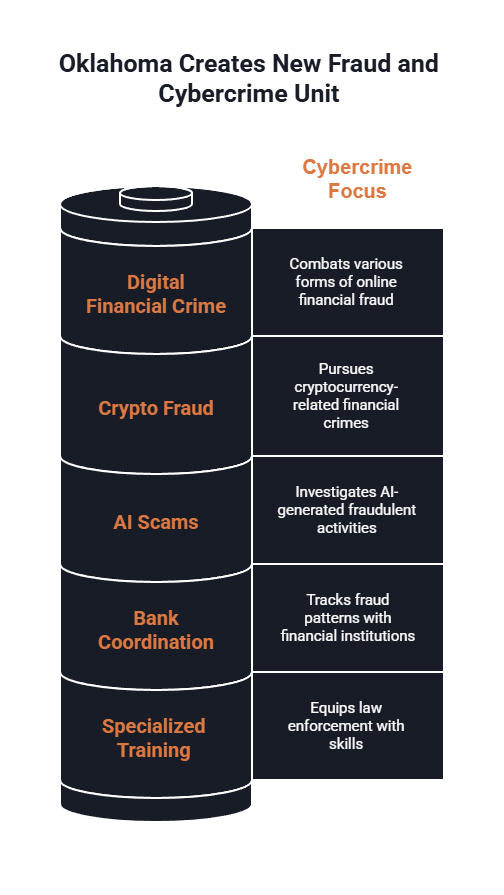
Senate Bill 1859 authorized the Oklahoma State Bureau of Investigation to establish the Fraud and Cybercrime Unit, which began operations on July 1. Headquartered in Oklahoma City, the unit was created in direct response to the estimated $150 million that Oklahoma residents have lost to crypto and AI-driven scams. It is designed to investigate financial crimes involving cryptocurrency, artificial intelligence, and other digital technologies, while also supporting local law enforcement and prosecutors in cases involving online and cross-jurisdictional financial crime.
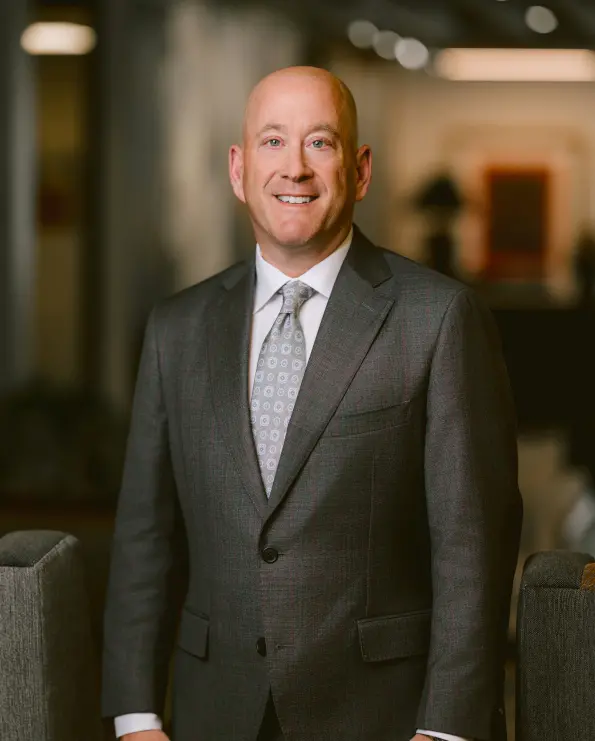
Courtney Werning, Principal at Meyer Wilson Werning and incoming PIABA President in 2027, leads the firm’s cryptocurrency fraud practice and has been appointed to FINRA’s own National Arbitration and Mediation Committee. Werning was direct in her assessment of Oklahoma’s response: “We believe other states should follow their lead and position this as an important problem to dedicate resources to.”

We Have Recovered Over
$350 Million for Our Clients Nationwide.
Which Oklahoma Platforms and Schemes Have Already Drawn Regulatory Attention?
Oklahoma regulators have not waited for the new unit to begin taking action. The Oklahoma Department of Securities has already issued investor alerts naming three specific platforms. BG Wealth Sharing, DSJ Exchange, and HQI Exchange were each flagged after multiple users reported they could not withdraw funds, and regulators confirmed that none of the platforms were registered to offer securities in Oklahoma.
The scope of individual schemes is also significant. An Oklahoma resident was sentenced to five years in federal prison for orchestrating a $9.4 million cryptocurrency investment fraud, illustrating the scale of harm that targeted investors in the state.
Oklahoma has also adopted new rules governing cryptocurrency kiosks. Licensed kiosk operators must now register with the Oklahoma Banking Department, disclose each kiosk location, impose transaction limits, display fraud warnings, provide receipts, and refund certain fraud victims who report within 14 days. The Banking Department can revoke a license when operators receive multiple unresolved fraud complaints.
Does a State Criminal Investigation Mean Investors Will Get Their Money Back?
A state-level criminal investigation can lead to arrests and prosecutions, but it does not automatically put money back in the hands of the people who lost it. Investors who suffered losses to Oklahoma cryptocurrency fraud should understand the gap between a law enforcement case and a private recovery action.
Filing a complaint with the Oklahoma Department of Securities creates an official record and may support broader enforcement actions. However, regulatory agencies are not authorized to act as personal representatives for individual investors seeking restitution. Private recovery actions, including arbitration or litigation against platforms, intermediaries, or financial professionals who facilitated the fraud, operate on a separate track.
When a regulated broker-dealer or investment adviser played a role in directing funds toward a fraudulent crypto scheme, investors may be able to pursue claims through arbitration, a process that can move faster than traditional court litigation and does not require the criminal case to reach a final determination first.
Our lawyers are nationwide leaders in investment fraud cases.
What Steps Should Oklahoma Investors Take If They Lost Money to a Crypto or AI Scam?
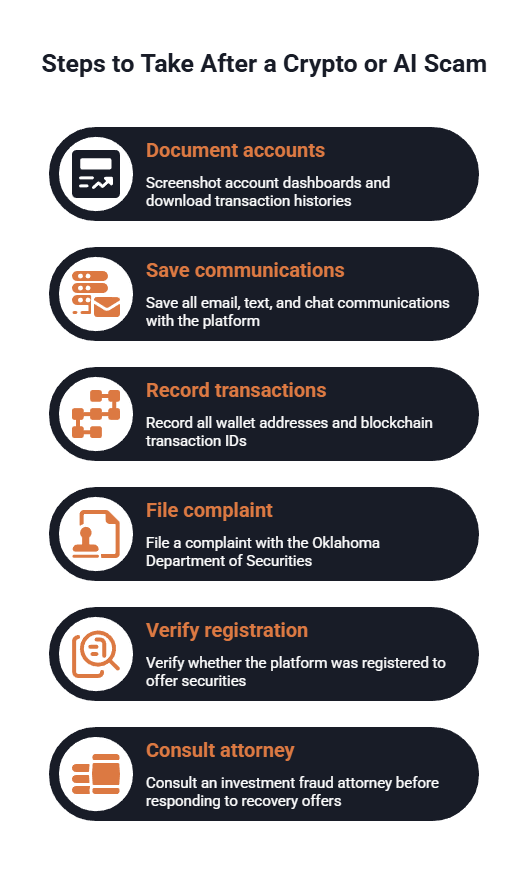
- Preserve evidence immediately. Once a fraudulent platform goes offline or a wallet address becomes inactive, retrieving transaction records can become far more difficult. Investors should take screenshots of account dashboards, download or print transaction histories, save all email and chat communications, and record any wallet addresses or blockchain transaction IDs associated with their accounts.
- Watch for recovery scams. The Oklahoma Department of Securities has warned that some third parties contact people who have lost money and promise to recover funds in exchange for an upfront fee. These offers are often secondary scams. Legitimate investment loss recovery efforts do not require payment before any money is recovered.
- Check registration status before investing. The platforms named in the Oklahoma investor alert were not registered to offer securities in the state. Investors can verify whether a platform or individual is registered by contacting the Oklahoma Department of Securities or checking federal databases maintained by the SEC and FINRA. If a broker or financial advisor recommended a crypto investment that turned out to be fraudulent, there may be a separate claim for broker misconduct or financial advisor negligence.
Oklahoma's Fraud and Cybercrime Unit won't get your money back. Here is what will.
byu/MeyerWilsonCo ininvestorclaims
We Are The firm other lawyers
call for support.
How Meyer Wilson Werning Can Help
Oklahoma’s new Fraud and Cybercrime Unit is a meaningful development. But state law enforcement cannot do what a private recovery action can: put money back in the hands of the individual investors who lost it.
If a broker, financial advisor, or registered platform played a role in directing your funds toward a fraudulent crypto scheme, a criminal investigation running in the background does not foreclose your ability to pursue a separate claim. Those two tracks move independently, and private recovery through arbitration does not require waiting for a prosecution to conclude.
With more than $350 million recovered for investors nationwide, Meyer Wilson Werning has spent over 25 years holding broker-dealers, financial advisors, and unregistered platforms accountable for exactly this kind of misconduct. If you or someone you know lost money to a cryptocurrency or AI-enabled fraud scheme in Oklahoma or anywhere else in the country, contact us today for a free and confidential consultation. You pay nothing unless we recover for you.
Frequently Asked Questions
What is the Oklahoma Fraud and Cybercrime Unit and what types of cryptocurrency fraud will it investigate?
The Oklahoma Fraud and Cybercrime Unit was created within the Oklahoma State Bureau of Investigation under Senate Bill 1859 and began operating on July 1. It is designed to investigate scams involving cryptocurrency, artificial intelligence, and other digital technologies that have cost Oklahoma residents an estimated $150 million. The unit also supports local law enforcement in cases where criminals operate online or across state lines.
How much money have Oklahomans reportedly lost to AI and cryptocurrency scams?
State reporting indicates that Oklahoma residents have collectively lost roughly $150 million to scams involving cryptocurrency, AI, and related digital technologies. Individual cases have been significant as well: one Oklahoma resident received a five-year federal prison sentence for a $9.4 million cryptocurrency investment fraud.
What should I do if I suspect I am a victim of a cryptocurrency fraud scheme in Oklahoma?
Stop sending additional funds immediately, preserve all records including screenshots and transaction histories, and file a complaint with the Oklahoma Department of Securities. Do not pay any third party that promises to recover your funds for an upfront fee. You may also want to consult with an investment fraud attorney to understand whether a private recovery action is available.
Has Oklahoma issued specific warnings about fraudulent cryptocurrency platforms?
Yes. Oklahoma regulators issued an investor alert naming BG Wealth Sharing, DSJ Exchange, and HQI Exchange as potentially fraudulent after multiple users reported they could not withdraw funds. Regulators confirmed that none of those platforms were registered to offer securities in Oklahoma.
Recovering Losses Caused by Investment Misconduct.