


Federal regulators have formally classified syndicated conservation easement transactions as abusive tax shelters, and IRS enforcement is accelerating. Thousands of investors who entered these arrangements based on recommendations from brokers, financial advisors, and promoters are now facing disallowed deductions, back taxes, accuracy-related penalties, and compounding interest charges through no fault of their own.
If a licensed broker, financial advisor, or promoter recommended a syndicated conservation easement to you and you are now facing IRS penalties or investment losses, an experienced alternative investments attorney can help determine whether your losses are actionable
What Is a Syndicated Conservation Easement?
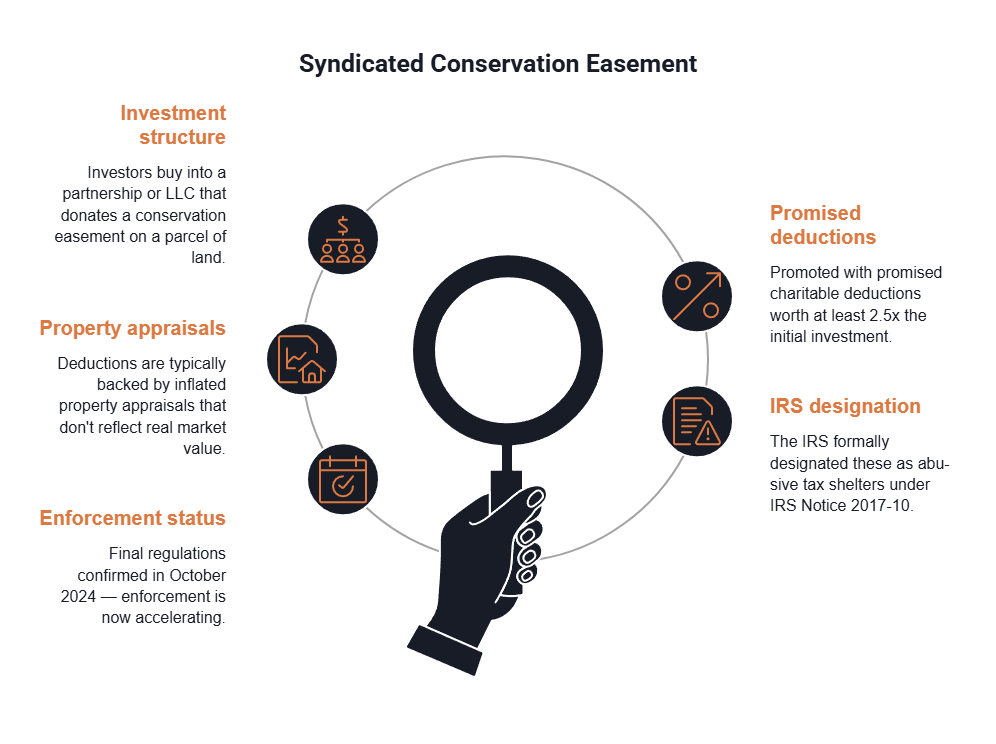
A syndicated conservation easement is a transaction in which investors purchase interests in a pass-through entity, typically a partnership or limited liability company, that donates a conservation easement on a parcel of land. According to IRS conservation easements guidance, these transactions are marketed through promotional materials that promise charitable deductions worth at least 2.5 times the amount of the investor’s initial investment.
The inflated deductions at the center of these transactions are typically supported by grossly overstated property appraisals. Promoters structure the deal so that the appraised value of the donated easement far exceeds any reasonable market assessment, allowing investors to claim deductions that dwarf their actual economic outlay. Reporting by ProPublica and other sources has documented promoter-driven structures involving inflated appraisals and pass-through entities designed to maximize paper losses for tax purposes.
While Congress established the conservation easement deduction to encourage legitimate land preservation, the IRS has determined that syndicated versions of these transactions have been used primarily to generate tax benefits that bear little relationship to actual conservation activity.

We Have Recovered Over
$350 Million for Our Clients Nationwide.
IRS Enforcement Actions Against Syndicated Conservation Easement Transactions
Federal enforcement targeting syndicated conservation easement transactions has intensified over several years. IRS Notice 2017-10 first identified these deals as “listed transactions,” requiring participants and promoters to disclose their involvement to the IRS. That designation placed syndicated conservation easements on the same enforcement tier as other abusive tax shelters.
In October 2024, the Treasury Department and IRS issued IRS final regulations on syndicated conservation easements, formally confirming that these transactions constitute abusive tax transactions. The final regulations solidified the government’s position that inflated appraisals and promoter-driven structures undermine the conservation incentives Congress intended to support.
For investors, this enforcement activity carries real financial weight. Participants in flagged transactions face audits, disallowed deductions, back taxes, and substantial penalties. Many investors entered these arrangements based on representations from financial advisors, tax professionals, or promoters who assured them the deductions were legitimate.
How These Transactions Harm Investors
The damage from a syndicated conservation easement can extend well beyond the initial investment. When the IRS disallows inflated deductions, investors may owe back taxes for every year the deduction was claimed, along with accuracy-related penalties that can reach 40% of the underpayment in cases involving gross valuation misstatements. Interest accrues on unpaid amounts from the original filing date, compounding losses further.
Investors who were steered into these transactions by a broker or financial advisor may have additional grounds for concern. When a financial professional recommends a syndicated conservation easement without adequately disclosing the risks, or when the recommendation is unsuitable given the investor’s financial profile, that conduct may constitute broker misconduct or financial advisor negligence.
The IRS enforcement of abusive tax shelters like syndicated conservation easements means that investors can no longer treat these deductions as settled. Every participant who claimed a deduction through one of these arrangements should understand their potential exposure.

Our lawyers are nationwide leaders in investment fraud cases.
How Meyer Wilson Werning Can Help
Meyer Wilson Werning represents investors nationwide who have been harmed by unsuitable recommendations, undisclosed risks, and promoter-driven schemes like syndicated conservation easements. With more than 75 years of combined experience and over $350 million recovered for clients across the country, the firm’s lawyers are nationwide leaders in investment fraud cases.
If you participated in a syndicated conservation easement and are now facing IRS penalties, back taxes, or investment losses, you may have options for recovery. Contact us today for a free and confidential consultation to discuss your situation.
We Are The firm other lawyers
call for support.
Frequently Asked Questions

I Was Told My Conservation Easement Was Legal. Can I Still Have a Claim Against My Broker?
Possibly. The fact that a promoter, broker, or financial advisor assured you the deductions were legitimate does not eliminate their potential liability, it may actually strengthen it. When a financial professional recommends a syndicated conservation easement without adequately disclosing the IRS enforcement risk, or when the investment was unsuitable for your financial profile to begin with, that conduct may constitute broker misconduct or financial advisor negligence regardless of what you were told at the time. The specific facts of how the investment was recommended and sold are what matter most.
What Financial Penalties Are Investors Facing From These Transactions?
The consequences can be significant and compounding. When the IRS disallows deductions tied to a syndicated conservation easement, investors may owe back taxes for every year the deduction was claimed. On top of that, accuracy-related penalties can reach 40% of the underpayment in cases involving gross valuation misstatements. Interest accrues from the original filing date, meaning the total exposure can far exceed what investors originally expected to save. Investors who entered these arrangements on the advice of a broker or advisor should not assume those consequences are theirs alone to absorb.
Is There a Deadline to File a Claim If I Lost Money in a Syndicated Conservation Easement?
Yes. Statutes of limitations apply to investment claims, and the window to bring a case can close quickly depending on the forum and the specific facts involved. In FINRA arbitration, claims must generally be filed within six years of the event giving rise to the dispute, though additional eligibility rules may also apply. Waiting to take action can limit your recovery options. If a broker or financial advisor recommended a syndicated conservation easement to you, contacting an attorney as soon as possible is the most important step you can take.
Recovering Losses Caused by Investment Misconduct.