


Robo-advisors have grown into a major segment of the investment management industry, and many investors assume these automated platforms operate outside the same regulatory framework that applies to traditional financial advisors. The SEC has confirmed that robo-advisors registered as investment advisers are subject to the Investment Advisers Act of 1940 and the fiduciary obligations that come with it.
At the same time, evolving SEC rulemaking around predictive data analytics and tightened internet-adviser registration requirements signal that regulators are paying closer attention to how automated advice is delivered, disclosed, and supervised.
Investors who have experienced losses through automated investment platforms may have legal options. Learn more about robo-advisor and AI investment losses here.
How the SEC Regulates Robo-Advisors
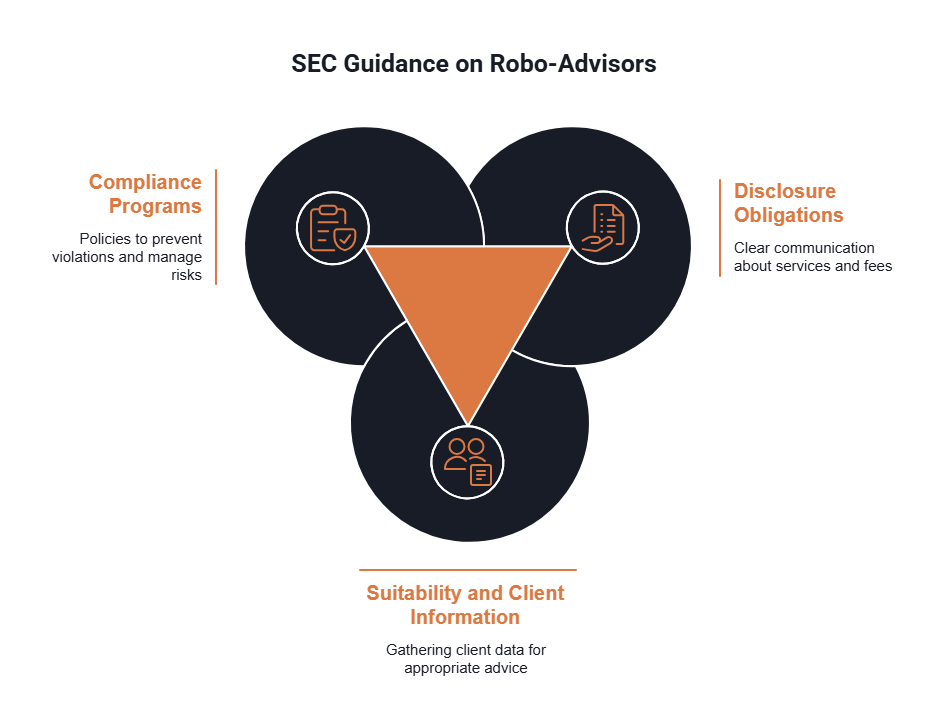
The SEC addressed the regulatory status of robo-advisors directly in SEC guidance on robo-advisers. That guidance confirmed that robo-advisors that register as investment advisers must satisfy the same substantive and fiduciary obligations as any other registered investment adviser (RIA). The SEC identified three areas of particular focus:
- Disclosure obligations. Robo-advisors must provide clear, meaningful disclosures about their services, fees, investment strategies, and limitations. The SEC warned that generic or boilerplate language may fall short of what the Advisers Act requires.
- Suitability and client information. A robo-advisor must gather sufficient information about each client’s financial situation, investment objectives, and risk tolerance to provide advice that is appropriate for that client. The SEC acknowledged that questionnaires can accomplish this, but only if they are designed to elicit the information needed to meet the adviser’s fiduciary duty.
- Compliance programs. Robo-advisors must adopt and implement written compliance policies and procedures reasonably designed to prevent violations of the Advisers Act. The SEC expects these programs to address the unique risks posed by automated advice, including oversight of algorithmic functions, cybersecurity, and business continuity.
The SEC also flagged potential compliance issues under the Investment Company Act, particularly Rule 3a-4, which sets conditions for managed-account programs to avoid being treated as unregistered investment companies.
More recently, the SEC proposed rules on predictive data analytics and conflicts of interest that would apply to broker-dealers and investment advisers using predictive data analytics, artificial intelligence, and similar technologies. The proposed rules would require firms to identify and address conflicts of interest that arise when these technologies place the firm’s interests ahead of investors.
Separate reporting indicates the SEC also tightened its registration requirements for internet investment advisers. Under the revised criteria, advisers relying on the internet-adviser exemption must maintain a fully operational, interactive website and provide advice exclusively through that website. Firms that did not meet these updated standards were required to confirm their eligibility by March 31, 2025.


We Have Recovered Over
$350 Million for Our Clients Nationwide.
What This Means for Investors
The fact that robo-advisors are regulated does not mean every platform meets its obligations. The SEC’s guidance makes clear that a robo-advisor’s fiduciary duty is not reduced simply because its advice is delivered through an algorithm rather than a human conversation.
Investors should be aware of several warning signs that a robo-advisor may not be meeting its regulatory duties:
- Inadequate disclosure. If a platform does not clearly explain its fee structure, investment methodology, rebalancing triggers, or the limitations of its algorithmic approach, that may represent a failure to satisfy the Advisers Act’s disclosure requirements.
- Insufficient client profiling. A robo-advisor that relies on a brief or superficial questionnaire may not be gathering enough information to make suitable recommendations.
- Conflicts of interest in algorithmic design. The SEC’s proposed predictive data analytics rule reflects concern that automated systems can be designed in ways that favor the firm’s revenue over investor interests.
- Lack of human oversight. While the SEC permits fully automated advice, the absence of meaningful human review can amplify problems when an algorithm makes unsuitable recommendations across many client accounts at once.
Investors who believe their robo-advisor failed to follow SEC rules or breached its fiduciary duty may be able to pursue claims through securities litigation or arbitration, depending on how the account was structured and which entities were involved.
How Meyer Wilson Werning Can Help
Meyer Wilson Werning represents investors nationwide who have suffered losses due to registered investment advisers and broker-dealers, including those using automated and algorithmic platforms. With more than 75 years of combined experience and over $350 million recovered for clients, the firm has the resources to evaluate whether a robo-advisor met its legal obligations.
If you experienced investment losses through a robo-advisor or automated investment platform, Contact us today for a free and confidential consultation to discuss your options.
Our lawyers are nationwide leaders in investment fraud cases.
Frequently Asked Questions
Are robo-advisors regulated by the SEC?
Yes. The SEC has confirmed that robo-advisors registered as investment advisers are subject to the Investment Advisers Act of 1940. This means they owe clients a fiduciary duty and must comply with the same rules that govern traditional registered investment advisers.
What are the main compliance issues for robo-advisors?
The SEC has identified three primary areas of concern: providing adequate disclosures about services and fees, collecting sufficient client information to make suitable investment recommendations, and maintaining effective compliance programs. Failures in any of these areas could expose a robo-advisor to regulatory action or investor claims.
Do robo-advisors have to act in investors’ best interests?
SEC-registered robo-advisors owe their clients a fiduciary duty under the Advisers Act. That duty requires them to act in the client’s best interest when providing investment advice, regardless of whether that advice is delivered by an algorithm or a human adviser.
Can I recover losses from a robo-advisor?
Investors who suffered losses because a robo-advisor provided unsuitable recommendations, failed to disclose material information, or breached its fiduciary duty may have legal options. Recovery may be pursued through FINRA arbitration or securities litigation, depending on the specific facts and account structure. Meyer Wilson Werning offers free and confidential consultations to evaluate potential claims.
How are SEC rules on robo-advisors changing?
The SEC has proposed new rules addressing conflicts of interest that arise from the use of predictive data analytics and artificial intelligence by broker-dealers and investment advisers. The agency has also tightened registration requirements for internet investment advisers, requiring a fully operational and interactive website as a condition for exemption eligibility.
Recovering Losses Caused by Investment Misconduct.