


Imagine scrolling through Instagram and seeing a post from a trusted friend, a retired police detective, a well-known influencer, maybe even a financial personality you follow, promoting what looks like a legitimate cryptocurrency investment. The link looks real. The enthusiasm is convincing. You click.
And just like that, your money is gone. The warning is not hypothetical. Courtney Werning’s analysis of this exact threat was featured by the International Business Times, alongside her Spectrum News interview, as journalists worldwide began reporting on the surge in social media account hijacking for crypto fraud.
Meyer Wilson Werning principal attorney Courtney Werning recently sat down with Spectrum News to explain how social media cryptocurrency scams actually work, and who is behind them. Here is a closer look at what she shared.
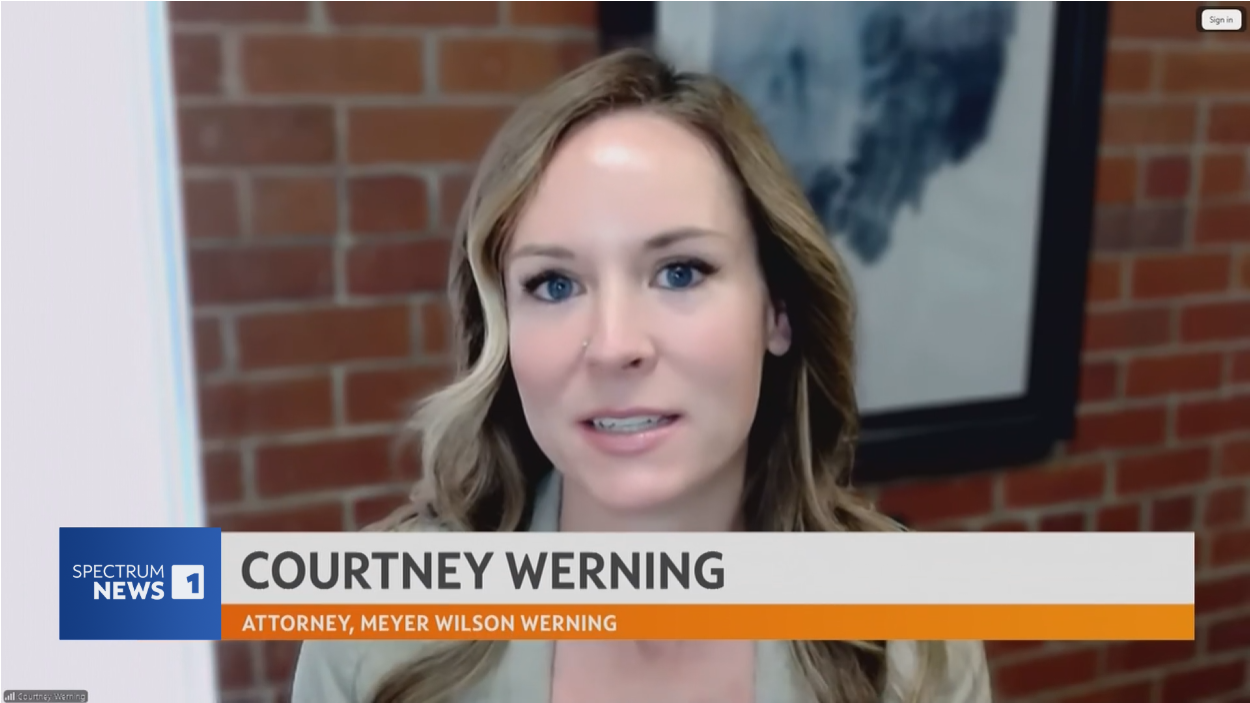
Courtney Werning Warns Spectrum News: “They Weaponize Your Credibility”
Courtney Werning, name partner and principal attorney at Meyer Wilson Werning, recently spoke with Spectrum News about one of the most alarming crypto fraud trends she is seeing in her practice: hackers hijacking real social media accounts to push fake cryptocurrency schemes to unsuspecting followers.
“When they hijack a real person’s account to push a crypto scam, it is super successful because the people that are on your account think they are hearing from you,” Werning told Spectrum News. “In that way, they weaponize your credibility and the influencer’s credibility to defraud their entire network. This is happening all over the place.”
The numbers back her up. According to Werning, the FTC has reported nearly $2 billion in social media scam losses in 2024 alone. A staggering increase from prior years.

We Have Recovered Over
$350 Million for Our Clients Nationwide.
A Real Story, A Real Warning
The Spectrum News story featured Dave Simpson, a retired Rochester Police Department investigator and host of The Crime Dawg podcast, someone who spent his career catching criminals. Even he couldn’t escape these scammers.
Hackers took over his X (formerly Twitter) account and began using it to push fake crypto promotions to his entire following. And recovering the account? Nearly impossible.
“They keep telling me they can’t verify my account because what happens is they hack your password and your email,” Simpson explained. “My email is not even affiliated with my name anymore. They have total control over it.”
If a seasoned law enforcement professional can be targeted this way, anyone can.
How These Social Media Crypto Scams Work
These scams follow a predictable, sophisticated playbook:
- Account hijacking: Hackers breach real, established social media accounts, often belonging to influencers, public figures, or trusted community members, by stealing passwords and email credentials, locking the real owner out completely.
- Fake investment promotion: The hacker then uses the compromised account to push cryptocurrency “opportunities,” creating posts, stories, and direct messages that appear to come from someone followers already know and trust.
- Convincing fake websites: People are directed to professionally designed, legitimate-looking websites that are, in reality, elaborate facades built to funnel your money directly to the scammer.
- The money disappears: Once you send funds, typically in cryptocurrency, which is difficult to trace and nearly impossible to reverse, it is gone. As Werning put it, “You’re sending money into a void.”
Our lawyers are nationwide leaders in investment fraud cases.
Why Crypto Makes These Scams So Dangerous
Traditional financial fraud leaves a paper trail. Crypto fraud, by design, often does not.
Cryptocurrency transactions are largely irreversible. There is no bank to call. No credit card chargeback. No dispute process. Once funds are transferred to a scammer’s wallet, recovering them requires aggressive legal action.
This is why Courtney Werning built Crypto.court, a dedicated legal platform specifically for investors affected by cryptocurrency fraud. While the platforms and payment processors wash their hands of responsibility, MWW holds them accountable.
We Are The firm other lawyers
call for support.
“I Am Tech-Forward, But This Concerns Me”
What makes Werning’s perspective uniquely valuable is that she is not a technophobe warning people away from digital assets. She is a credentialed advocate inside the space.
“I am tech forward, but it concerns me how prevalent the growth of cryptocurrency fraud is,” she told Spectrum News.
That combination of deep legal expertise and genuine fluency with the technology is exactly what makes her one of the most credentialed crypto fraud litigators in the country, and why outlets from Spectrum News to the International Business Times have turned to her to explain this threat to their audiences. She currently serves on FINRA’s National Arbitration and Mediation Committee (NAMC), chairs PIABA’s arbitration committee, and is on track to become PIABA President in 2027 — which would make her just the fourth woman in the organization’s history to hold that role.
When she speaks about crypto fraud, she speaks from inside the fight.
5 Steps to Protect Yourself Right Now
Werning’s practical guidance from the Spectrum News interview translates directly into action:
- Pause before you click. Hover over any link before opening it to see its actual destination URL. If it looks off, it is.
- Enable two-factor authentication (2FA), but use an authenticator app, not SMS. SIM-swapping scams can intercept text-based 2FA. An app-based authenticator is significantly more secure.
- Be skeptical of crypto promotions from anyone, even people you know. Their account may have been compromised. Contact them through a different channel before acting on anything financial.
- Never send cryptocurrency to someone you have not independently verified. Legitimate investment opportunities do not require you to wire crypto on the spot.
- Report it immediately. File a complaint with your local police department and with the FBI’s Internet Crime Complaint Center at IC3.gov. Documentation is critical if you pursue legal action.
Lost Money in a Crypto Scam? You May Have Legal Options.
Most investors assume that once cryptocurrency is gone, it is gone forever. That is not always true. Depending on the platform involved, how the fraud was promoted, and who facilitated the transaction, there may be legal claims available to you and time matters.
Through Crypto.court, Courtney Werning and her team at Meyer Wilson Werning pursue cryptocurrency fraud claims for investors nationwide. With over $350 million recovered for defrauded investors since 1999, MWW has the track record and the resources to go after the platforms, promoters, and facilitators who made these scams possible. Every case is handled on a pure contingency fee — you pay nothing unless we recover money for you. Contact us today for a free and confidential consultation.
Frequently Asked Questions

What is a social media cryptocurrency scam?
A social media cryptocurrency scam occurs when fraudsters, often using hijacked accounts belonging to real, trusted people, promote fake investment opportunities to unsuspecting followers. Because the posts appear to come from someone you know, the scam is far more convincing than a cold message from a stranger.
How do hackers take over someone’s social media account?
Most account takeovers happen through stolen passwords and email credentials. Once a hacker controls both, the real account owner is locked out completely, with no way to verify their identity to the platform. As the person in this story discovered firsthand, recovering the account can be nearly impossible.
Why is cryptocurrency fraud so hard to reverse?
Unlike a bank transfer or credit card charge, cryptocurrency transactions are largely irreversible. There is no fraud department to call and no chargeback process. Once funds reach a scammer’s wallet, recovering them requires swift legal action.
Can I get my money back if I was scammed?
Possibly. Recovery depends on the platform involved, how the fraud was facilitated, and how quickly you act. In some cases, legal claims can be brought against the platforms or payment processors that enabled the fraud. The sooner you consult an attorney, the more options you have.
What should I do immediately after being scammed?
Stop sending money, document everything (screenshots, transaction IDs, communications) and report the fraud to your local police and the FBI’s Internet Crime Complaint Center at IC3.gov. Then contact a cryptocurrency fraud attorney to evaluate your legal options before evidence disappears.
Recovering Losses Caused by Investment Misconduct.