

The GPB Capital fraud case has reached a major turning point after years of uncertainty for more than 10,000 investors who have not received a single distribution since 2018. A federal judge has now approved the release of $400 million to certain investors—a meaningful step in a long and difficult recovery process. This development unfolds against the backdrop of ongoing criminal proceedings against GPB’s former leadership, whose sentencing has been postponed despite their convictions.
More than 10,000 investors. Zero distributions since 2018. If a financial advisor recommended GPB Capital to you as a safe, income-producing investment, the $400 million distribution is only part of the story. Your advisor’s firm may owe you far more. Our private placement attorneys at Meyer Wilson Werning are reviewing GPB claims now. Contact us today for a free and confidential consultation, and you pay nothing unless we recover for you.
How the GPB Capital Fraud Scheme Unraveled
GPB Capital, founded in 2013, raised about $1.8 billion from investors through high-risk private placement offerings sold by dozens of independent broker-dealers. These investments were marketed as income-generating funds designed to pay steady 8% annual returns. GPB held more than half a dozen funds, primarily invested in automotive dealerships and waste-management businesses, and positioned these investments as stable alternatives during a period of historically low interest rates.
Fraudulent Conduct Identified by Federal Prosecutors
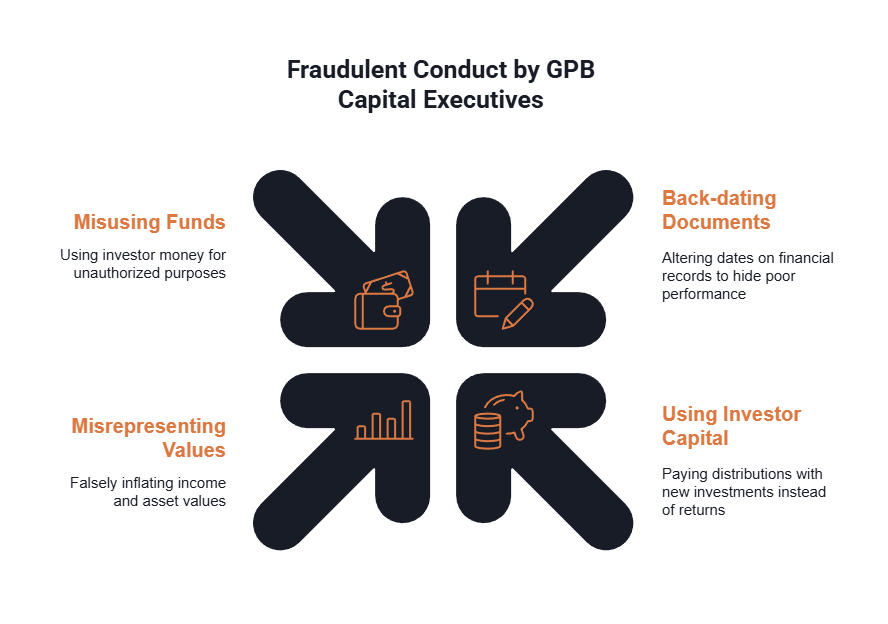
As the funds began underperforming, GPB executives allegedly resorted to deceptive tactics to maintain the appearance of profitability. Jurors later found that top executives engaged in practices such as:
- Back-dating financial documents to disguise poor performance
- Paying investor distributions using investor capital, not legitimate returns
- Misrepresenting fund income and asset values, creating a false impression of stability
- Misusing investor funds for purposes not aligned with the funds’ stated strategy
These findings led to criminal convictions in federal court. GPB founder David Gentile was found guilty of five fraud counts, and sales chief Jeff Schneider was convicted on three counts. Despite these verdicts, their sentencing—originally scheduled for this spring—has been postponed to May, prolonging the accountability process for investors.
Additional Financial Details That Shaped the Collapse
Several important facts help define the scope of the misconduct and its ongoing consequences for investors:
- Prior to collapsing, GPB stopped paying distributions entirely in 2018, leaving investors without income for more than six years.
- Court filings show that GPB maintained $719 million in cash reserves, a figure that may influence future rounds of distributions.
- It was revealed that GPB has paid approximately $75 million toward the legal costs of its convicted executives, further complicating the allocation of investor funds.
These details show why the case remains one of the largest private-placement failures in recent history.

We Have Recovered Over
$350 Million for Our Clients Nationwide.
Understanding the Judge’s Decision to Release $400 Million
On April 8, the judge overseeing the GPB receivership approved a plan to distribute $400 million to certain investors. This marks the first time since the scheme collapsed that investors are receiving any return of capital. The court also dismissed objections filed by Gentile and Schneider, clearing the way for the payments to proceed.
Which GPB Funds Will Receive the Initial Distribution
The initial disbursement applies to investors in three of GPB’s major funds:
- GPB Automotive Portfolio
- GPB Holdings II
- GPB Cold Storage
These funds were among the most heavily marketed and widely sold, particularly by independent broker-dealers promising income and diversification.
Why the Distribution Matters—But Leaves Unanswered Questions
The $400 million release is an important step, but it represents only a portion of what was raised, and many investors still face substantial losses. Key considerations include:
- The distribution is not full restitution, but rather an initial return of capital
- Additional distributions may follow, depending on remaining reserves and ongoing litigation
- Delayed sentencing of the executives prolongs investors’ wait for accountability
- Investors remain uncertain about how much of the remaining reserve could ultimately be recoverable
These factors make it crucial for investors to understand not only the receivership process but also other legal avenues for recovery.
Legal Pathways Available to GPB Investors Seeking Further Compensation
The receiver’s distribution does not replace the potential liability of the broker-dealers and financial advisors who sold GPB investments. Many investors were encouraged to buy these private placements based on representations about income, stability, or low risk that did not align with the funds’ actual structure or performance. Brokerage firms were required to evaluate whether these investments were appropriate and to supervise how their financial advisors recommended them.
Preparing to Evaluate a Potential Recovery Claim
Investors who want to explore additional recovery options should begin gathering materials such as:
- Investment statements showing GPB purchases and halted distributions
- Emails and communications with their financial advisor
- Offering documents or sales materials used during the recommendation process
These documents help establish how the investment was presented and whether the financial advisor failed to provide an accurate understanding of the risks involved.
Our lawyers are nationwide leaders in investment fraud cases.
How Meyer Wilson Werning Helps GPB Capital Investors
Four hundred million dollars sounds like a lot. For an investor who put in $100,000 or $500,000, it is a fraction of what was lost. And the distribution does nothing to address what the broker-dealers who recommended this product did wrong. That is a separate claim, on a separate timeline, and it is still very much available.
Over 25 years, Meyer Wilson Werning has recovered more than $350 million for investors harmed by advisors and firms that put them in unsuitable or fraudulent products. We investigate how GPB was sold, identify the supervisory failures behind the recommendation, and pursue recovery through arbitration against the firms responsible. Contact us today for a free and confidential consultation. You pay nothing unless we recover for you.
We Are The firm other lawyers
call for support.
Frequently Asked Questions
What was the GPB Capital fraud scheme about?
Federal prosecutors found that GPB executives used deceptive tactics—including back-dated documents, inflated asset values, and payments made from investor capital—to create the illusion of stable, income-producing funds. These practices misled more than 10,000 investors who were promised steady 8% returns.
Why are GPB investors receiving $400 million now?
A federal judge overseeing the receivership approved the first major distribution of funds to certain GPB investors after years of frozen accounts. This release marks the first return of capital since GPB stopped making distributions in 2018.
Which GPB funds will receive the initial distribution?
The $400 million distribution applies to investors in: GPB Automotive Portfolio, GPB Holdings II, and GPB Cold Storage. These funds were among the most widely sold by broker-dealers nationwide.
Does the receiver’s distribution replace legal claims against financial advisors?
No. The distribution does not absolve broker-dealers or financial advisors who recommended GPB investments without properly disclosing risks. Investors may still pursue recovery for negligence, unsuitable recommendations, or sales-practice violations.
What should investors gather if they want to pursue a GPB recovery claim?
Key documents include investment account statements showing GPB purchases, advisor emails or notes about the investment, and any offering materials or brochures provided at the time of sale. These materials help establish how the investment was recommended and whether risks were accurately disclosed.
Recovering Losses Caused by Investment Misconduct.