

It begins with a simple, seemingly accidental text message: “Are we still on for dinner?” or a casual stock tip sent to the wrong person. For at least four investors, this polite correction was the first step in a “pig-butchering” scheme that resulted in the theft of $3.4 million. In March 2026, the U.S. Attorney’s Office for the District of Massachusetts filed a civil forfeiture action to recover $3.44 million in Tether (USDT) stolen from victims across three states.
This case provides a clear look at the calculated playbook used by sophisticated criminal networks to exploit trust and steal life savings. If you have been targeted by a suspicious investment opportunity introduced through social media or text, the experienced cryptocurrency lawyers at Meyer Wilson Werning can help you understand your recovery options.
If a “wrong number” text led you to an investment platform, and a broker, financial advisor, or U.S.-based exchange was involved, you may have more legal options than you know. Contact us today for a free and confidential case review. There is no cost, no obligation, and no risk. We only get paid if you recover.
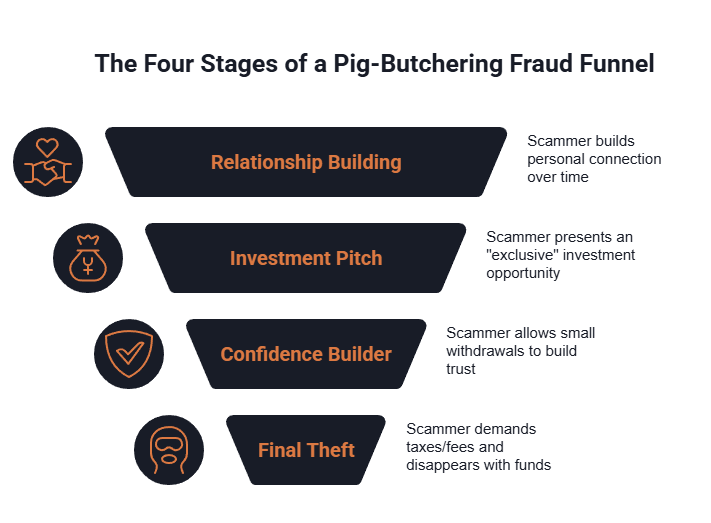
How the “Pig-Butchering” Playbook Unfolds
Federal investigators describe this type of fraud as a “pig-butchering” scheme because the scammer “fattens up” the victim with a false sense of friendship and success before finally stealing their funds. The process is broken down into specific, well-rehearsed steps:
- The Accidental Outreach: Scammers initiate contact through “wrong number” texts or messages on encrypted apps like WhatsApp and Telegram. This framing is designed to lower your guard, you are less likely to be suspicious of a stranger who appears to have reached you by mistake.
- The Relationship Phase: Over weeks or months, the scammer builds a personal connection. They may pose as a successful business person or a romantic interest. They are patient because the ultimate payout is high.
- The Investment Pitch: Once trust is established, they mention an “exclusive” opportunity. In this case, it was an Ethereum platform allegedly backed by physical gold. They often show polished-looking websites with fabricated returns.
- The Confidence Builder: To encourage larger deposits, the platform may allow you to withdraw a small amount of money early on. This convinces the victim the investment is legitimate.
- The Final Theft: When a victim tries to withdraw a large sum, they are told they must first pay “taxes” or “fees.” This is a near-universal sign of fraud. Eventually, the platform disappears, and the funds, often converted to Tether (USDT), are moved to untraceable, unhosted wallets.

We Have Recovered Over
$350 Million for Our Clients Nationwide.
What a Civil Forfeiture Action Means for Victims
The civil forfeiture action filed in March 2026 is a significant step by federal law enforcement to take cryptocurrency fraud seriously. While these actions allow the government to seize assets tied to a crime, they do not guarantee that every investor will be made whole.
Government actions are often limited in scope. They may not pursue every possible avenue for civil recovery or represent every victim who has a viable claim. Depending on whether U.S.-based exchanges or financial institutions played a role in facilitating the fraud, there may be private legal options, such as arbitration, that can be pursued alongside government efforts.
Important Points to Protect Your Assets
The scheme detailed by the Department of Justice follows a pattern that our firm sees consistently. To protect yourself, watch for these specific warning signs:
- Unexpected Connection: Any stranger who reaches out via text and quickly tries to move the conversation to a personal or investment-related topic.
- Unregistered Platforms: Always verify if an investment platform is registered with the SEC or FINRA by visiting investor.gov.
- Physical Backing Claims: Be highly skeptical of crypto investments claiming to be “backed” by gold, real estate, or other physical assets without verifiable legal documentation.
- Cryptocurrency Conversion Requests: Being told to purchase Ethereum (ETH) or other coins only to transfer them to an external, third-party wallet.
- Withdrawal Fees: Being asked to pay “taxes” or “fees” before you can access your own profits.
Our lawyers are nationwide leaders in investment fraud cases.
Pursuing Recovery Through Private Legal Action
At Meyer Wilson Werning, we represent investors who have suffered cryptocurrency fraud losses across the country, but our ability to help depends on the specific circumstances of your case.
We may be able to help if:
- A U.S.-based broker, financial advisor, or registered firm was involved in directing your investment
- You transferred funds through a regulated exchange that may have failed in its duty to detect or stop the fraud
- Your losses exceed $100,000
We are likely not able to help if:
- The scam occurred entirely through Telegram, WhatsApp, or social media with no licensed professional involved
- No brokerage account or registered financial firm played a role in your loss
If you’re unsure which category applies to you, that’s exactly what a free consultation is for. Contact us today, we’ll give you an honest answer about what your options are, at no cost and no obligation.
We Are The firm other lawyers
call for support.
Frequently Asked Questions
What is a “pig-butchering” scam?
A pig-butchering scam is a long-term fraud where a scammer builds a relationship with a victim to gain their trust before persuading them to invest in a fraudulent cryptocurrency platform. The name refers to “fattening up” the victim before stealing their money.
Can the government recover my stolen cryptocurrency?
While the government can seize assets through civil forfeiture actions, as seen in the $3.44 million seizure in March 2026, these actions may not cover all victims. Private legal claims through arbitration are often necessary to pursue full recovery.
What should I do if a stranger texts me about an investment?
Never engage with investment advice from a stranger who contacted you via a “wrong number” text or encrypted app. Legitimate financial advisors do not solicit clients through accidental text messages or WhatsApp.
Is it a red flag if I am asked to pay a fee to withdraw my crypto?
Yes. Requiring an upfront payment for “taxes” or “fees” before allowing a withdrawal is a definitive sign of an investment scam. Legitimate platforms deduct fees from the balance; they do not require new payments to release funds.
Recovering Losses Caused by Investment Misconduct.