


The NanoBit crypto fraud case represents a significant milestone in federal enforcement against so-called “pig butchering” scams, and a warning to every investor who has been approached through WhatsApp or social media with promises of easy crypto profits.
According to the SEC, the NanoBit scheme allegedly affected at least 18 investors, involved approximately $967,835 in crypto assets and fiat currency, and funneled roughly $2 million into bank accounts in Hong Kong. The SEC complaint against NanoBit was filed on September 17, 2024, marking the agency’s first-ever enforcement action tied to pig butchering-style relationship investment scams.
The experienced crypto fraud attorneys at Meyer Wilson Werning can help evaluate whether your losses are the result of actionable misconduct. If a licensed financial professional, broker, or advisor facilitated your investment, contact us today for a free and confidential consultation, and you pay nothing unless we recover for you.
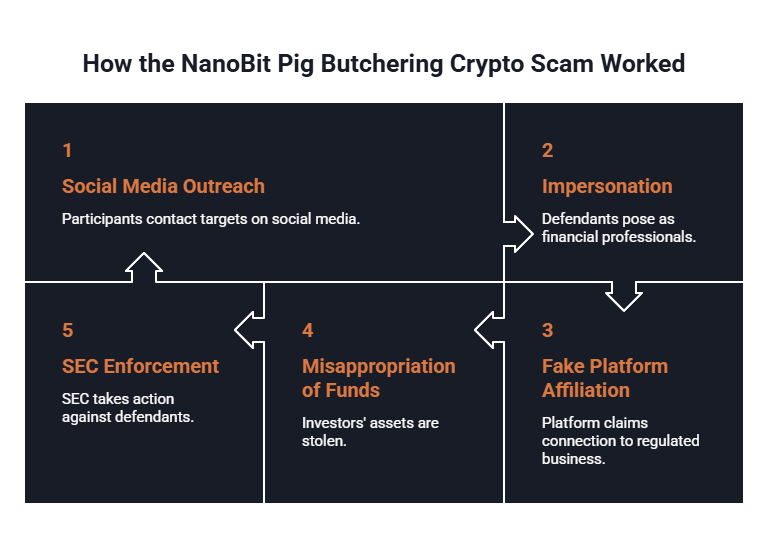
How the NanoBit Scheme Allegedly Operated
The SEC’s complaint paints a detailed picture of how the alleged NanoBit crypto fraud unfolded. According to the filing and secondary reporting, the scheme followed a pattern now widely recognized as a pig butchering crypto scam:
- Social media and WhatsApp outreach: The alleged participants contacted targets through social media platforms and WhatsApp groups, building personal relationships over time before introducing the idea of investing in cryptocurrency.
- Impersonation of financial professionals: According to the SEC, the NanoBit defendants allegedly posed as financial industry professionals within WhatsApp chats, creating false credibility to lower investor skepticism.
- Fake platform affiliation: The NanoBit platform allegedly presented itself as connected to a regulated investment business, giving investors a false sense of security that their funds were managed by a legitimate entity.
- Misappropriation of funds: The SEC alleges that investors’ crypto assets and cash, totaling about $967,835 from at least 18 investors, were misappropriated, with approximately $2 million routed to bank accounts in Hong Kong.
The complaint sought injunctions, civil penalties, and disgorgement of ill-gotten gains from the defendants. This action was described by the agency as its first enforcement response to pig butchering conduct in the crypto space.
Courtney Werning, named principal at Meyer Wilson Werning, was recently featured on the Easy Prey Podcast to discuss pig butchering schemes:

We Have Recovered Over
$350 Million for Our Clients Nationwide.
What This Means for Investors Targeted by Relationship Crypto Scams
The NanoBit case is a clear signal that federal regulators are now treating relationship investment scams targeting crypto investors as a priority. But the SEC’s action also reveals how difficult recovery can be when fraudsters operate offshore and use decentralized platforms to move stolen assets.
Investors should watch for these warning signs of a fake crypto trading platform:
- Unsolicited contact via WhatsApp, Telegram, or dating apps from someone who quickly steers the conversation toward investing
- Claims of affiliation with a regulated broker-dealer or exchange that cannot be verified through FINRA BrokerCheck or the SEC’s EDGAR system
- Unrealistic or guaranteed returns with little or no downside risk described
- Pressure to deposit additional funds after an initial small “gain,” a classic pig butchering tactic designed to build false confidence
- Withdrawal restrictions or unexplained delays when you attempt to access your money
Relationship-driven schemes, including crypto fraud conducted over WhatsApp, differ from traditional broker disputes in one important way, the perpetrators are often unregistered individuals operating outside the U.S. regulatory framework. That makes the path to recovery more complicated, but not impossible, particularly when regulated intermediaries such as banks, exchanges, or payment processors handled investor funds along the way.
Investors who have been drawn into Ponzi schemes and crypto scams through social engineering should know that legal options may still exist, depending on the specific facts of their case and whether any regulated entity played a role in facilitating the fraud.

How Meyer Wilson Werning Can Help
The NanoBit judgment is a reminder that pig butchering scams are not unsophisticated street-level fraud. They are calculated, patient operations that exploit trust, impersonate legitimate professionals, and funnel investor funds overseas before most people realize anything has gone wrong. A court order for $5.5 million against defendants who have already disappeared offers little comfort to the 18 investors who lost real money to this scheme.
With more than $350 million recovered for investors nationwide, Meyer Wilson Werning has spent over 25 years holding those responsible for crypto fraud and deceptive investment schemes accountable. If you lost money in NanoBit or a similar relationship investment scam and a licensed financial professional, broker, or advisor played a role in directing your investment, contact us today for a free and confidential consultation to discuss your situation and determine whether you have a viable claim.
Our lawyers are nationwide leaders in investment fraud cases.
Frequently Asked Questions
What is the NanoBit crypto fraud case about?
The NanoBit crypto fraud case is an SEC enforcement action alleging that fraudsters used social media and WhatsApp to build trust, then directed investors to a fake cryptocurrency trading platform. The SEC said the NanoBit scheme affected at least 18 investors and involved about $967,835 in crypto assets and fiat currency. The complaint also alleges that the platform falsely presented itself as connected to a regulated investment business.
Is NanoBit part of a pig butchering crypto scam?
Yes. SEC reporting and secondary coverage describe NanoBit as part of a pig butchering crypto scam, meaning the perpetrators allegedly formed personal relationships with targets before pushing them into a fake crypto trading platform. These schemes often rely on romance, friendship, or professional-looking WhatsApp chats to lower investor skepticism. The NanoBit action was part of the SEC’s first enforcement response to this type of conduct.
What did the SEC allege in the NanoBit enforcement action?
The SEC alleged that the NanoBit defendants impersonated financial industry professionals in WhatsApp groups and used that deception to solicit investments. According to reporting, the scheme allegedly moved about $2 million into bank accounts in Hong Kong and involved misappropriation of investors’ crypto assets. The SEC complaint was filed on September 17, 2024, and seeks remedies including injunctions, penalties, and disgorgement.
How can investors recognize a fake crypto trading platform?
A fake crypto trading platform often uses unrealistic returns, social-media outreach, and pressure to deposit more money after an initial gain. In the NanoBit case, the SEC described a relationship investment scam that relied on WhatsApp-based trust building and a false claim of affiliation with a regulated platform. Investors should treat unsolicited crypto pitches, guaranteed profits, and withdrawal obstacles as major warning signs.
Recovering Losses Caused by Investment Misconduct.