


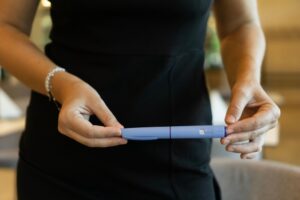
Ozempic, Wegovy, Mounjaro, and Zepbound work in part by slowing digestion. Food stays in the stomach longer, you feel full sooner, and you eat less. For most people that is exactly what was intended. For a smaller group, the slowdown did not stop where it was supposed to.
The lawsuits against Novo Nordisk and Eli Lilly are brought by patients whose stomachs stopped emptying properly and did not recover, who developed intestinal blockages, or who woke up one morning with permanent vision loss in one eye. The claim is not that these drugs should never have been sold. It is that both companies understood these risks and did not put adequate warnings in front of patients and prescribing doctors, who could have watched for them.
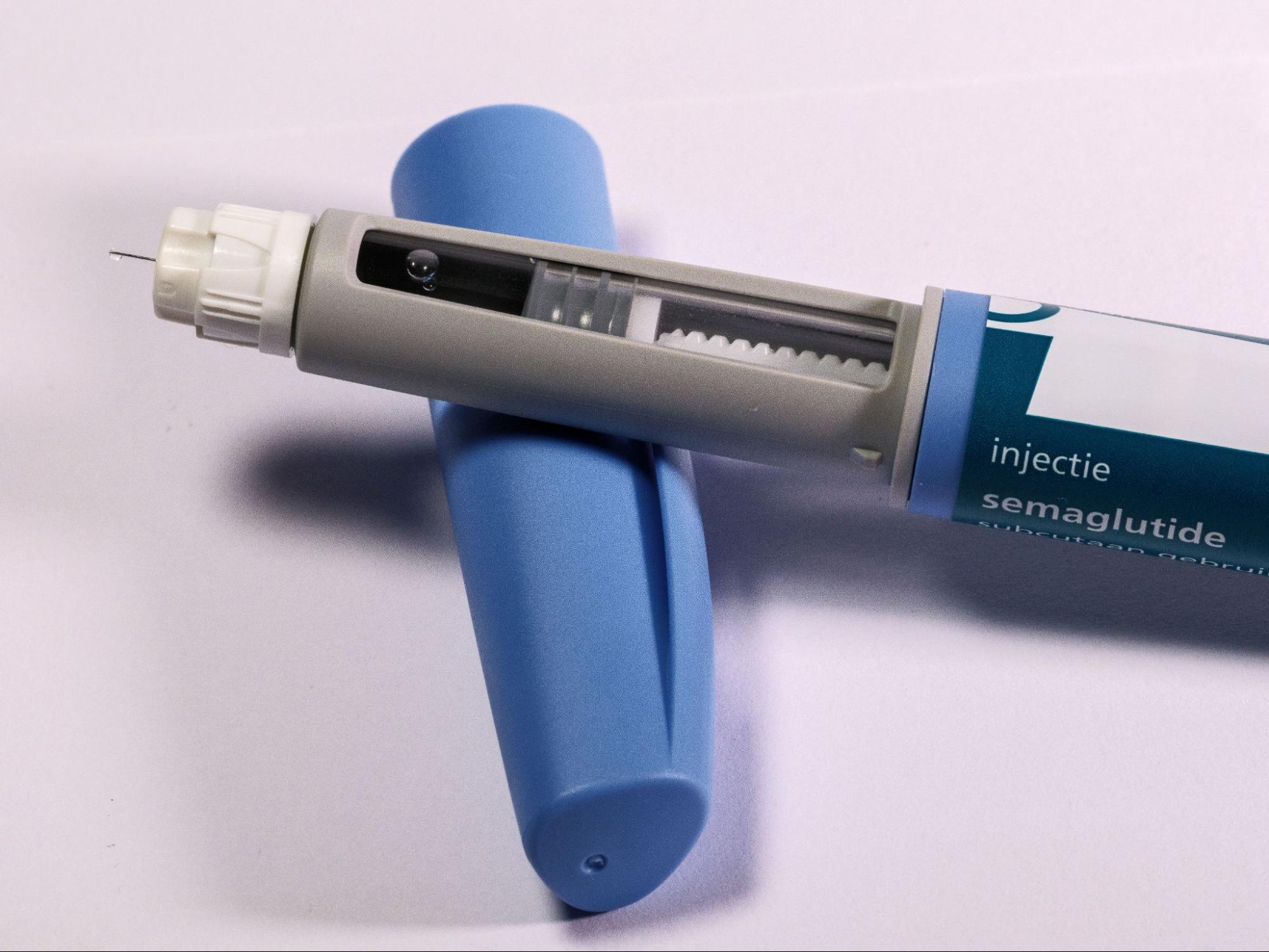
Meyer Wilson Werning is evaluating GLP-1 claims for patients diagnosed with gastroparesis, bowel obstruction, or a specific form of sudden vision loss called NAION. This page explains what these cases require, including one documentation requirement that decides a large share of gastroparesis claims before they start. If you are currently taking a GLP-1 medication, do not stop based on anything here. Speak to the physician who prescribed it. Whether your records meet that requirement is a separate question, and a free and confidential case review will answer it.
Who May Have a GLP-1 Claim
You may have a claim if you took Ozempic, Wegovy, Rybelsus, Mounjaro, or Zepbound and were later diagnosed with any of the following.
- Gastroparesis, sometimes described as stomach paralysis, meaning the stomach empties far too slowly or stops emptying on its own.
- Ileus or intestinal obstruction, where the bowel stops moving contents through or becomes blocked.
- Gallbladder disease, including gallstones and gallbladder removal.
- NAION, short for non-arteritic anterior ischemic optic neuropathy, a sudden loss of blood flow to the optic nerve that usually causes permanent vision loss in one eye.
Ordinary nausea, vomiting, or constipation while taking these drugs is not the basis of a claim. These are known and disclosed effects. What separates these cases is a diagnosed condition that persisted, required significant medical intervention, or did not resolve when the drug was stopped.

We Are The firm other lawyers
call for support.
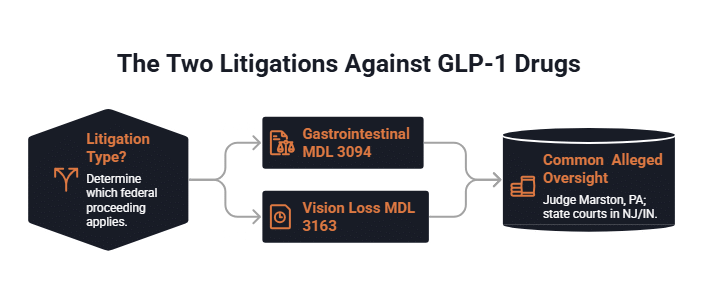
Two Separate Litigations, and Which One You Are In
Something worth understanding before you call: there are two federal proceedings here, not one, and they are on very different timelines.
The gastrointestinal cases are consolidated in MDL No. 3094, created in February 2024. That litigation is well developed. Expert discovery is complete, the parties have fully briefed the motions that determine which scientific testimony a jury will hear, and bellwether trial selection is the next major step.
The vision loss cases are in MDL No. 3163, created in December 2025, which is roughly two years behind. It remains in early procedural stages, with a special master recently appointed to manage discovery. Both are assigned to Judge Karen Spencer Marston in the Eastern District of Pennsylvania, and parallel state court proceedings exist in New Jersey and Indiana.
Neither has produced a trial, a verdict, or a settlement. Neither is a class action, and each patient keeps an individual claim. Any website quoting a GLP-1 settlement amount is inventing a number. Where you sit affects how quickly your case is likely to move, and it is a fair question to ask us.
The Stomach and Bowel Injury Cases
Gastroparesis means delayed gastric emptying. Food sits in the stomach far longer than it should, which produces nausea and vomiting hours after eating or even on an empty stomach, upper abdominal fullness and bloating, feeling full after a few bites, vomiting undigested food, reflux, and unintended weight loss or malnutrition when the body stops absorbing enough. For some patients the condition improves after stopping the drug. For others it does not, and that is the population this litigation concerns.
Roughly three quarters of the complaints in MDL 3094 allege gastroparesis, with most of the remainder alleging ileus or gallbladder injuries. In January 2025, the Ozempic label was revised to say the drug is not recommended for patients with severe gastroparesis, and a warning about severe gastrointestinal reactions was added. The label still does not say the drug can cause the condition, which is the gap plaintiffs are litigating. A warning that arrives after a patient is already injured also does nothing for that patient, which is the core of a failure to warn claim. The same theory drives other pharmaceutical litigation, including the Dupixent lawsuits, the Suboxone lawsuits, and earlier Invokana amputation claims.
We Have Recovered Over
$350 Million for Our Clients Nationwide.
Why Gastroparesis Claims Require a Gastric Emptying Study
This is the single most important thing on this page for anyone considering a stomach injury claim.
Judge Marston requires objective diagnostic testing to support a gastroparesis claim. In practice that means a gastric emptying study, a scintigraphy test where you eat a meal containing a small amount of radioactive tracer and imaging measures how quickly it leaves your stomach. It is the standard diagnostic test for the condition. A physician’s clinical impression, a chart note recording your symptoms, or a diagnosis code entered without testing will generally not be enough on its own.
If you have severe symptoms but have never had this test, that is a reason to talk to your gastroenterologist, not a reason to give up on a claim. The test can still be performed now, and the underlying condition does not disappear because nobody measured it earlier. If you have had the study, the report is the first document we will want to see.
Our lawyers are nationwide leaders in investment fraud cases.
The Vision Loss Cases
NAION is sometimes called an eye stroke. Blood flow to the optic nerve drops suddenly, the nerve is starved of oxygen, and the damage that follows is generally permanent. There is no established treatment that reverses it. Most people notice it on waking, which is characteristic of the condition.
Symptoms that warrant immediate medical attention include the following.
- Sudden painless loss of vision in one eye.
- Vision that is blurred, dimmed, or darkened on waking.
- A dark spot, shadow, or missing area in the visual field.
- Loss of peripheral vision on one side.
If you experience any of these, go to an emergency room or an ophthalmologist immediately. Some causes of sudden vision loss are treatable if caught within hours, and distinguishing among them is not something to do at home or on a website.
What the Research Shows on Vision Loss
The evidence linking semaglutide to NAION developed quickly, and it is stronger in some populations than others.
- A July 2024 study in JAMA Ophthalmology first raised the signal, examining patients at a Boston neuro-ophthalmology clinic and finding higher NAION rates among those prescribed semaglutide.
- A Danish cohort study of 424,152 people with type 2 diabetes found that semaglutide users had roughly twice the risk of NAION, a hazard ratio of 2.19, with the effect persisting after adjusting for other factors. Denmark’s annual first-time NAION cases roughly doubled after Ozempic entered the market.
- A 2025 JAMA Ophthalmology cohort study found an increased NAION risk among diabetes patients taking semaglutide, with the risk higher still in patients who also had high blood pressure.
The picture is not uniform. A large Danish and Norwegian analysis found no increased risk among patients taking semaglutide for obesity rather than diabetes, and the first study drew its patients from a specialty clinic where optic nerve disease is overrepresented. Diabetes and vascular disease independently raise NAION risk, which the defense will argue accounts for the association. A 2025 meta-analysis found the overall association statistically significant while noting these inconsistencies.
What Regulators Have Done
European regulators moved first. The European Medicines Agency opened a formal review of semaglutide in early 2025 and, by mid-2025, NAION had been added to European labeling as a very rare side effect. The World Health Organization issued a related safety signal the same year.
The U.S. label has not followed. FDA-approved prescribing information for Ozempic still carries no dedicated NAION warning, referring only to vision changes among potential serious effects. Plaintiffs argue that a manufacturer that warned European patients while leaving American patients uninformed made a choice, and that the choice is exactly what failure to warn law addresses.
Where the Litigation Stands
As of August 2026, roughly 3,900 cases were pending in the gastrointestinal MDL and more than 140 in the vision loss MDL, with both dockets growing monthly.
In August 2025, Judge Marston declined to dismiss 12 of the 17 counts brought against Novo Nordisk and Eli Lilly, allowing the core failure to warn theories to proceed. Since then the gastrointestinal litigation has completed expert depositions and briefed the motions that determine which scientific evidence reaches a jury. Those rulings are the hinge for this entire litigation. Bellwether trials could begin in late 2026 or 2027, and broad settlement discussions typically follow trial results rather than preceding them.
What Strengthens a GLP-1 Claim
These cases are built from records. Most of what matters already exists, and we can help obtain it.
- Prescription and pharmacy records establishing which drug you took, at what dose, and over what period. Insurance statements work when pharmacy records are incomplete.
- The gastric emptying study report for gastroparesis claims, as described above. For bowel obstruction, the imaging and any surgical records.
- The ophthalmology records for vision loss claims, including the NAION diagnosis, visual field testing, and optic nerve imaging.
- Records from before you started the drug, which matter more than people expect, because they establish that the condition was not already present.
- Documentation of what the injury cost you, including hospitalizations, procedures, missed work, and ongoing treatment.
What to Do If You Were Injured
- Do not stop a prescribed medication on your own. These drugs treat diabetes for many patients, and stopping abruptly carries real risk. Any change belongs in a conversation with your prescribing physician.
- Get evaluated and get the testing. For persistent stomach symptoms, ask your gastroenterologist about a gastric emptying study. For sudden vision changes, see an ophthalmologist immediately.
- Request your records now. Pharmacy records in particular become harder to obtain as time passes, especially if you have changed pharmacies or insurers.
- Write down your timeline. When you started the drug, the dose, when symptoms began, who you told, and what you were diagnosed with.
- Have someone review it. A short conversation is usually enough to tell whether your records support a claim.
Contact a GLP-1 Drug Injury Lawyer
If you were diagnosed with gastroparesis, a bowel obstruction, or NAION after taking Ozempic, Wegovy, Mounjaro, or Zepbound, the question is what your medical records actually show, and that is something we can assess without any commitment from you.
Meyer Wilson Werning handles pharmaceutical litigation against manufacturers with enormous resources and every reason to defend products this profitable. We will tell you honestly what we think of your case, including when we think the documentation is not there. Contact us by phone or through our online form for a free and confidential consultation.
Recovering Losses Caused by Investment Misconduct.