


Alleged investor losses exceeding $60 million were reported in the Bay Area following the January 21, 2025, indictment of Alexander Charles Beckman and Valerie Lau Beckman. The unsealed indictment outlines 25 federal counts, including wire fraud, securities fraud, conspiracy, and identity theft, showing how promotional gloss and incomplete disclosures can be misused in private fundraising.
The January 2025 indictment of Alexander and Valerie Lau Beckman offers a detailed look at how private startup fraud is allegedly constructed and sustained. Meyer Wilson Werning publishes analyses like this to help investors understand warning signs, know their rights, and take informed action. We are not currently pursuing direct claims against the GameOn founders, but if a licensed broker or financial advisor recommended this investment to you, that is a different matter entirely.
Detailed Allegations in the GameOn Indictment
The GameOn (also known as GameOn Technology or The ON Platform Inc.) allegations read like a manual for how a founder narrative can collapse. Prosecutors and the SEC claim the couple ran a years-long scheme to fabricate traction and stability through invented relationships, forged financials, and identity misuse.
In multiple instances, investors reviewed glossy “audit” reports before wiring funds—only to learn those reports were created with stolen logos and forged signatures. That gap between pitch and proof sits at the heart of investor harm in San Francisco.
Key Points of the Alleged Misconduct:
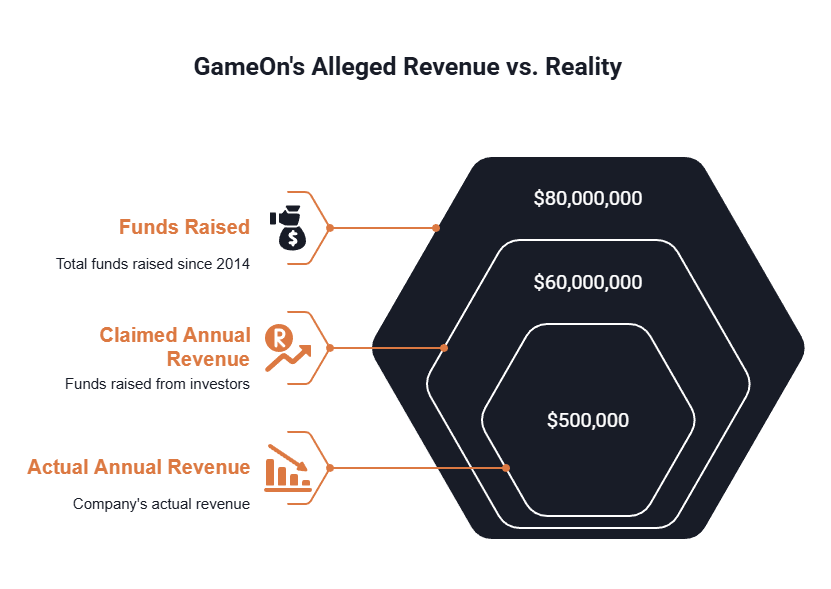
- Massive Fundraising Based on Fiction: Authorities allege Alexander Beckman, 41, raised over $60 million from investors (and more than $80 million since 2014) by falsely claiming tens of millions in annual revenue. In reality, the company’s annual revenue never exceeded $500,000, and it was never profitable.
- Phantom Partnerships: Beckman allegedly provided reports reflecting millions in recurring revenue from high-profile customers like Coca-Cola, the NBA, NHL, and PGA. However, GameOn often generated little to no revenue from these entities and was actually paying them fees to use their branded content.
- Identity Theft and Impersonation: To further the scheme, Beckman allegedly used the names and forged signatures of at least seven real people, including a GameOn CFO, bank employees, and sports league officials. He also created fake email accounts to impersonate financial consultants and send false data to the board.
- Fabricated Audits and Bank Statements: Valerie Lau Beckman (also known as Valerie Lau), 38, a licensed attorney, allegedly helped create and disseminate fake audit reports featuring the PricewaterhouseCoopers (PwC) logo. In one instance, she allegedly delivered a fake bank statement showing over $13 million when the actual balance was only $25.93.
- Personal Misuse of Funds: The couple allegedly diverted over $4 million of investor funds for personal expenses, including San Francisco residences, private school tuition, and their October 2023 wedding.

We Have Recovered Over
$350 Million for Our Clients Nationwide.
The Culture of Exaggeration in the Bay Area
Ambition and speed shape the local startup playbook. Mantras like “fake it till you make it” and “move fast and break things” can normalize aggressive claims that push beyond fair dealing. In crowded pitch rooms, charisma can outrun careful examination. This dynamic can blur the line between salesmanship and misrepresentation, especially when founders face make-or-break funding deadlines in the Bay Area.
Why San Francisco Startups Are High-Risk for Fraud:
- Extreme Competition for Funding: The pressure to secure capital can lead founders to omit weaknesses or misstate metrics.
- Technical Complexity: Investors may not fully grasp the underlying technology, allowing jargon to hide product flaws.
- Limited Regulation: Many startup investments occur through private offerings that lack the stringent disclosure requirements of public companies.
- Founder-Centric Branding: The “pedigree” and personality of a founder often drive investment decisions, which can enable personality-driven deception.
Red Flags Investors Should Watch For
Early warning signs often surface before a funding round closes. This checklist can guide a careful review:
- Repeatedly delayed product launches or “vague” milestones.
- Resistance to third-party audits or independent financial reviews.
- Secrecy regarding the engineering team or specific technical details.
- Pressure to make rapid investment decisions to avoid “missing out”.
- Inconsistent explanations during follow-up meetings or due diligence.
- Reluctance to provide written disclosures or supporting documentation for revenue claims.
Our lawyers are nationwide leaders in investment fraud cases.
Understanding Your Options After Startup Investment Fraud
When the line between ambition and fraud is crossed, investors are not without recourse. If a founder knowingly misrepresents material information—such as user growth, revenue, or partnerships—to secure funding, it may constitute securities fraud.
Legal remedies available to harmed investors generally include:
- Claims for Securities Fraud: Based on material misrepresentations or omissions.
- Breach of Fiduciary Duty: If the founder or board prioritized personal gain over the company’s interests.
- Negligent Misrepresentation: If facts were presented carelessly without a reasonable basis for truth.
- Arbitration: Many investment agreements require disputes to be resolved through arbitration, which can be a faster path to recovery than traditional litigation.
We Are The firm other lawyers
call for support.
How Meyer Wilson Werning Can Help
The GameOn allegations describe fabricated audits, forged signatures, and invented revenue figures that were presented to investors before they committed capital. For anyone who invested based on materials like these, the question of who is responsible extends beyond the founders. If a registered broker or financial advisor recommended GameOn, they had a legal obligation to investigate those claims before making that recommendation. A broker who failed to do that may have independent liability regardless of what the Beckmans are ultimately found to have done.
For over 25 years, Meyer Wilson Werning has recovered more than $350 million for investors harmed by brokers and firms that failed in exactly that duty. If a licensed financial professional recommended this investment to you, contact us today for a free and confidential consultation. You pay nothing unless we recover for you.
Frequently Asked Questions

What constitutes startup misrepresentation in San Francisco?
Misrepresentation occurs when a founder hides or distorts material facts tied to a securities sale. Common examples include false claims about users, revenue, partnerships, product readiness, or available cash.
What is the current status of the GameOn legal case?
As of January 2026, the case against Alexander Beckman and Valerie Lau Beckman is ongoing in the Northern District of California. A status hearing is scheduled for January 22, 2026, with a jury trial currently set to begin on October 5, 2026.
Can an attorney be held liable for startup fraud?
Yes. In the GameOn case, Valerie Lau Beckman, a licensed attorney, was indicted for her alleged role in creating fake audit reports and bank statements to deceive investors. She faces charges of conspiracy, wire fraud, securities fraud, and obstruction of justice.
How can investors recover losses from startup investment fraud?
Investors should immediately preserve all records, including pitch decks, emails, and financial statements. Consulting a San Francisco investment fraud attorney can help evaluate claims for recovery through arbitration or litigation.
Recovering Losses Caused by Investment Misconduct.