


Earlier this year, on March 2, 2026, FINRA published Regulatory Notice 26-06, asking for public comment on a range of possible changes to its arbitration rules, guidance, and procedures.
These ideas could affect how investors pursue arbitration in the future. For example, FINRA asked about whether some high-dollar or complex disputes could be sent to outside forums, whether punitive damages in arbitration could face new limits, and how arbitration panels are selected. Comments were due by May 1, 2026. As of Oct. 23, 2026, FINRA had not submitted formal proposals on these topics.
Investors who have suffered losses linked to broker or adviser misconduct should understand what FINRA is considering and how proposed FINRA rule amendments could affect their options for seeking recovery through the existing arbitration process.
What FINRA Is Considering in Regulatory Notice 26-06
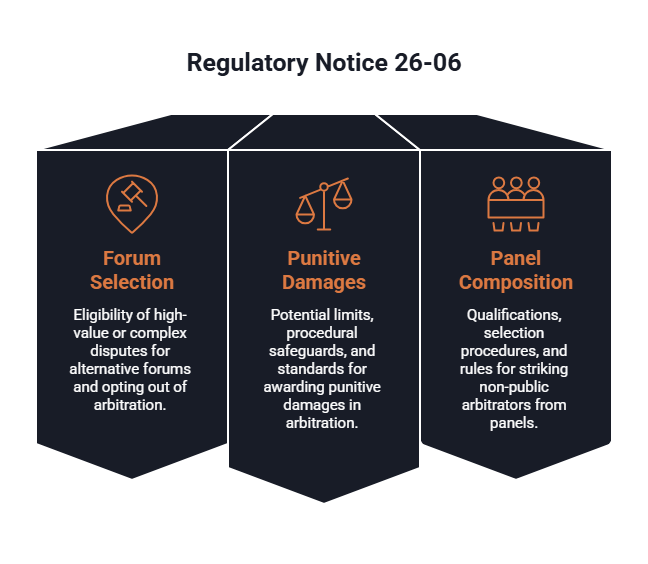
Regulatory Notice 26-06 is a request for comment, not a final rule. It asks for public input on several broad topics. Changes would happen only if, later on, any item becomes a formal rule proposal, gets SEC approval, and then takes effect.
Forum Selection for Large or Complex Claims
FINRA asked whether certain high-value, large, or complex disputes, including cases with institutional investors, should be eligible for alternative forums. The notice also raised whether parties should be able to opt out of arbitration by agreement for certain types of claims.
This does not mean that any investor claim is being moved to a different forum right now. Under the current rules, customer arbitration cases proceed under FINRA Rule 12200, and industry arbitration cases proceed under FINRA Rule 13200. Those rules remain in effect.
“Cost and transparency are the key questions with outside forums. FINRA arbitration publishes its awards and is often more affordable for individual investors. If large or complex cases move elsewhere, investors with significant losses could face higher costs and less visibility into how similar cases have been decided.” -David P. Meyer, Meyer Wilson Werning
Punitive Damages in Securities Arbitration
The notice requested comment on whether FINRA should change how punitive damages are handled in arbitration. Topics raised include possible limits or caps on punitive damages, extra procedural safeguards, higher standards for awarding punitive damages, a requirement that arbitrators issue explained decisions when awarding punitive damages, stronger arbitrator qualifications for cases where punitive damages are requested, and an internal process to review punitive-damages awards.
At the same time, the notice does not itself add any new limits on punitive damages. Under the current system, arbitration awards that include punitive damages are generally final and binding. Courts may vacate, modify, or correct an award only through limited judicial procedures.
“Punitive damages are rare, but their deterrent effect is essential. They are reserved for the most egregious misconduct, when compensatory damages alone may not be enough to hold a firm accountable or prevent future investor harm. Limiting this remedy would protect wrongdoers, weaken incentives for meaningful supervision, and leave investors bearing the consequences of misconduct.” -Courtney Werning, Meyer Wilson Werning
FINRA Arbitration Panel Selection and Composition
FINRA asked investors and other stakeholders to weigh in on arbitration panelists and how they are chosen. FINRA keeps separate rosters of public and non-public arbitrators. A non-public arbitrator is generally someone who is disqualified from the public roster because of current or past ties to the financial industry.
In customer disputes with three arbitrators, each side can currently strike any or all of the non-public arbitrators on the list for any reason, which can allow a party to seek an all-public panel. FINRA asked whether that option should be changed, whether the definition of “public arbitrator” should be revised to expand the public roster, and whether parties should be given more arbitrators to choose from by lengthening the lists and increasing strikes.
FINRA also asked about arbitrator qualifications and the roster makeup, including whether it should keep recruiting from a variety of backgrounds or focus more on specific expertise. Nothing has changed yet, and the current rules still apply. Since May 2025, new arbitrators must have a four-year degree and at least five years of full-time professional work experience.

We Have Recovered Over
$350 Million for Our Clients Nationwide.
SR-FINRA-2026-017: A Separate Arbitrator Selection Filing
Separate from Regulatory Notice 26-06, FINRA filed a narrower proposed rule change known as SR-FINRA-2026-017 proposed rule change. This filing focuses on specific procedures for how parties get, rank, strike, and use arbitrator lists, including how replacement arbitrators are selected.
SR-FINRA-2026-017 is not part of the broader rule review in Regulatory Notice 26-06. It is a separate filing with its own comment period and approval process. Investors considering a claim can review the firm’s investment loss recovery resources for additional background on how dispute-resolution procedures can affect recovery efforts.
How Meyer Wilson Werning Can Help
Meyer Wilson Werning represents investors nationwide in arbitration claims involving broker misconduct, unsuitable recommendations, and other securities-related losses. The firm’s attorneys help investors understand their rights under the arbitration framework that applies today, and how future changes could affect dispute resolution.
If you’ve lost money because of a broker or adviser, speak with a securities attorney about your options under the rules that apply today.
Our lawyers are nationwide leaders in investment fraud cases.
Frequently Asked Questions

What is FINRA Regulatory Notice 26-06?
Regulatory Notice 26-06 is FINRA’s March 2, 2026 request for public comment on possible changes to its arbitration rules, guidance, and processes. It is a consultation document that asks for input on topics including forum selection, punitive damages, and panel composition. It is not an adopted rule and does not change the current arbitration framework.
Could large or complex investor claims move outside FINRA arbitration?
FINRA asked whether certain high-value, large, complex, or institutional-investor disputes should be eligible for alternative forums or contractual opt-outs from FINRA arbitration. The notice itself does not move any claim or alter the current process. Any change would require a formal rule proposal, SEC review, and public comment before taking effect.
Could FINRA arbitration rules limit punitive damages?
FINRA asked for views on possible limits, caps, procedural safeguards, heightened standards, explained decisions, enhanced arbitrator qualifications, or an appellate process for punitive-damages awards. No such change has been adopted. Punitive damages remain available under current FINRA arbitration rules, and awards continue to be generally final and binding.
Is SR-FINRA-2026-017 the same proposal as Regulatory Notice 26-06?
No. SR-FINRA-2026-017 is a separate, narrower proposed filing that addresses how parties receive, strike, rank, and use arbitrator lists, including replacement-arbitrator selection. It should not be confused with the broader rule review in Regulatory Notice 26-06, which covers forum selection, punitive damages, and panel composition among other topics.
Recovering Losses Caused by Investment Misconduct.