


FINRA has censured Cape Securities Inc. and ordered the Georgia-based broker-dealer to pay $145,072.62 in restitution for failures that left senior investors heavily concentrated in GWG L Bonds and complex leveraged products. The sanctions follow nearly five years of supervisory breakdowns and repeated failures to respond to regulatory requests.
If you invested in GWG L Bonds or non-traditional exchange-traded products through Cape Securities or another brokerage firm, the experienced alternative investment loss attorneys at Meyer Wilson Werning can help evaluate whether your losses are the result of actionable misconduct. Contact us today for a free and confidential consultation, and you pay nothing unless we recover for you.
What FINRA Found: The Cape Securities AWC
According to FINRA’s Letter of Acceptance, Waiver, and Consent (AWC), Cape Securities violated Regulation Best Interest and FINRA’s supervisory rules across a period spanning July 2020 through March 2025.
The AWC’s central finding: Cape Securities failed to establish a supervisory system reasonably designed to achieve compliance with Reg BI’s care obligation. In plain terms, the firm’s oversight structure did not require brokers to verify that their recommendations actually served clients’ best interests before those recommendations were made.
FINRA issued a censure and ordered $145,072.62 in partial restitution plus interest. Cape Securities consented without admitting or denying the findings. No fine was imposed given the firm’s financial condition and its March 2026 filing to terminate FINRA registration. Cape Securities had been a FINRA member since 1976, with approximately 20 registered representatives across eight branches.

We Have Recovered Over
$350 Million for Our Clients Nationwide.
GWG L Bond Overconcentration: Five Seniors Affected
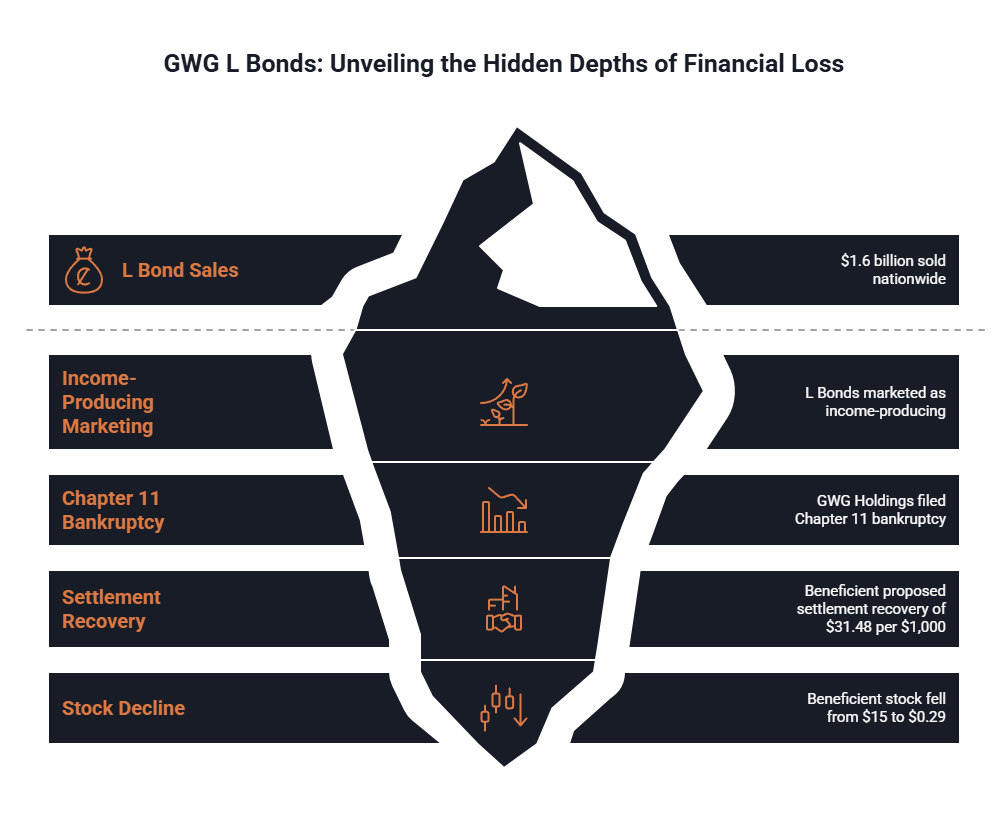
The most significant AWC finding involves GWG L Bonds, an unrated alternative investment issued by GWG Holdings. Cape Securities representatives recommended GWG L Bonds to six retail customers, five of them seniors with moderate risk tolerances. In certain cases, concentrations reached as high as 43% of a customer’s liquid net worth in a single, unrated, illiquid product.
GWG Holdings defaulted on its L Bond obligations and filed for bankruptcy in April 2022. For heavily concentrated investors, that default amplified losses well beyond what a properly diversified portfolio would have produced.
This pattern of senior investors with moderate risk profiles being placed into high-risk alternative investments without adequate supervision is one Meyer Wilson Werning attorneys have seen across GWG L Bond cases nationwide.
Leveraged ETP Losses and Long Holding Periods
The AWC also addresses harm involving non-traditional exchange-traded products (NT-ETPs), which are leveraged, daily-reset instruments not designed for long-term holding.
Cape Securities failed to supervise NT-ETP recommendations to four retail customers who held positions for up to 693 days, resulting in $15,072.62 in realized losses tied directly to compounding and time-decay risk. Daily-reset leveraged ETPs are built for short-term tactical use. In volatile or sideways markets, extended holding can erode value even when the underlying index performs reasonably. A firm with adequate procedures should flag long holding periods and require documentation justifying continued exposure. Cape Securities did not have those controls in place.
Our lawyers are nationwide leaders in investment fraud cases.
Repeated Failures to Respond to FINRA
FINRA cited Cape Securities for failing to timely respond to eight Rule 8210 information requests, materially delaying the regulatory investigation. Rule 8210 requires members to provide requested information promptly. Eight delayed responses reflect a pattern of non-cooperation, not an isolated oversight.
We Are The firm other lawyers
call for support.
What This Means for Investors With Losses
The conduct FINRA documented at Cape Securities can support investor recovery claims through FINRA arbitration. Investors who suffered losses connected to GWG L Bond overconcentration or long-held leveraged ETP positions may have claims for:
- Unsuitable recommendations based on risk profile, age, and investment objectives
- Overconcentration in a single issuer or illiquid alternative investment
- Failure to supervise under FINRA Rule 3110
- Regulation Best Interest violations under Exchange Act Rule 15l-1
The FINRA restitution is partial. Civil recovery through FINRA arbitration is a separate and available path for investors seeking the full measure of their losses.
How Meyer Wilson Werning Can Help
The investors described in this AWC did not take on excessive risk voluntarily. They were seniors with moderate risk profiles who trusted their broker to look out for them, and that trust was allegedly not honored.
With more than $350 million recovered for investors nationwide, Meyer Wilson Werning has spent over 25 years holding brokerage firms accountable for unsuitable recommendations, overconcentration, and supervisory failures. If you suffered losses through GWG L Bonds, leveraged ETPs, or other alternative investments recommended by Cape Securities or any broker-dealer, contact us today for a free and confidential consultation. You pay nothing unless we recover for you.
Frequently Asked Questions
What did FINRA find in its investigation of Cape Securities?
FINRA found that they failed to establish a supervisory system reasonably designed to comply with Regulation Best Interest. The firm failed to supervise GWG L Bond recommendations that resulted in concentrations as high as 43% of certain senior investors’ liquid net worth, allowed leveraged ETP holdings to extend up to 693 days, and failed to timely respond to eight Rule 8210 information requests.
What are GWG L Bonds and why did investors lose money?
GWG L Bonds were unrated alternative investments issued by GWG Holdings, backed by life insurance policies. They were marketed as income-producing products but carried significant credit risk and illiquidity. GWG Holdings filed for Chapter 11 bankruptcy in April 2022, leaving investors with substantial losses.
What is Regulation Best Interest and how does it protect investors?
Regulation Best Interest, adopted by the SEC in 2020, requires broker-dealers to act in the best interest of retail customers when making investment recommendations, evaluating risks, costs, and reasonable alternatives before proceeding. A failure to comply can support investor claims for compensation.
What are the risks of holding leveraged ETPs long-term?
Leveraged, daily-reset ETPs are designed to deliver a multiple of an index’s daily return over a single session. When held for extended periods in volatile or sideways markets, they can decay significantly even when the underlying index is flat. A broker or firm that allows customers to hold them for months without review may be failing its supervisory obligations.
Can I still pursue recovery even though FINRA already ordered restitution?
Yes. The FINRA restitution covers only specific amounts calculated during its investigation. Civil recovery through FINRA arbitration is a separate process where investors can pursue the full measure of their losses based on their own facts and circumstances.
Recovering Losses Caused by Investment Misconduct.