

The 2026 FIFA World Cup is the most-watched, most-attended, and most financially active sporting event ever staged. It is also, by every measurable indicator, the most significant proving ground for AI-powered cryptocurrency fraud that has ever existed. Not because fraud is new to major sporting events. It is not. But because 2026 is the first tournament where two forces that were developing separately, AI content generation and cryptocurrency as a mainstream payment method, arrived at full maturity at the same moment.
The result is a fraud ecosystem of a scale and sophistication that no previous event has produced, and that most investors and fans are not equipped to recognize.
This article is intended to be informational. If you or someone you know has lost money to a cryptocurrency scheme connected to the 2026 FIFA World Cup and a licensed financial professional, broker, or advisor facilitated your investment, the cryptocurrency fraud attorneys at Meyer Wilson Werning are reviewing claims now. Contact us today for a free and confidential consultation, and you pay nothing unless we recover for you.
Why Cryptocurrency Turned the World Cup Into a Fraud Accelerant
The conditions that make the World Cup attractive to fraudsters have always been present at major sporting events: enormous crowds, compressed decision-making, and millions of simultaneous financial transactions. What changed at the 2026 tournament is the payment infrastructure underneath those transactions.
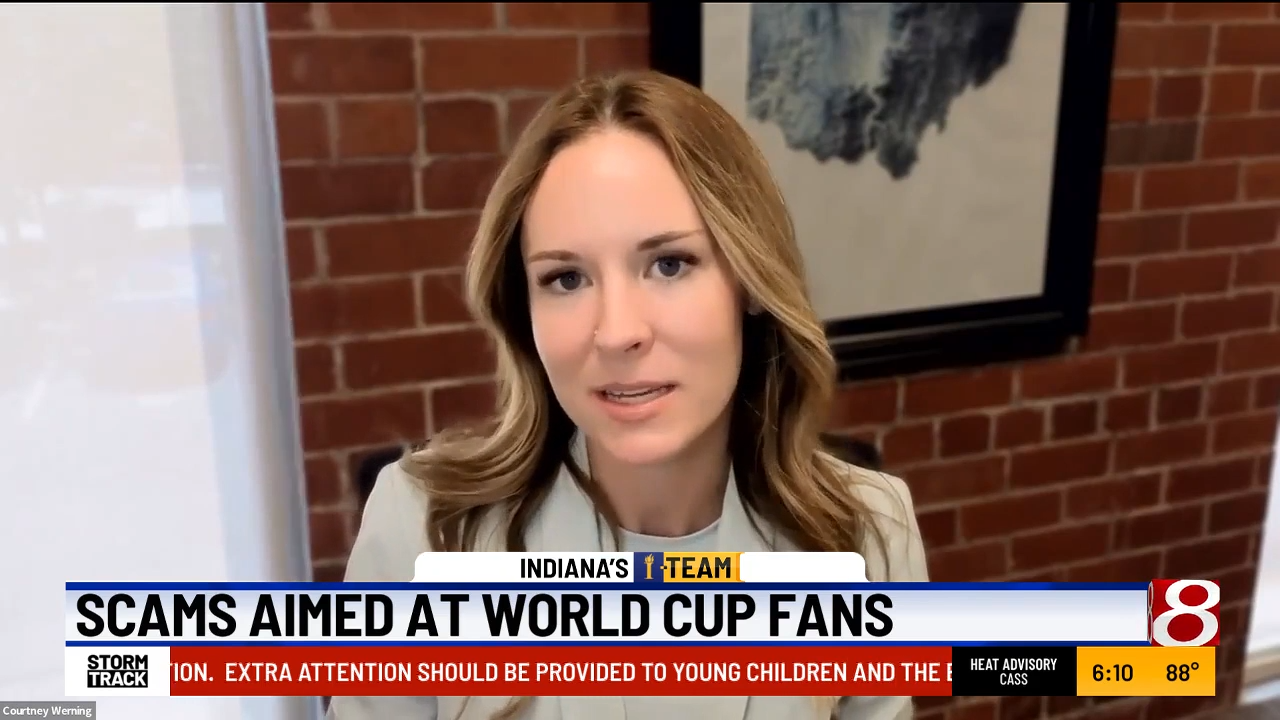
In her recent interview with WISH TV, Courtney Werning, named principal at Meyer Wilson Werning, said, “Cryptocurrency payments have become more mainstream, and it’s become more widely accepted for the use of crypto.”
The truth is exactly that: cryptocurrency has gone mainstream, and fraudsters built the infrastructure around this tournament accordingly. Fake ticketing platforms, fraudulent sportsbooks, and investment schemes tied to the World Cup are almost uniformly designed around crypto payment requirements. The reason is deliberate: a cryptocurrency payment, once processed, cannot be reversed. There is no bank to call, no chargeback mechanism, and no intermediary who can freeze the transaction. The moment funds move into a wallet controlled by a fraudster, the recovery window begins closing immediately.
CybelAngel identified 344 domains actively cloning the official FIFA World Cup 2026 website, with 125 live and serving content by early June. More than 13,000 FIFA-themed domains were registered between January and May 2026 alone, with roughly one in 41 already identified as suspicious or malicious before the first match. These are not opportunistic individual scams. They are organized operations built around the specific financial irreversibility that cryptocurrency provides.

We Have Recovered Over
$350 Million for Our Clients Nationwide.
What AI Removed That Once Protected Investors
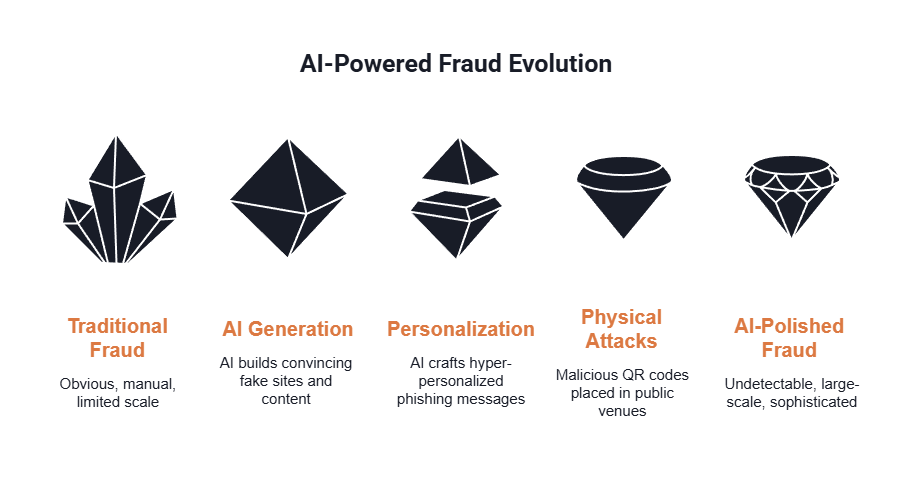
For years, investors had a working set of defenses against online fraud: suspicious domain names, grammatical errors, cloned websites with mismatched branding. AI has systematically eliminated each one.
The time barrier is gone. A convincing fraudulent platform with a professional interface, working deposit functions, and a customer service chatbot used to require weeks of technical work. AI tools can generate that infrastructure in hours. CybelAngel documented one such operation built entirely around the 2026 World Cup, complete with a Telegram promotional network, an automated deposit bot, and fabricated withdrawal confirmations designed to keep funds flowing in before the inevitable exit.
The language barrier is gone. Grammatical errors were once a reliable signal that a communication was fraudulent. Large language models now produce fluent, professional, appropriate text at no cost. Recorded Future’s Payment Fraud Intelligence team tracked 33 World Cup-themed scam domains connected to roughly 2,500 targeted online advertisements in April and May 2026 alone. These were personalized, well-written campaigns tied to real behavioral data about their targets.
The scale barrier is gone. Reaching enough people to make a fraud operation financially viable used to be the hardest part. AI has automated that problem entirely. Fraudsters now run personalized campaigns targeting millions of people simultaneously, with messages tailored to each recipient’s known interests, location, and browsing behavior.
What the Fraud Infrastructure Actually Looks Like in 2026
The scams surrounding the 2026 tournament have not changed dramatically in category, the difference is the technology behind them. Group-IB researchers identified more than 4,300 fraudulent domains impersonating FIFA’s official web presence, alongside six parallel fraud schemes and four independent threat actors operating before the tournament began. These are structured operations with promotional pipelines, automated transaction processing, and exit strategies built in from the start.
The deepfake component represents the most significant evolution. AI-generated video and audio content featuring athletes, FIFA officials, and recognized financial figures is being used to promote fake cryptocurrency investments and fraudulent token launches tied to World Cup branding. Cybersecurity researchers with specialized detection tools have documented difficulty distinguishing these fabrications from genuine appearances. For an ordinary investor encountering this content on social media, visual verification alone is no longer a reliable defense.
QR code attacks complete the physical dimension of this infrastructure. Malicious codes placed over legitimate ones in venues near match sites redirect fans to credential-harvesting pages or cryptocurrency wallet-draining sites. This tactic has been documented across U.S. host cities and requires no technical sophistication beyond placing a printed code in a crowded, distracted environment.
Our lawyers are nationwide leaders in investment fraud cases.
What This Means for Investors After the Final Whistle
The tournament ends. The fraud does not.
The investors most affected by World Cup-connected crypto fraud are not people who were careless. They are people who trusted what appeared to be a professional platform, responded to a promotion that looked legitimate, or acted on an endorsement they had no reason to question. The fraud infrastructure surrounding this tournament was built specifically to produce that outcome.
Investment loss recovery options in cryptocurrency fraud cases depend on how the fraud was structured, whether a licensed professional was involved, and how quickly legal action is initiated. Crypto.court, Meyer Wilson Werning’s dedicated cryptocurrency fraud platform, was built specifically to pursue these claims, including cases arising from fake investment platforms, wallet-draining schemes, and AI-generated fraud operations of exactly the kind documented around this tournament.
We Are The firm other lawyers
call for support.
Meyer Wilson Werning Is Watching This. We’re Ready to Act.
The investors we hear from most often are not reckless. They did exactly what you are supposed to do: they researched a purchase, followed a link that looked official, and trusted a platform that had been built specifically to earn that trust. By the time they realized something was wrong, the funds were gone and the site had vanished. That is the architecture of AI-powered fraud in 2026. It is designed to be believed.
For over 25 years, Meyer Wilson Werning has recovered more than $350 million for investors harmed by financial misconduct. This blog is designed to inform, not to imply that every World Cup-related loss is recoverable through legal action. If a licensed broker, financial advisor, or regulated platform was involved in your losses, we want to hear from you. Contact us today for a free and confidential consultation. You pay nothing unless we recover for you.
Frequently Asked Questions
Can you recover money lost to a cryptocurrency scam tied to the 2026 FIFA World Cup?
In many cases, yes, though recovery depends on how the fraud was structured and how quickly you act. When a licensed financial professional or platform with regulatory obligations facilitated the transaction, legal claims through FINRA arbitration or civil litigation may be available. Engaging an attorney early, before funds are moved again, is critical. The crypto fraud attorneys at Meyer Wilson Werning are reviewing World Cup-related claims now.
How can you tell if a FIFA World Cup ticket website is legitimate?
Legitimate FIFA 2026 tickets are only sold through FIFA’s official platform at FIFA.com. Treat any third-party site requesting payment via cryptocurrency, wire transfer, or Venmo as suspicious regardless of how professional it looks. Red flags include slight domain name variations, requests for crypto payment, no verifiable business address, and offers arriving via social media, text, or QR code.
What is a deepfake investment scam and how does it work?
A deepfake investment scam uses AI-generated video or audio to impersonate a real person and promote a fraudulent investment. At the 2026 World Cup, researchers documented deepfakes using players and FIFA-affiliated figures to push fake crypto token launches and betting platforms. If a video promotion caused you to send money to a platform that has since disappeared or refused withdrawals, contact Meyer Wilson Werning for a free and confidential consultation.
What should you do if you scanned a QR code at a World Cup venue and now suspect fraud?
Stop any further transactions immediately and do not re-enter login credentials. Document the QR code destination URL, any confirmation messages, and records of financial transfers. Contact your bank or crypto exchange to flag the transaction. Then contact an attorney. Time is a critical factor in preserving recovery options.
Is the FIFA World Cup crypto fraud connected to pig butchering scams?
Yes, the mechanics overlap significantly. Pig butchering scams involve building trust with a target before directing them into a fake investment platform that eventually refuses withdrawals. World Cup-themed schemes follow the same playbook, with the tournament providing a ready-made emotional hook that compresses the trust-building phase from weeks to hours. If you can no longer access funds sent through a World Cup-themed platform, that pattern is consistent with what our attorneys are currently investigating.
Recovering Losses Caused by Investment Misconduct.