


Meyer Wilson Werning is sharing its annual holiday fraud prevention tips to help investors and consumers stay ahead of seasonal scams as the 2026 holidays approach. With more than 75 years of combined experience representing investors nationwide, the firm’s attorneys say fraud complaints rise each holiday season, and they are offering ten practical ways to protect your money when scammers are most active.
Investors who are worried about suspicious activity in their accounts or pressure to move money quickly should learn more about investment loss recovery options.
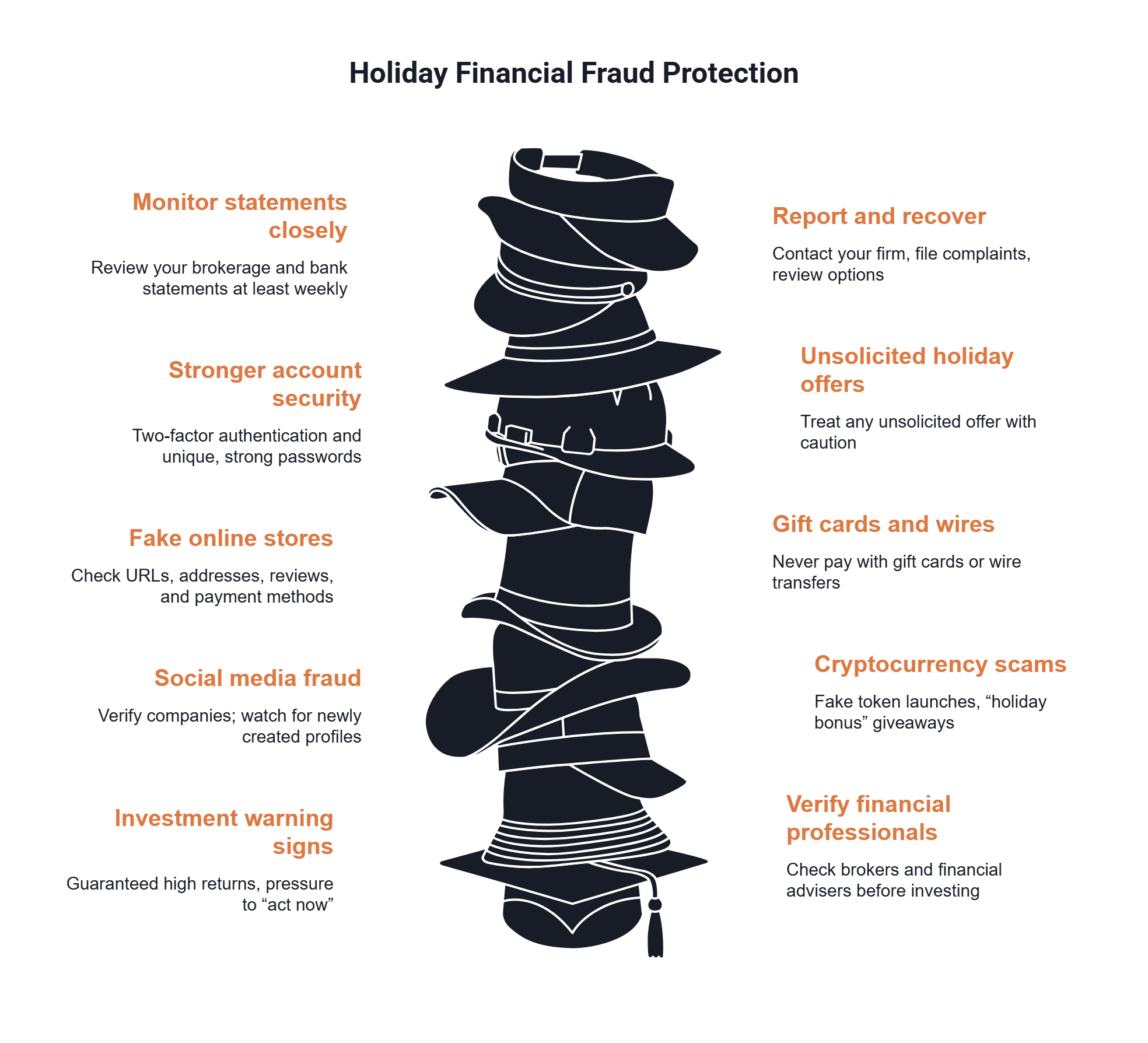
Why We’re Sharing These Tips Now
Fraud activity often increases in November and December for predictable reasons. People spend more, move money between accounts, and make quick decisions because of seasonal time pressure. The FTC holiday online-shopping scam guidance explains how scammers use the high volume of online transactions to slip fraudulent offers, impersonation scams, and phishing messages into the mix.
These same pressures affect investors. Year-end portfolio reviews, bonus-season windfalls, and tax-planning deadlines can create openings for bad actors who pitch “limited-time” opportunities or pose as legitimate financial professionals. The most recent FBI IC3 holiday shopping scam advisory has warned that criminals use seasonal urgency to push victims to move past the careful research that might otherwise expose a scheme.

We Have Recovered Over
$350 Million for Our Clients Nationwide.
Tip 1: Recognize Investment Scam Warning Signs
Holiday scams are not limited to fake shopping sites. Some of the most damaging fraud involves investment pitches that are made to look like legitimate year-end opportunities. Common investment scam warning signs include:
- Promises of guaranteed high returns with little or no risk
- Pressure to “act now” before a supposed deadline or limited offering closes
- Unsolicited contact from someone claiming to be a broker, adviser, or fund manager
- Requests to send money through unusual methods such as cryptocurrency, wire transfers, or prepaid cards
If an opportunity sounds too good to be true, treat that as a sign to slow down and verify before sending any funds.
Tip 2: Verify Brokers and Financial Advisers Before You Invest
Checking brokers and financial advisers before you invest is one of the best steps you can take. FINRA’s BrokerCheck tool helps you check a broker’s registration status, employment history, and any disclosed customer complaints, regulatory actions, or terminations. The SEC’s Investment Adviser Public Disclosure database provides similar information for registered investment advisers.
Our lawyers are nationwide leaders in investment fraud cases.
Tip 3: Guard Against Holiday Social Media Fraud
Holiday social media fraud protection starts with skepticism. Sponsored posts, influencer promotions, and direct messages that offer exclusive deals or investment returns are common ways scams spread. Fraudsters often create professional-looking profiles, use stolen photos, and make up testimonials to seem believable.
Before you click a link in a social media ad or message, verify the company on your own. Search for the business name along with terms like “scam” or “complaint.” Watch for profiles that were created recently, have little or no post history, or try to move the conversation to encrypted messaging apps, where it can be harder to track what they are doing.
We Are The firm other lawyers
call for support.
Tip 4: Watch for Holiday Cryptocurrency Scam Tactics
Holiday cryptocurrency scam prevention requires extra care because crypto transactions are hard to reverse after they are sent. Scammers often promote fake token launches, fraudulent trading platforms, and “holiday bonus” giveaways that require an upfront deposit.
Other common cryptocurrency scams include romance scams that intensify during the holidays, fake airdrops that ask for wallet access, and impersonation of well-known exchanges or public figures. If someone asks you to send cryptocurrency to unlock a larger payment or to guarantee a return, that is a scam. Investors who have lost money through cryptocurrency fraud may have legal options for recovery.
Tip 5: Spot Fake Online Stores and Shopping Deals
Fake websites that copy real retailers often show up during the holiday shopping season. These sites may advertise very large discounts, use domain names that closely match well-known brands, and disappear after they collect payment information.
Before buying from a site you do not know, check the URL closely for misspellings and unusual domain extensions. Look for a physical address and a real customer-support contact method. Read reviews from well-known sources instead of relying on testimonials posted only on the seller’s own website. When possible, pay with a credit card, because credit card transactions usually offer stronger fraud protections than debit cards, wire transfers, or payment apps.
Tip 6: Never Pay With Gift Cards or Wire Transfers
Real businesses and government agencies do not ask people to pay with gift cards, prepaid debit cards, or wire transfers. Scammers prefer these payment methods because they are hard to trace and nearly impossible to reverse.
If anyone contacts you during the holidays and demands quick payment through these methods, whether they claim to be from a retailer, a utility company, the IRS, or a brokerage firm, treat it as a red flag. Hang up, verify the organization’s contact information using a source you find yourself, and call using a number you look up independently.
Tip 7: Protect Your Financial Accounts With Stronger Security
The holidays are a good time to check the security settings on your brokerage accounts, bank accounts, and email. Turn on two-factor authentication when it is available. Use unique, strong passwords for each financial account, and do not reuse the same password across different sites.
Be careful when using public Wi-Fi to check balances or make transactions. If you get an email or text message that asks you to click a link and confirm your account information, do not click it. Instead, log in directly using your institution’s official website or mobile app. Also, set up a trusted contact with your brokerage or financial firm so someone you choose can be notified or assist if suspicious activity occurs.
Tip 8: Be Skeptical of Unsolicited Holiday Offers
Scammers often reach out around seasonal events and year-end planning times. You may get unsolicited calls, emails, or messages that offer exclusive investment opportunities, charitable donation matching, or limited-time financial products.
Treat any unsolicited offer with caution. Real investment opportunities do not require immediate decisions, and legitimate charities do not pressure donors through cold calls or threats. If someone says they work for your brokerage firm or financial adviser, verify who they are by contacting the firm directly using contact information from your own records, not the information in the message.
Tip 9: Monitor Brokerage and Bank Statements Closely
Holiday spending can make it easier to miss unusual charges or unauthorized transactions. Set up account alerts for large transactions, new logins, and changes to your contact information. Review your brokerage and bank statements at least weekly during the holiday period.
Watch for unfamiliar trades, transfers you did not authorize, or fees you do not recognize. Fraud is often easier to address when it is reported quickly. Most financial institutions and brokerage firms have fraud teams that can help freeze compromised accounts and start investigations.
Schemes such as Ponzi schemes sometimes fall apart around year-end when investors request withdrawals and learn that the promised funds are not available. If a firm delays or refuses a withdrawal request, take it seriously and get independent guidance.
Tip 10: Know How to Report and Recover From Financial Fraud
Recovering from financial fraud starts with acting quickly. If you think you have been targeted, take these steps:
- Contact your bank or brokerage firm right away to report the suspicious activity and request a freeze on affected accounts.
- File a complaint with the FTC at ReportFraud.ftc.gov.
- Report internet-related fraud to the FBI’s Internet Crime Complaint Center (IC3) at ic3.gov.
- If a registered broker or adviser is involved, file a complaint with FINRA or the SEC.
- Talk with an attorney experienced in investment-fraud recovery to review your options for pursuing lost funds.
Our legal team works with investors who have suffered losses due to fraud, misconduct, or negligence by financial professionals. Early action can help preserve evidence and support recovery efforts.
How Meyer Wilson Werning Can Help

Holiday scams can take many forms, from fake online stores to more advanced investment fraud that targets both new and experienced investors. Our team of attorneys across the country handles investment fraud cases and helps investors recover losses connected to broker misconduct, fiduciary breaches, Ponzi schemes, and other financial fraud.
If you or someone you know lost money to a scam this holiday season, Meyer Wilson Werning represents investors nationwide who were misled or misinformed by their financial professionals. The firm works on a contingency fee basis, meaning there is no cost to you if we cannot recover your losses. Contact us today for a free and confidential consultation.
Recovering Losses Caused by Investment Misconduct.