

In March 2026, a federal court entered final judgments against two former Ozy Media executives, closing the civil chapter of a case that exposed one of the more calculated fundraising frauds in recent memory. According to the SEC, the company raised approximately $50 million from investors by inflating its annual revenue by at least 100 percent every year between 2018 and 2020, fabricating business relationships, and misrepresenting the state of its fundraising. For investors who put capital into Ozy Media on the advice of a broker or financial advisor, the question now is not just what the company did wrong, but whether the professionals who recommended it did their job.
For investors who committed capital based on a broker or financial advisor’s recommendation, the SEC’s findings matter beyond the headlines. The attorneys at Meyer Wilson Werning are experienced in financial advisor negligence claims and can help you understand whether your losses are recoverable. Contact us today for a free and confidential consultation, and you pay nothing unless we recover for you.
What Led to the SEC v. Ozy Media Lawsuit?
The U.S. Securities and Exchange Commission (SEC) initiated litigation in February 2023, alleging that Ozy Media and its leadership team raised approximately $50 million from investors through a series of calculated misrepresentations. The Ozy Media litigation highlighted a pattern of behavior designed to make the company appear far more successful than it actually was.
Important Points Regarding the Alleged Misconduct
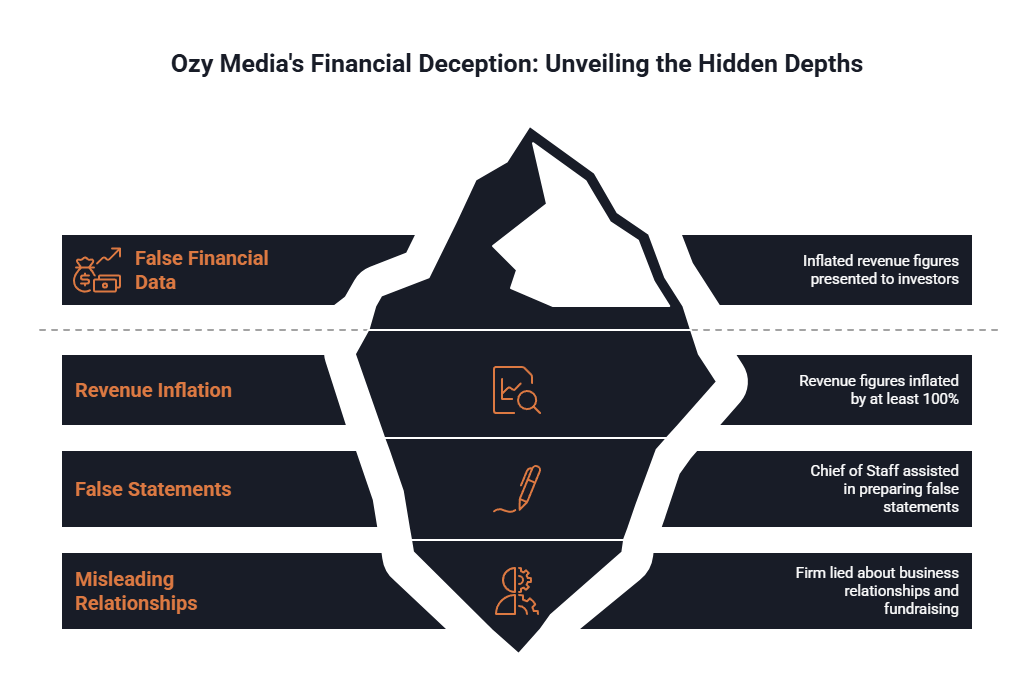
- Revenue Inflation: Former COO Samir Rao allegedly provided prospective investors with false financial data that vastly inflated Ozy Media’s annual revenue.
- Extent of Deception: The revenue figures were reportedly inflated by at least 100 percent every year between 2018 and 2020.
- Preparation of False Statements: Former Chief of Staff Suzee Han was accused of assisting in the preparation and dissemination of these false financial statements to entice investors.
- Misleading Business Relationships: In addition to financial data, the firm allegedly lied about its business relationships and the progress of its fundraising efforts to create a false sense of security and momentum.

We Have Recovered Over
$350 Million for Our Clients Nationwide.
Details of the Ozy Media Final Judgments
On March 18, 2026, the United States District Court for the Eastern District of New York entered final consent judgments against Samir Rao and Suzee Han, resolving the civil litigation against them. These Ozy Media final judgments serve as a formal acknowledgment of the violations and impose strict prohibitions on the defendants’ future activities in the financial markets.
Key Penalties and Restrictions
- Permanent Injunctions: Both Rao and Han are permanently enjoined from violating the antifraud provisions of Section 17(a) of the Securities Act of 1933, as well as Section 10(b) of the Securities Exchange Act of 1934 and Rule 10b-5.
- Officer and Director Bar: The court imposed a three-year bar against Samir Rao, preventing him from serving as an officer or director of any public company. This was a modification of a previous ten-year bar imposed earlier in the proceedings.
How Do Ozy Media Fraud Allegations Impact Investors?
When a company collapses under the weight of fraud allegations, investors are often left with worthless or significantly devalued interests. Because these funds were raised through private offerings, the lack of public transparency often makes it difficult for individual investors to spot red flags before the SEC or other regulators intervene.
Common Red Flags in Private Investment Fraud
- Unrealistic Revenue Growth: Promises of consistent, triple-digit growth that seem out of step with industry standards or economic conditions.
- Opaque Financial Reporting: A lack of audited financial statements or resistance to providing detailed, third-party verified data.
- High-Pressure Fundraising: Creating a false sense of “exclusivity” or “urgency” to prevent investors from conducting thorough due diligence.
- Inconsistencies in Leadership Backgrounds: Misrepresenting the qualifications or professional history of key executives.
Our lawyers are nationwide leaders in investment fraud cases.
Seeking Justice and Recovery Through Arbitration
If you invested in Ozy Media at the recommendation of a broker or financial advisor, you may have claims not only related to the fraud itself, but against the brokerage firm that failed to conduct proper due diligence before recommending the investment. Meyer Wilson Werning specializes in identifying where licensed financial professionals fell short of their obligations, including failures of due diligence, suitability, and supervision under FINRA rules and Regulation Best Interest.
Contact us today for a free and confidential consultation to discuss your situation. Our team is here to help you evaluate your claims and pursue the compensation you deserve.
We Are The firm other lawyers
call for support.
Frequently Asked Questions
What did the SEC Ozy Media litigation reveal about the company’s finances?
The investigation revealed that Ozy Media allegedly inflated its annual revenue by at least 100 percent between 2018 and 2020 to attract roughly $50 million in investor capital.
Who were the primary individuals named in the Ozy Media final judgments?
The final judgments entered on March 18, 2026, applied to former COO Samir Rao and former Chief of Staff Suzee Han.
Can Samir Rao still work as an executive for public companies?
Under the final judgment, Samir Rao is barred from acting as an officer or director of any public company for a period of three years.
What legal avenues do I have if I lost money in Ozy Media?
Investors may pursue recovery through arbitration or litigation by filing claims based on misrepresentation, fraud, or the failure of financial advisors to disclose the risks of the investment.
Why is the IAPD important when researching investment advisors?
The Investment Adviser Public Disclosure (IAPD) system allows you to verify the registration and disciplinary history of the professionals managing your money, helping you avoid those with a history of misconduct or regulatory actions.
Recovering Losses Caused by Investment Misconduct.