


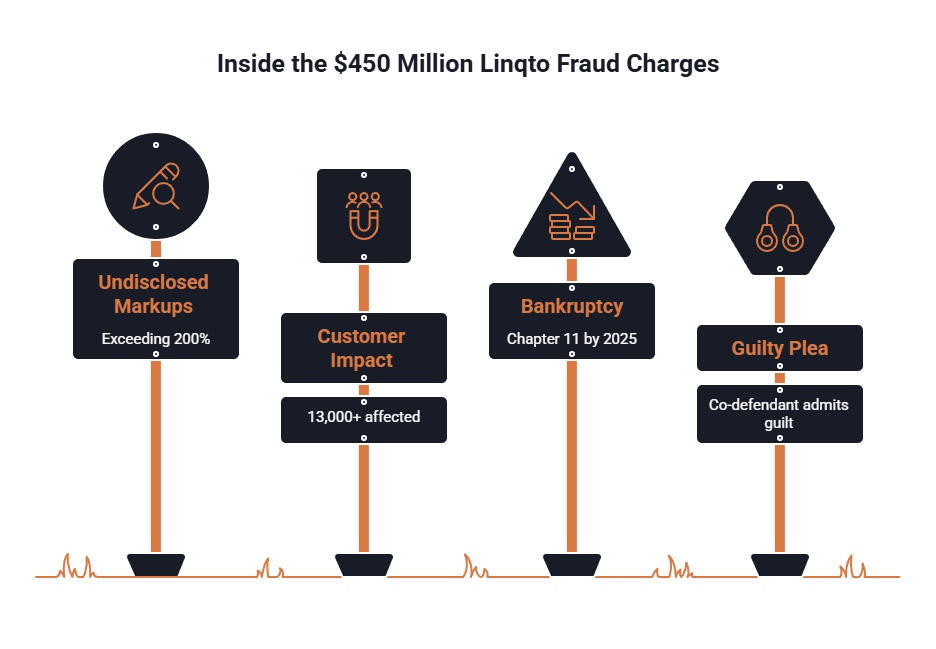
William Sarris, the 75-year-old founder of pre-IPO investment platform Linqto, faces federal criminal charges in the Southern District of New York for his alleged role in a scheme that drew more than $450 million from over 13,000 customers between 2020 and 2025.
According to the unsealed indictment, Sarris allegedly charged undisclosed markups on private-company shares sold through the platform, sometimes exceeding 200%, while systematically concealing those charges from customers. The charges remain allegations, and Sarris is presumed innocent unless and until proven guilty in court.
If a licensed financial professional, broker, or adviser facilitated your investment in Linqto or a similar platform, the alternative investment loss attorneys at Meyer Wilson Werning are reviewing claims now. Contact us today for a free and confidential consultation, and you pay nothing unless we recover for you.
What Do Current Disclosures Report About William Sarris?
Linqto Capital LLC was registered as a broker-dealer with FINRA under CRD #314557, and Linqto Investment Management was separately registered as an SEC-registered investment adviser under CRD #318630. However, no individual FINRA BrokerCheck profile for William Sarris has been located in available public regulatory databases, meaning personal disclosure records such as customer complaints, regulatory actions, or termination notices linked to Sarris individually are not confirmed.
What is clear from the federal indictment and related filings is the scope of the allegations:
- Securities fraud, wire fraud, broker-dealer fraud, and conspiracy: According to the DOJ press release detailing the charges against Linqto founder William Sarris, Sarris is charged with multiple counts related to the alleged concealment of excessive markups from Linqto customers between 2020 and 2025.
- Guilty plea by co-defendant: Joseph Endoso, Sarris’s former second-in-command at Linqto, pled guilty to an Information on August 27, 2026, in connection with his role in the alleged scheme, according to the same DOJ release.
- Class-action litigation: A separate civil securities complaint, Maxwell et al. v. William Sarris (No. 1:25-cv-5643, S.D.N.Y.), al0leges unregistered broker-dealer activity, excessive markups, fraudulent offerings, deficiencies in the SPV (special purpose vehicle) structure used for investor purchases, and non-exempt unregistered securities offerings.
Prosecutors and plaintiffs allege that Linqto customers were systematically overcharged for pre-IPO shares, were misled about share pricing and availability, and in some cases may not have actually owned the securities they believed they purchased.

We Have Recovered Over
$350 Million for Our Clients Nationwide.
What Do Past Regulatory Actions and Bankruptcy Indicate for Linqto Investors?
Linqto marketed itself as a platform that democratized access to pre-IPO shares in high-profile private companies such as Anthropic, Ripple, and SpaceX. According to the indictment and reporting from Reuters and other outlets, Sarris allegedly manufactured false scarcity in shares of these companies to increase demand and boost both Linqto’s revenue and the value of his own ownership stake.
By mid-2025, Linqto collapsed into Chapter 11 bankruptcy. Current management’s public communications have stated that prior executives, including William Sarris, allegedly engaged in extensive fraud and unethical actions that exploited more than 13,000 customers and contributed directly to the company’s downfall. Investors who review their investment loss recovery options for Linqto and other pre-IPO platforms may find that several paths to potential compensation exist, but any recovery depends on individual circumstances, the status of criminal and civil proceedings, and applicable limitation periods.
FINRA is also reportedly investigating the broker-dealer arm of Linqto. According to FINRA-related reporting, internal investigations revealed that some customers never owned the securities they believed they purchased, and that some investors may not have been eligible to buy stakes in private companies in the first place. This investigation remains ongoing.

Pre-IPO Markup Fraud, Broker-Dealer Violations, and Reg BI
The Linqto case fits a broader pattern of alleged pre-IPO investment fraud that the SEC has repeatedly warned investors about. Pre-IPO investments carry unique risks because the shares are not traded on public exchanges, pricing is opaque, and verifying ownership and fair value is difficult for individual investors. The SEC Investor Alert on pre-IPO investment scams and common red flags identifies several red flags directly relevant to the Linqto allegations, including pressure to act quickly, claims of guaranteed access to limited shares, and a lack of transparent pricing information.
The Linqto allegations also share characteristics with other recent pre-IPO fraud schemes. Investors who lost money in similar offerings involving firms such as Forge or Sestante Capital can find additional context at the page covering pre-IPO investment fraud patterns involving Forge and Sestante Capital.
Our lawyers are nationwide leaders in investment fraud cases.
How Meyer Wilson Werning Can Help
The Linqto case is not simply a story about one platform’s collapse. It is a case in which more than 13,000 investors allegedly paid prices that were never disclosed to them, may have held securities they never actually owned, and in some cases may have been ineligible to participate in the offerings at all. For investors whose losses were compounded by a broker or financial adviser who recommended Linqto-related products without adequate due diligence, the criminal case against Sarris is the beginning of the picture, not the end. Individual claims against the recommending firm may be available through arbitration or court, independent of the bankruptcy proceedings and regardless of how the criminal case resolves.
With more than $350 million recovered for investors nationwide, Meyer Wilson Werning has spent over 25 years pursuing claims against brokers, advisers, and financial institutions that failed to protect the investors who trusted them. If a licensed financial professional, broker, or adviser facilitated your investment in Linqto or a similar platform, contact us today for a free and confidential consultation. You pay nothing unless we recover for you.
We Are The firm other lawyers
call for support.
Frequently Asked Questions
What is William Sarris accused of in the Linqto pre-IPO fraud case?
According to a federal indictment unsealed by the U.S. Attorney’s Office for the Southern District of New York, Linqto founder William Sarris is charged with securities fraud, broker-dealer fraud, wire fraud, and conspiracy in connection with an alleged scheme at the Linqto pre-IPO investment platform between 2020 and 2025. Prosecutors allege he concealed exorbitant markups from customers, sometimes exceeding 200%, and built Linqto’s business on misrepresentations. These charges remain allegations, and Sarris is presumed innocent unless and until proven guilty in court.
How did the alleged Linqto pre-IPO markup scheme work?
The DOJ indictment and related reporting allege that Sarris and others used Linqto’s platform to charge undisclosed markups on private-company shares sold to customers, manufactured false scarcity in high-demand names such as Ripple, Anthropic, and SpaceX, and misrepresented prices and inventory to boost company revenue. The scheme allegedly drew in over $450 million from more than 13,000 customers before Linqto collapsed into Chapter 11 bankruptcy by mid-2025.
Does Regulation Best Interest apply to brokers who recommended Linqto investments?
Yes. Because the alleged misconduct occurred between 2020 and 2025, any registered broker-dealer representative who recommended Linqto-related investments to retail customers during that period was subject to Reg BI. That regulation requires brokers to act in the customer’s best interest when making a recommendation, and evidence of undisclosed markups, misrepresented ownership, or sales to ineligible investors could support claims against the recommending broker in FINRA arbitration or court.
Can Linqto investors recover losses from the alleged $450 million pre-IPO fraud?
Several recovery avenues may be available. Investors are already pursuing securities class actions such as Maxwell et al. v. William Sarris in federal court, a Chapter 11 bankruptcy process is underway that may provide distributions to creditors, and individual investors may have separate claims against brokers or advisers who recommended Linqto products. However, any recovery depends on the specific facts of each case, the status of ongoing proceedings, and applicable limitation periods.
Recovering Losses Caused by Investment Misconduct.