


William Carlton is a former investment adviser representative whose alleged misconduct spanned roughly seven years and affected an unknown number of advisory clients. According to the U.S. Department of Justice, Carlton pleaded guilty on September 17, 2026, to securities fraud for running a cherry-picking trade-allocation scheme while associated with Cetera Advisor Networks and its predecessor firm, First Allied Securities.
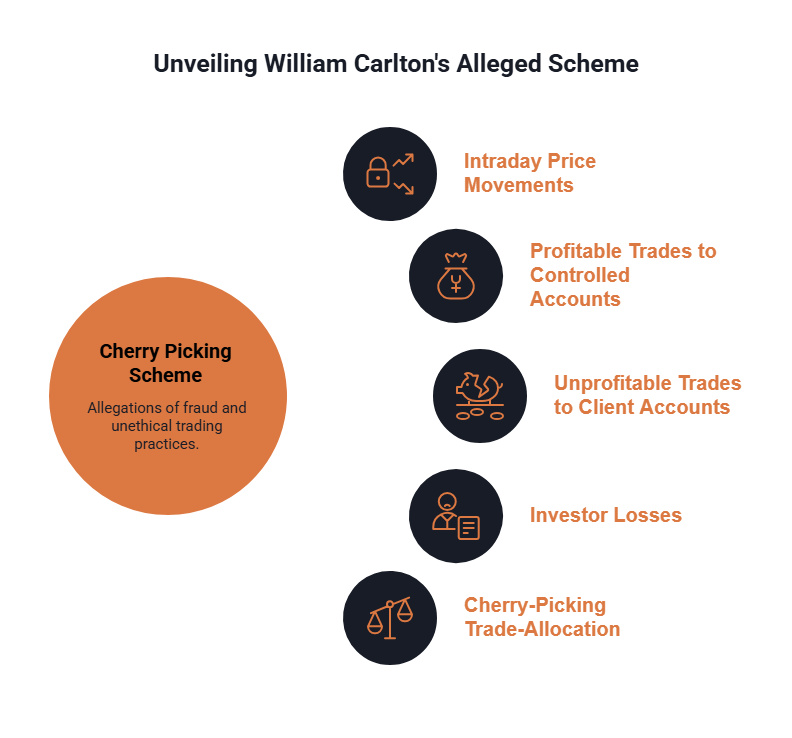
The SEC had previously filed a civil complaint in 2024 alleging that Carlton observed intraday price movements before directing profitable trades to accounts he controlled and unprofitable trades to his clients’ accounts. Investors who held accounts managed by Carlton during the period covered by these proceedings may have experienced losses they did not fully understand at the time.
Investors affected by potential broker misconduct can learn more about how these allegations may affect their accounts and what options are available.
What Do Current Disclosures Report About William Carlton?
William David Carlton (CRD# 1215541) currently carries at least nine customer complaint disclosures on record according to a FINRA BrokerCheck profile search dated September 6, 2026. Those disclosures reflect a pattern of reported investor concerns that grew significantly after federal regulators became involved in his case.
The SEC filed a civil complaint (Case No. 2:24-cv-01542) in 2024 alleging that Carlton engaged in a cherry-picking scheme from approximately January 2015 through August 2022. According to the SEC complaint against William D. Carlton, Carlton allegedly generated approximately $5.3 million in illicit first-day profits for accounts he controlled while causing more than $6.4 million in first-day losses to his investment-advisory clients.
The later Department of Justice announcement of Carlton’s guilty plea reported that Carlton admitted to securities fraud and that the scheme generated approximately $6 million in ill-gotten gains. Carlton faces a maximum statutory penalty at sentencing, and the DOJ announcement referenced forfeiture and restitution obligations. A sentencing date has been set, though Carlton had not yet been sentenced as of the date of the DOJ release.


We Have Recovered Over
$350 Million for Our Clients Nationwide.
What Do Past Settlements and Regulatory Actions Indicate for Cetera and First Allied Investors?
Carlton operated under the supervision of two broker-dealer firms during the period covered by the SEC’s civil allegations: First Allied Securities and, following a corporate transition, Cetera Advisor Networks. Both firms had supervisory responsibilities over Carlton’s trading activity under FINRA Rule 3110, which requires member firms to establish, maintain, and enforce written supervisory procedures reasonably designed to detect and prevent misconduct.
According to regulatory records, both First Allied Securities and Cetera Advisor Networks were each assessed a $200,000 penalty in connection with supervisory findings related to Carlton’s conduct. These penalties raise questions about whether the firms identified red flags in Carlton’s trading patterns and, if so, whether they acted on those warnings in a timely manner.
How Meyer Wilson Werning Can Help
Meyer Wilson Werning represents investors nationwide who have been affected by broker and adviser misconduct, including cherry-picking and trade-misallocation schemes like the one alleged against William Carlton. With more than 75 years of combined experience and over $350 million recovered for clients across the country over the last 26 years, the firm has a proven track record of holding brokers and their supervising firms accountable.
The legal team at Meyer Wilson Werning can evaluate account records, trade confirmations, and allocation data to determine whether a client’s losses may be recoverable through arbitration or other legal proceedings. The firm works on a contingency fee basis, meaning if they are not able to recover your losses, their services are at no cost to you.
Contact us today for a free and confidential consultation to discuss your options.
Our lawyers are nationwide leaders in investment fraud cases.
Frequently Asked Questions

Who is William Carlton?
William David Carlton is a former investment adviser representative and broker registered under CRD number 1215541. According to the U.S. Department of Justice, he pleaded guilty on September 17, 2026, to securities fraud involving a cherry-picking trade-allocation scheme while associated with Cetera Advisor Networks and its predecessor, First Allied Securities.
What did William Carlton plead guilty to?
According to the DOJ, Carlton pleaded guilty to securities fraud for allocating profitable trades to his own accounts and unprofitable trades to his investment-advisory clients’ accounts after observing how those trades performed during the trading day. The SEC’s earlier civil complaint alleged this misallocated trade scheme generated approximately $5.3 million in illicit profits for Carlton and caused more than $6.4 million in losses for his clients.
What is cherry-picking in investing?
Cherry-picking is a fraudulent trade-allocation practice in which a broker or adviser observes how trades perform before deciding where to allocate them. Profitable trades are directed to the adviser’s personal or favored accounts, while unprofitable trades are allocated to client accounts. Regulators and prosecutors treat this as a form of securities fraud.
What should investors do if they had an account managed by William Carlton?
Investors should review their account statements, trade confirmations, and allocation records covering the period from approximately January 2015 through August 2022. Comparing the performance of their account against the FINRA BrokerCheck disclosures for Carlton can help identify potential irregularities. Consulting with an attorney who handles investment fraud claims can help determine whether losses may be recoverable.
Recovering Losses Caused by Investment Misconduct.