


Barbara A. Hirshfield, an 83-year-old Lexington, Massachusetts resident who owned and operated Ideal Financial Services, Inc. and Ideal Financial Holdings, pleaded guilty on September 3, 2026 to five federal counts of wire fraud connected to an approximately $10 million Ponzi scheme.
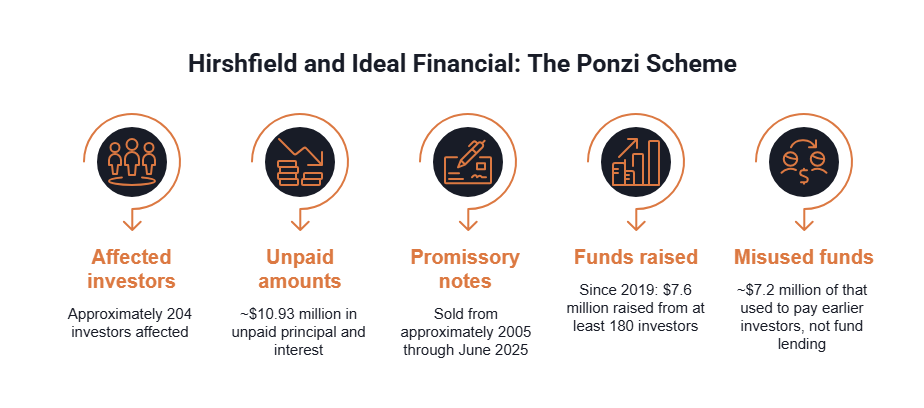
According to the U.S. Attorney’s Office for the District of Massachusetts, Hirshfield allegedly raised money from investors by offering high-yield promissory notes from about 2005 through June 2025, promising returns tied to automobile and small-loan financing. About 204 investors are believed to have been affected, with losses totaling about $10.93 million.
Because neither Hirshfield nor the Ideal entities operated as FINRA-registered broker-dealers, Meyer Wilson Werning cannot pursue claims directly against them. But if a licensed broker, financial adviser, or registered firm recommended these promissory notes to you, you may have other legal options, and an experienced Ponzi scheme attorney may be able to help.
What Do Current Disclosures Report About Barbara Hirshfield?
Neither Barbara Hirshfield nor either Ideal entity appears to have operated as a FINRA-registered broker-dealer. No CRD number or BrokerCheck profile has been found for Hirshfield or the Ideal entities. The businesses worked as a state-regulated lender and seller of investment promissory notes, not as a licensed brokerage.
The public enforcement record includes two related actions:
- Federal: The U.S. Attorney’s Office charging announcement describes five wire fraud counts. Prosecutors say the scheme raised about $10 million from more than 200 investors. They also state total losses were about $10,930,940 across roughlyy 204 victims, with more than 25 of them suffering major financial harm. Hirshfield pleaded guilty on September 3, 2026 and faces up to   years per count**, three years of supervised release, fines, and restitution.
- State: The Massachusetts Securities Division’s administrative complaint alleges that since 2019, Ideal raised more than $7.6 million from at least 180 investors, and about $7.2 million of that money was used to pay other investors instead of funding legitimate lending. The Division issued a cease-and-desist order. Hirshfield reportedly invoked the Fifth Amendment during the state proceeding.
Taken together, these filings describe a long-running scheme where investor money was allegedly passed from new buyers to pay earlier investors. That is a key feature of a Ponzi scheme.

We Have Recovered Over
$350 Million for Our Clients Nationwide.
What Do Past Regulatory Actions Indicate for Ideal Financial Services Investors?
Ideal Financial Services, Inc. was a family-owned lending business in West Springfield, Massachusetts, with reported community roots dating to the 1940s. Ideal Financial Holdings was the related business that sold the high-yield promissory notes described in the allegations. The long local business history appears to have helped investors feel more confident.
The regulatory record was less stable. According to media reports and the state administrative complaint, Massachusetts banking regulators raised concerns about Ideal’s finances as early as 2012. By about 2014, Ideal had lost its authority to issue motor vehicle and small loans. Hirshfield allegedly continued selling promissory notes without telling investors that Ideal no longer had that authority.
The scheme moved toward collapse when cash flow slowed. Investors began reporting missed or irregular interest payments in fall 2024. Payments stopped completely by early 2025. By spring 2025, the Massachusetts Securities Division had received dozens of investor complaints. Then in June 2025, Hirshfield allegedly told investors she could not repay outstanding obligations, leaving about 204 victims with nearly $10.93 million in unpaid principal and interest.
What the Ideal Financial Wire Fraud Charges Mean for Investors
Hirshfield pleaded guilty to five counts of wire fraud, and each count carries a possible sentence of up to 20 years in prison. A Ponzi scheme tends to collapse when new investor money is no longer enough to pay amounts owed to earlier investors. Investors who invested later often face the biggest losses. The Massachusetts Securities Division’s administrative complaint also adds a state securities-law issue, alleging the promissory notes were securities sold in violation of registration and anti-fraud rules.
Whether Regulation Best Interest applies depends on whether a licensed broker-dealer recommended the notes to you. Ideal was not a FINRA-registered brokerage, but Reg BI can apply to any registered representative who recommended these notes to a retail customer. If you are not sure whether a broker was involved, you can research the recommendation through the broker complaint database.
If you find that a licensed professional played a role, you may have grounds for claims related to broker misconduct or claims through arbitration for losses tied to a Ponzi scheme. Learning what to do if you suspect a Ponzi scheme can help affected investors take action before deadlines pass.
Our lawyers are nationwide leaders in investment fraud cases.
How Meyer Wilson Werning Can Help
For about two decades, investors in the West Springfield community put their trust and savings into promissory notes sold by a family business with deep local roots. What the public record now alleges is that this money was not used to support legitimate lending, but instead was being reused from new investors to pay earlier investors.
By early 2025, when payments stopped, about 204 investors were left with nearly $10.93 million in unpaid principal and interest. The criminal case may lead to restitution, but affected investors may also have separate civil claims, especially if a licensed financial professional or adviser recommended these notes without proper due diligence or without disclosing known regulatory problems with Ideal’s lending operations.
Meyer Wilson Werning is not able to pursue claims directly against Hirshfield or the Ideal entities. However, if a licensed financial professional, broker, or adviser recommended promissory notes from Ideal Financial Services or Ideal Financial Holdings and you suffered losses, you may have independent legal options against that party.
Contact us today for a free and confidential consultation.
We Are The firm other lawyers
call for support.
Frequently Asked Questions

Who is Barbara Hirshfield and what is the Ideal Financial Services Ponzi scheme?
Barbara A. Hirshfield is an 83-year-old Massachusetts resident who owned and operated Ideal Financial Services, Inc. in West Springfield, Massachusetts, and the related entity Ideal Financial Holdings. Federal prosecutors and the Massachusetts Securities Division allege she ran these entities as a Ponzi scheme, selling promissory notes to investors and using new investor money to pay interest and principal to earlier investors rather than funding legitimate lending activities.
How much money was involved in the Ideal Financial Services fraud and how many investors were affected?
According to federal charging documents, the alleged scheme involved approximately $10 million in investor funds and affected more than 200 investors, with total losses of about $10.93 million. The Massachusetts Securities Division’s separate complaint alleges that since 2019 alone, Ideal raised over $7.6 million from at least 180 investors, with approximately $7.2 million of those funds used to pay other investors.
What charges does Barbara Hirshfield face for the Ideal Financial Services Ponzi scheme?
Hirshfield pleaded guilty on September 3, 2026 in U.S. District Court in Springfield, Massachusetts to five counts of wire fraud. She faces up to 20 years in prison per count, three years of supervised release, fines, and restitution to investors. Prosecutors have recommended a sentence of four years imprisonment and full restitution of $10,930,940, though the defense retains the right to argue for a lesser sentence.
Recovering Losses Caused by Investment Misconduct.