


According to cybersecurity researcher Jeremiah Fowler of ExpressVPN, a massive Binance-related account data leak has reportedly exposed approximately 149,404,754 sets of login credentials. The sensitive information, which includes access to roughly 420,000 Binance accounts, was discovered in an unprotected 96 GB dataset stored in a publicly reachable database. This exposure appears to be part of a broader “social media login spill” that could jeopardize crypto users and traders across multiple global platforms.
If you believe your assets or personal information may be at risk due to this or other unauthorized access incidents, our experienced Cryptocurrency Hacking & Theft Lawyers can help you understand your legal options. At Meyer Wilson Werning, we represent victims of financial fraud and system failures. If you or someone you know has suffered significant investment losses, reach out to us today for a free and confidential consultation to determine if you have grounds for recovery.
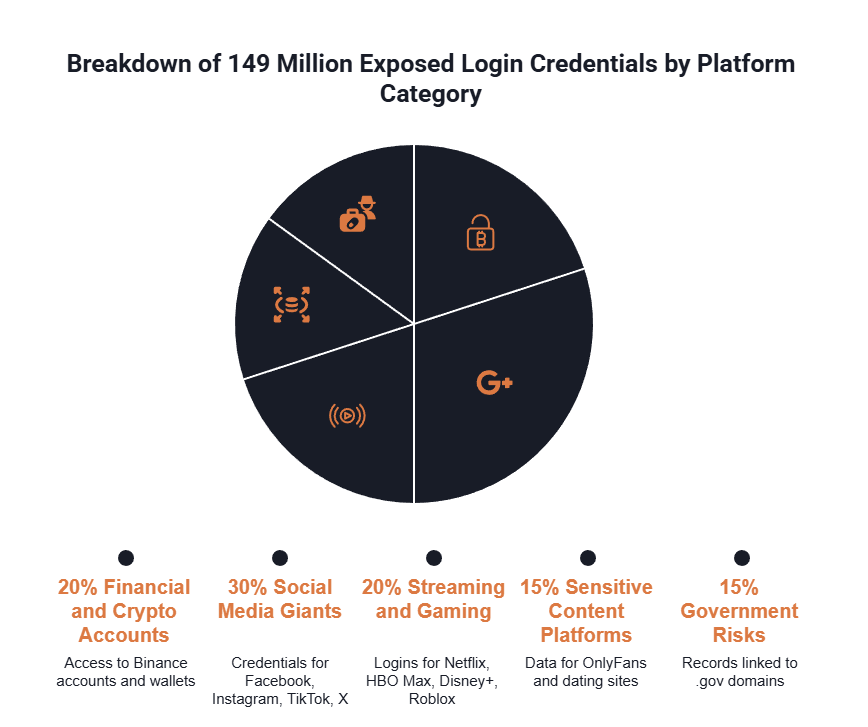
Inside the Reported Binance-Related Leak and the 96 GB Database
The exposed dataset, discovered in January 2026, reportedly contained 149,404,754 distinct login credentials and 96 GB of raw data. The database was open to the public, lacked any form of encryption or password protection, and stored critical information such as emails, usernames, passwords, and account login URLs.
Important Points Regarding the Leaked Records:
- Financial and Crypto Accounts: The leak specifically exposed access to 420,000 Binance accounts, crypto wallets, banking logins, and credit card portals.
- Social Media Giants: Credentials linked to Facebook (reported at 17 million), Instagram, TikTok, and X (formerly Twitter) were identified in the database.
- Streaming and Gaming: Logins for Netflix, HBO Max, Disney+, and Roblox were also found.
- Sensitive Content Platforms: Data tied to OnlyFans and various dating sites reportedly showed login methods for both creators and users.
- Government Risks: Records linked to .gov domains from several nations were identified, raising concerns regarding targeted phishing or impersonation of government officials.
The database was hosted online without clear ownership details. After almost a month of reporting by Fowler, the hosting provider suspended the service but did not disclose who managed the database. The exposure window remains unclear, and it is known that the record count continued to grow until access was finally restricted.

We Have Recovered Over
$350 Million for Our Clients Nationwide.
Why the Reported Binance-Related Leak Happened
Technical analysis suggests the database was populated by keylogging and infostealer malware, which secretly collect credentials from infected devices. Unlike older datasets, these records reportedly included a “host_reversed path,” a structure that helps organize stolen data by victim and source for indexing and to evade simple detection rules.
The release of these unique credentials enables automated attacks against email, crypto wallets, and business systems. This exposure significantly raises the risk of identity theft, financial crimes, and phishing. Research estimates that annual cybercrime losses reached $16.6 billion in 2025, highlighting the vulnerability of unprotected devices.
How Meyer Wilson Werning Supports Investors After Data Breaches
The reported Binance accounts exposure demonstrates how gaps in platform data controls can drain accounts and expose identities. Investors deserve counsel that understands the intersection of cyber compromise and financial harm. Legal strategies may involve addressing potentially negligent actors and pursuing recovery through arbitration.
When platforms allegedly fail to secure data, investors often pay the price in lost access and financial damage. If you experienced losses tied to the reported Binance account data breach or other platform failures, Meyer Wilson Werning is prepared to guide you through the recovery process. Contact us today for a free and confidential consultation to explore your path forward and protect your financial future.
Frequently Asked Questions

What does the Binance account data breach expose?
The exposure reportedly included over 149 million unique login credentials, including emails, usernames, passwords, and account URLs for 420,000 Binance accounts and various social media platforms.
Why do infostealer malware and the “host_reversed path” matter?
Infostealers capture credentials silently. The “host_reversed path” helps intruders sort and hide stolen data, making it easier for them to target specific financial or crypto-related accounts.
What are the risks of having my login credentials exposed?
Exposed credentials can be used for automated credential-stuffing attacks on your crypto wallets, banking accounts, and enterprise systems, leading to fraud and identity theft.
How can I protect my Binance account after this leak?
You should reset your credentials using unique phrases, enable two-factor authentication (2FA), and scan your devices with reputable antivirus software to remove any active infostealers.
Can I recover investment losses tied to this data leak?
Yes. If a platform or firm failed to maintain adequate security protocols or supervisory duties, you may be able to pursue recovery through arbitration.
Recovering Losses Caused by Investment Misconduct.