

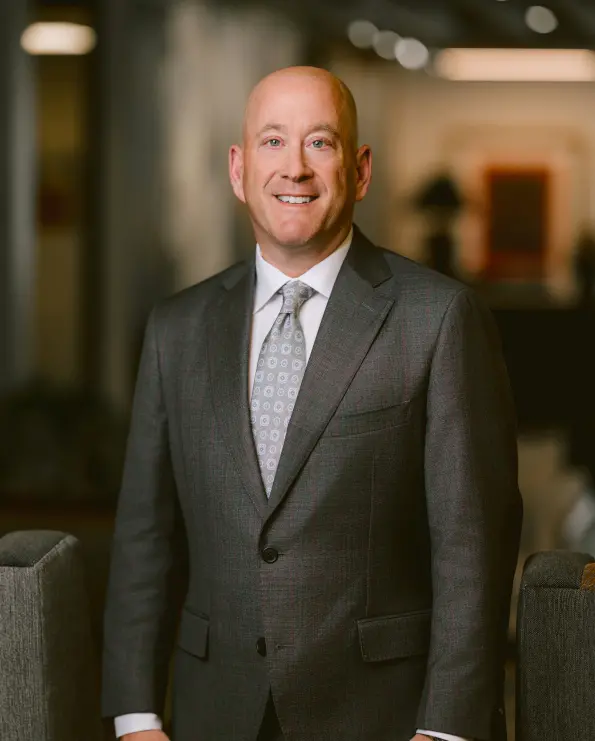
Investment fraud losses in the United States hit nearly $21 billion in 2025 alone, a 25% increase over the prior year, driven by increasingly sophisticated long-con schemes, AI-powered impersonation, and a global criminal infrastructure that specifically targets retirees and senior investors. The scams are not random. They are engineered, tested, and executed from playbooks.
The conversation could not be more timely. Meyer Wilson Werning principal attorney Courtney Werning joined Chuck Jaffe on Money Life, one of the country’s most respected personal finance radio programs, to discuss why no one is too smart to be scammed and the practical steps families can take right now to protect the people they love.

No One Is Too Smart to Fall for an Investment Scam
One of the most dangerous assumptions in personal finance is that intelligence protects you from fraud. Courtney dismantled that idea directly.
“There’s nobody too smart to fall for an investment scam,” she told host Chuck Jaffe. “We see doctors, engineers, senators, truly every walk of life. And that belief that ‘I’m too smart to fall for this’ is actually a huge vulnerability that scammers will prey on.”
It is a point Courtney raises in litigation, too. When presenting cases before arbitration panels, Meyer Wilson Werning works with psychologists and behavioral data to explain why sophisticated people fall for well-engineered fraud. The psychological mechanisms that make scams work are not a reflection of the investor’s intelligence. They are a reflection of the scammer’s skill.

We Have Recovered Over
$350 Million for Our Clients Nationwide.
The Numbers Behind the Crisis
The scale of the problem is no longer abstract. Courtney cited the FBI’s Internet Crime Complaint Center (IC3) report, which documented nearly $21 billion in investment fraud and cybersecurity losses in 2025 alone, including $12.3 billion attributable to cryptocurrency fraud. That represents a 25% increase over 2024.
“The scammers are getting better,” she said. “These criminal enterprises are so good at preying on human psychology and getting people to trust them.”
The modern fraud playbook centers on the long con. Investors are groomed to commit small amounts first. Fake profits appear on convincing-looking platforms. Sometimes investors are even encouraged to withdraw early gains to build confidence. By the time the real ask comes, the trust is fully established.
Senior investors are disproportionately targeted. As Courtney put it: “Scammers go where the money is, and the money in America is in the hands of retirees.”
When a Law Firm Can Help, and When It Cannot
Chuck raised a question that MWW hears constantly: when can investors actually get their money back?
Courtney drew a clear line. Meyer Wilson Werning can get involved when there is a failure by a financial institution or a licensed financial professional, whether that means negligent security protocols, a financial advisor who missed red flags of exploitation, or a cryptocurrency exchange that failed its duty of care to customers.
When the fraud involves an unregistered individual with no institutional connection, the path to recovery is far narrower. In those cases, Courtney’s advice is unambiguous: contact the FBI, file an IC3 report, and act immediately. Wire transfers can sometimes be recalled, but only if law enforcement is notified fast.
“The quicker the better,” she said. “Immediately acting to get either your state or your federal law enforcement involved is your best chance.”
Our lawyers are nationwide leaders in investment fraud cases.
The AI Red Flag Everyone Should Know
When Jaffe asked about new warning signs specific to AI-enabled fraud, Courtney pointed directly at social media.
“Any unsolicited direct message on any social media platform should be viewed as highly suspect,” she said. “The vast majority of people who are scammed on the internet, it starts with contact on a social media platform, LinkedIn, WhatsApp, X.”
Her advice: do not click links in unsolicited messages, even from accounts that appear to belong to someone you know. Verify through a separate channel before engaging. Scammers routinely impersonate friends, family members, and known contacts to establish an opening.
We Are The firm other lawyers
call for support.
The Trusted Contact Rule: A Simple but Powerful Protection
For families with elderly parents in what Courtney called “the strike zone,” she highlighted a FINRA rule that most people have never heard of.
Under FINRA’s trusted contact rule, brokerage firms are required to make reasonable efforts to obtain a trusted contact person for every investment account. That contact is not a power of attorney and cannot make decisions on the account. They are simply someone the firm can reach out to if something looks wrong.
Courtney described setting this up for her own mother, a 71-year-old widow living alone who fits the profile of a high-risk investor. She receives copies of her mother’s account statements and is listed as a trusted contact, giving her visibility without removing her mother’s financial independence.
“If you’ve got one trusted person in their life that can be clued in to what’s going on,” she said, “and just have that phone call with mom and say, ‘Let’s just talk about this. What documentation did you get? Where did you meet this person?’ That can throw cold water on the whole scheme.”
Even if a brokerage firm has not asked about a trusted contact, families can initiate the conversation themselves.
About Courtney Werning
Courtney Werning is a principal attorney at Meyer Wilson Werning and leads the firm’s securities fraud and cryptocurrency practices, including through the dedicated Crypto.court platform. She serves on the board of PIABA (Public Investors Advocate Bar Association), chairs its arbitration committee, sits on the PIABA crypto task force, and has been appointed to FINRA’s National Arbitration and Mediation Committee (NAMC). She is on track to become PIABA’s president in 2027, which would make her just the fourth woman to lead the organization in its history.
Listen to the Full Interview
Courtney’s full conversation with Chuck Jaffe covers additional ground on how financial institutions can be held accountable when security protocols fail, what families should look for in their elderly relatives’ account activity, and why the front-line employees at banks and brokerage firms are increasingly the last line of defense against fraud.
You can listen to the full episode of Money Life with Chuck Jaffe on YouTube below. Courtney’s segment begins at the 16:28 mark.