

More than 2,000 retail investors entrusted approximately $86 million to Phoenix American Hospitality, LLC and its president, William Lee “Perch” Nelson. According to the SEC, those investors were allegedly told their money was generating steady returns of up to 12% per year from profitable hotel operations. The SEC’s complaint, filed June 4, 2026, in the Northern District of Texas, tells a different story: neither fund was profitable, distributions were primarily funded by returns of investor capital, and one fund held only a preferred equity interest in a single hotel rather than the 11 hotels PAH allegedly advertised.
If a licensed financial professional, broker, or advisor facilitated your investment in Phoenix American Hospitality hotel funds, the experienced alternative investment loss attorneys at Meyer Wilson Werning can help evaluate whether your losses are the result of actionable misconduct. Contact us today for a free and confidential consultation, and you pay nothing unless we recover for you.
What the SEC Alleges Against Phoenix American Hospitality LLC and William Lee “Perch” Nelson
The SEC’s Litigation Release No. 26560, published June 5, 2026, describes a settled enforcement action against Phoenix American Hospitality, LLC, a Texas-based real estate investment manager, and William Lee “Perch” Nelson of Dallas, Texas, PAH’s president.
According to the complaint, PAH and Nelson raised approximately $86 million from more than 2,000 retail investors across two hotel-focused funds between March 2022 and July 2024. The SEC alleges two core categories of false statements:
- Misrepresenting hotel ownership: PAH allegedly told investors one fund owned “as many as 11 hotels.” In reality, that fund held only a preferred equity interest in a single hotel until January 2024.
- Misrepresenting profitability and distributions: PAH allegedly claimed both funds were generating regular profit distributions of up to 12% per year. According to the SEC, neither fund was profitable and distributions were primarily funded by returns of investor capital.
As part of the settlement, PAH agreed to pay a civil penalty of $591,127 and Nelson agreed to pay a civil penalty of $118,225. Both consented to permanent injunctions barring future violations of federal antifraud provisions under Section 17(a) of the Securities Act of 1933 and Section 10(b) of the Securities Exchange Act of 1934 and Rule 10b-5 thereunder. Nelson also faces a five-year officer and director bar.

We Have Recovered Over
$350 Million for Our Clients Nationwide.
How Phoenix American Hospitality Allegedly Misled Retail Investors
The pattern the SEC describes is one investors in private real estate products encounter too often: the investment looks credible on paper, distribution checks arrive on schedule, and nothing signals a problem until it is too late.
In this case, investors were allegedly led to believe they were participating in funds with diversified hotel portfolios, that their distributions represented legitimate operating profits, and that both funds were generating annual returns of up to 12%. The alleged reality differed on every count. According to the SEC, distributions were primarily investors’ own capital recycled back to them in a form designed to look like income.
For retail investors who chose these hotel funds for the appearance of stability and consistent yield, this type of alleged deception strikes at the core of the investment relationship.
What the SEC Settlement Means for Investors
The civil penalties, permanent injunctions, and Nelson’s five-year officer and director bar are meaningful regulatory consequences. But none of this directly compensates investors for their losses. Investors who purchased interests in Phoenix American Hospitality hotel funds through brokerage firms or financial advisors may have independent legal claims, including:
- Unsuitability: FINRA rules require brokers to reasonably believe a recommended investment is suitable for the specific client’s financial profile and risk tolerance. The SEC’s Regulation Best Interest, effective June 30, 2020, raised this standard further, requiring broker-dealers to act in the client’s best interest. Illiquid hotel fund investments may have been wholly inappropriate for retirees or conservative investors.
- Misrepresentation and material omission: If an advisor described these funds as safe or income-producing without disclosing that distributions might be returns of principal or that the fund’s hotel holdings were misrepresented, investors may have claims based on material misrepresentations or omissions.
- Failure to supervise: Brokerage firms must conduct adequate due diligence and maintain supervisory systems before allowing registered representatives to sell alternative investment products. Firms that failed to identify red flags in PAH’s offering materials may share responsibility for investor losses.
These claims are typically pursued through arbitration, a process that is generally faster and less costly than traditional court litigation.
Our lawyers are nationwide leaders in investment fraud cases.
Why Private Hotel Funds Carry Risks Advisors Must Disclose
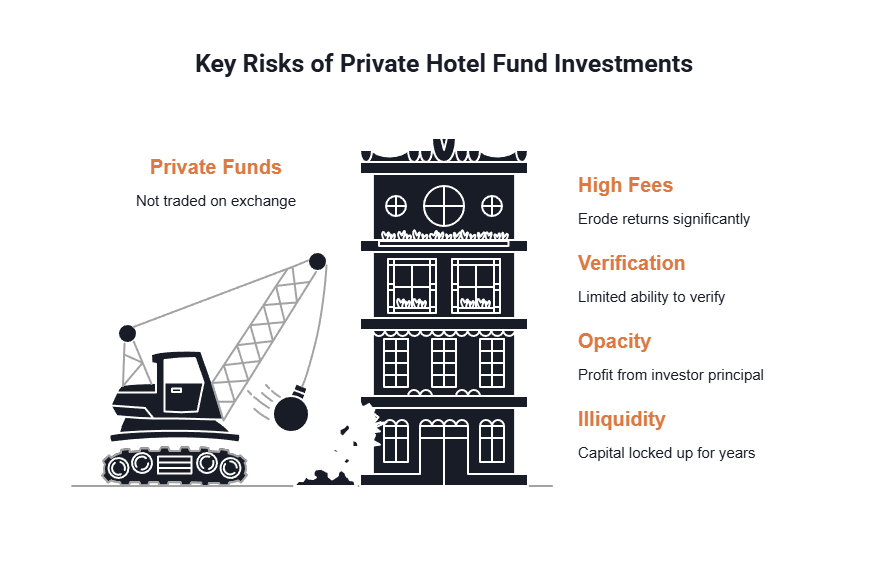
Hotel real estate funds structured as private placements carry a distinct risk profile that retail investors are often not told about. Key risks include:
- Illiquidity: Private fund interests are not traded on any exchange. Capital may be locked up for years with no practical exit.
- Distribution sourcing opacity: As the SEC alleged here, “profit” distributions can originate from investor principal rather than actual operating income.
- Asset verification challenges: Retail investors have limited ability to independently verify claims about portfolio composition, as this case illustrates.
- High fees: Management fees and related costs in private placement funds can far exceed those in publicly traded REITs, eroding returns even when underlying properties perform adequately.
When advisors recommend these products without fully explaining these risks, or affirmatively misrepresent a fund’s profitability and portfolio, they may be violating obligations under FINRA rules and federal securities law.
We Are The firm other lawyers
call for support.
How Meyer Wilson Werning Can Help Investors Recover Losses
Over 2,000 retail investors were allegedly told their money was working for them in a growing portfolio of profitable hotels. According to the SEC, the checks they received were not profits at all. For investors who relied on those representations to commit retirement savings to an illiquid private fund, the financial consequences can be severe and lasting.
With more than $350 million recovered for investors nationwide, Meyer Wilson Werning has spent over 25 years holding brokers and advisors accountable for exactly this kind of misconduct. If a licensed financial professional facilitated your investment in Phoenix American Hospitality hotel funds and you believe you were not given an accurate picture of the fund’s holdings, profitability, or distribution practices, contact us today for a free and confidential consultation. You pay nothing unless we recover for you.
Frequently Asked Questions
What did the SEC allege against Phoenix American Hospitality LLC?
The SEC alleged that PAH and its president, William Lee “Perch” Nelson, raised approximately $86 million from more than 2,000 retail investors between March 2022 and July 2024 while making untrue statements about the assets and profitability of two hotel-focused funds. According to the complaint, PAH claimed one fund owned up to 11 hotels when it held only a preferred equity interest in one property, and claimed both funds were distributing profits of up to 12% per year when neither was profitable.
What penalties did PAH and Nelson agree to pay?
Phoenix American Hospitality, LLC agreed to pay a civil penalty of $591,127 and William Lee “Perch” Nelson agreed to pay a civil penalty of $118,225. Both consented to permanent injunctions barring future violations of federal antifraud law. Nelson additionally agreed to a five-year officer and director bar. Neither party admitted or denied the SEC’s allegations.
Does the SEC settlement compensate investors directly?
No. The civil penalties are paid to the government. Investors may have independent legal claims against the brokerage firms and financial advisors who recommended these products, including claims for unsuitability, misrepresentation, or failure to supervise, typically pursued through arbitration.
How can investors determine whether they have a claim?
Investors should review how the investment was presented to them and whether their broker fully explained the risks, the fund’s actual hotel holdings, and how distributions were sourced. A securities fraud attorney can assess whether arbitration or other recovery options are appropriate.
Recovering Losses Caused by Investment Misconduct.