

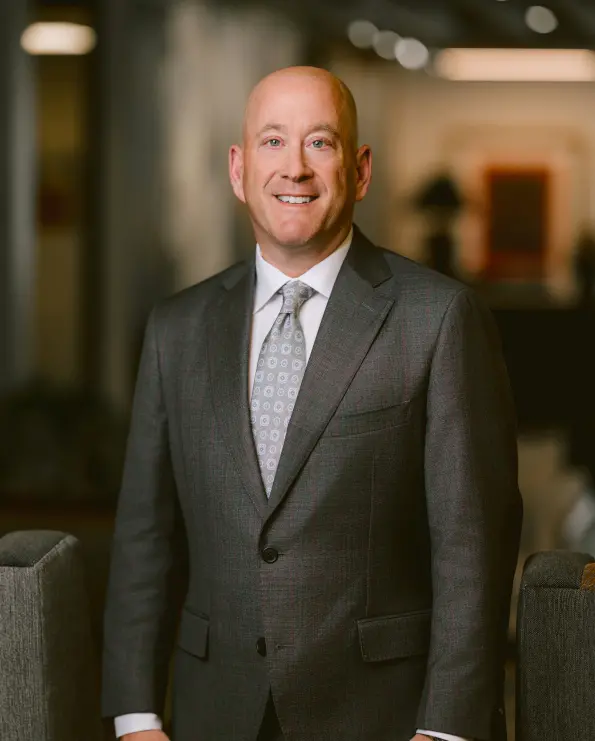
The recently proposed FINRA Rule 3290 threatens to strip away critical investor protections by relaxing the supervision of financial advisors’ outside business activities. By creating broad exemptions for how firms monitor the activities of its agents, regulators are effectively removing the guardrails that prevent some of the most devastating forms of financial misconduct. Investors are facing potential losses of their entire life savings if these “outside” activities, often the breeding ground for Ponzi schemes and unregistered securities fraud, are allowed to operate in the shadows without oversight.
At Meyer Wilson Werning, our commitment to investors goes beyond the courtroom, we actively shape the rules that protect them.
What Is the Proposed FINRA Rule 3290 Rollback?
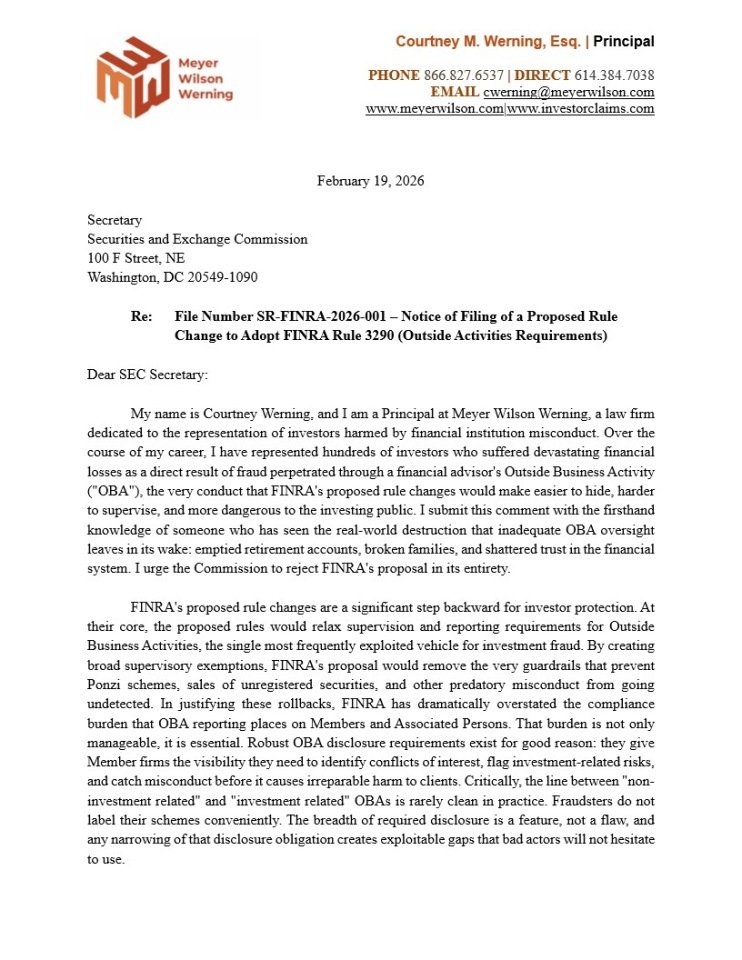
On February 19, 2026, Meyer Wilson Werning Principal Courtney M. Werning filed a comment letter with the Securities and Exchange Commission (SEC) regarding the proposed adoption of FINRA Rule 3290. This new rule seeks to replace and relax current standards regarding Outside Business Activities (OBAs). Specifically, the proposal aims to reduce the compliance burden on brokerage firms by narrowing the scope of what they must supervise and report.
It is our belief that this proposal is a significant step backward for investor protection. The core changes would:
- Relax Supervision: Create broad exemptions that allow advisors to engage in outside business activities without the current level of firm scrutiny.
- Limit Visibility: Reduce the OBA reporting requirements that give firms the “line of sight” needed to identify conflicts of interest.
- Create Loopholes: Narrow the definition of disclosure obligations, creating gaps that bad actors can exploit to hide fraudulent schemes.

We Have Recovered Over
$350 Million for Our Clients Nationwide.
Why Outside Business Activities Are a Critical Risk
The term “Outside Business Activity” might sound harmless, but in the world of investment fraud, it is often the weapon of choice for predators. As stated in our firm’s letter to the SEC, OBAs are “the single most frequently exploited vehicle for investment fraud.” When a financial advisor sells an investment that is not approved or vetted by their brokerage firm, a practice sometimes referred to as “selling away,” it often happens under the guise of an outside business.
Without strict brokerage firm supervision, these activities can lead to catastrophic outcomes:
- Ponzi Schemes: Fraudsters often use outside businesses to funnel client money into non-existent or fraudulent ventures.
- Unregistered Securities: Investors may be sold private, unregulated products that lack the protections of standard public markets.
- Devastating Losses: Because these investments often bypass firm compliance systems, red flags are missed until it is too late, leaving investors with emptied retirement accounts and shattered trust.
Leading the Conversation on Investor Protection
At Meyer Wilson Werning, our commitment to investors goes far beyond filing lawsuits. We actively shape the legal landscape to ensure the system works for those who have been wronged. Our attorneys are recognized national leaders who regularly educate other lawyers, regulators, and the public on the complexities of investment fraud.
Courtney M. Werning is a powerful voice for investor rights on the national stage. As a leader within the Public Investors Advocate Bar Association (PIABA), she works directly to influence policy and protect the public from practices that harm everyday investors.
Our lawyers are nationwide leaders in investment fraud cases.
Meyer Wilson Werning’s Advocacy: We Stand for You
Meyer Wilson Werning is actively fighting to prevent harm before it happens. Our voice in opposition to Proposed FINRA Rule 3290 is driven by the firsthand knowledge of the destruction that inadequate supervision leaves in its wake.
In her letter to the SEC, Courtney Werning emphasized that the “compliance burden” FINRA complains about is actually an essential protection. “That burden is not only manageable, it is essential,” she wrote. By pushing back against these rollbacks, we are advocating for:
- Maintained Visibility: Ensuring firms cannot turn a blind eye to what their advisors are doing.
- Stricter Oversight: Demanding that the line between “non-investment” and “investment” activities remains clearly policed, as fraudsters rarely label their schemes conveniently.
- Investor Safety: Prioritizing the financial security of families over the administrative convenience of Wall Street firms.
We Are The firm other lawyers
call for support.
How Meyer Wilson Werning Helps Investors
If you have been harmed by an advisor’s unsupervised outside business activities, you do not have to face the aftermath alone. With more than 20 years in the industry and over $350 million recovered for clients, Meyer Wilson Werning has the resources and expertise to challenge powerful financial institutions. Contact us today for a free and confidential consultation to discuss your specific case and learn how we can assist in protecting your financial interests.
Frequently Asked Questions
What is an Outside Business Activity (OBA)?
An Outside Business Activity is any business venture, employment, or compensation arrangement a financial advisor engages in outside the scope of their relationship with their brokerage firm. Common examples include selling insurance, real estate, or tax preparation services.
How does Proposed FINRA Rule 3290 affect my investments?
If adopted, FINRA Rule 3290 would relax the rules requiring brokerage firms to supervise these outside activities. This would make it easier for dishonest advisors to hide fraudulent investment schemes (like selling away) under the guise of a legitimate outside business, increasing the risk of undetected fraud.
Can I sue my brokerage firm for losses related to an OBA?
Yes, brokerage firms have a legal duty to supervise their agents. If a firm failed to reasonably supervise an advisor’s outside activities, and you suffer losses as a result, you may be able to recover losses through arbitration.
Why is Meyer Wilson Werning opposing this rule?
We oppose this rule because we have represented hundreds of investors who lost their savings due to fraud committed through outside business activities. We believe relaxing these rules removes essential guardrails that prevent Ponzi schemes and other predatory misconduct.
Recovering Losses Caused by Investment Misconduct.