

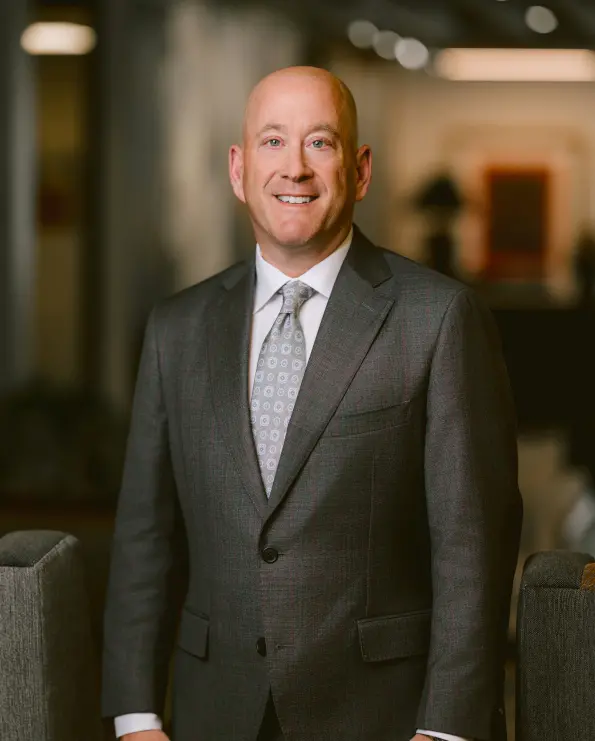



By David P. Meyer, Esq. and Courtney Werning, Esq. David P. Meyer is the founder and managing principal of Meyer Wilson Werning, past president of the Public Investors Advocate Bar Association (PIABA), and author of the Amazon #1 best-seller The Investor Protector: Stories of Triumph Over Financial Advisors Who Lie, Cheat, and Steal, which includes cases of elder financial exploitation. Courtney Werning is a principal at the firm, currently serves as Vice-President of PIABA, and has written and spoken widely on investor protection.
Last reviewed: 09/2026. See our case results, meet our team, or request a free case review.
Elder financial abuse can strip older adults of more than money. It can threaten the security and independence they spent a lifetime building. When brokers, investment advisers, or financial institutions cause or enable that harm, Meyer Wilson Werning fights to recover those losses and hold the responsible parties accountable. Since 1999, we have recovered more than $350 million for investors nationwide.
The harm goes far beyond an account balance. Elder financial abuse can erase retirement income, savings set aside for grandchildren, and the independence those funds were meant to preserve. Many victims remain silent because they feel ashamed. But the blame belongs to those who exploited their trust or enabled the harm. If an older adult in your life has suffered a significant loss, contact Meyer Wilson Werning for a free, confidential case review.
What Is Elder Financial Abuse?
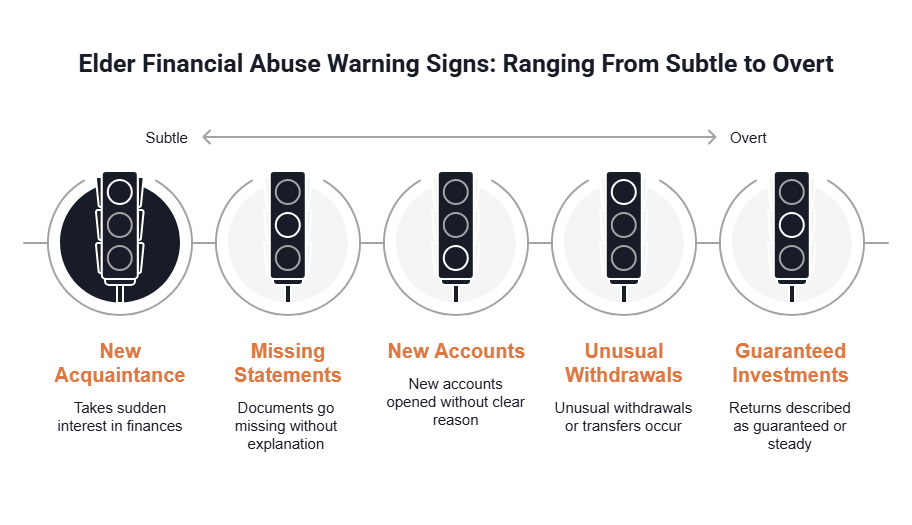
Elder financial abuse is the wrongful or unauthorized taking, withholding, or use of an older person’s money or property, often through deception, intimidation, or undue influence. When the abuse involves an investment account, it tends to take a familiar set of forms:
- Outright theft, such as forging signatures or draining an account. David Meyer’s book The Investor Protector recounts an elderly widow whose broker befriended her, then used blank checks she had signed to steal $500,000.
- Romance and relationship scams, including “wrong number” texts and pig-butchering schemes that build trust before steering an older adult into a fraudulent cryptocurrency investment.
- Government and law-enforcement impersonation scams, in which fraudsters claim the victim’s identity or assets are connected to a crime and demand secrecy, urgency, and immediate payment.
- Tech-support scams that begin with a fake security alert or remote access to the victim’s computer, then escalate into instructions to move money to a supposedly “safe” account.
- Fake cryptocurrency platforms and wallets that display fabricated profits, then demand additional payments for taxes, fees, or the release of supposedly frozen funds.
- Gold, cash, and courier schemes that pressure victims to liquidate investments, wire money to third parties, purchase gold or cashier’s checks, or hand assets to strangers.
- Account takeovers and hacking, in which criminals gain access to an investment account and execute unauthorized liquidations, high-risk trades, withdrawals, or transfers.
- Brokerage firms that ignore obvious warning signs, including abrupt portfolio liquidations, repeated round-dollar wires, transfers to new recipients, activity inconsistent with the customer’s history, and transactions with serious tax consequences.
- Failures to intervene when exploitation is suspected, such as not escalating suspicious activity, contacting a trusted person, investigating unusual transactions, or temporarily pausing a transfer before the money is gone.
Brokerage firms and other financial institutions are often the last line of defense against elder financial exploitation. They have an obligation to monitor senior accounts, detect and investigate suspicious activity, and use available safeguards to prevent a lifetime of savings from disappearing. When they ignore clear warning signs and allow the harm to continue, they may be held accountable.

We Are The firm other lawyers
call for support.
Why Seniors Are Targeted
Scammers go where the money is. Seniors hold more than $35 trillion in retirement assets, making retirees a prime target for increasingly sophisticated fraud. These schemes are calculated attacks on the savings an entire generation spent decades building.
Scammers exploit a lifetime of institutional trust. They impersonate banks, brokerage firms, government agencies, and law enforcement, then use caller-ID spoofing, AI-generated voices, remote-access software, and convincing fake investment platforms to make the scheme appear legitimate. These technologies give old fraud tactics new credibility and speed, making it even more important for financial institutions to recognize the warning signs and intervene before the money is gone.
How to Protect the Older Adults in Your Life
- Make financial conversations routine. Talk openly about accounts, new relationships, unexpected calls, and investment opportunities. These conversations should feel supportive, not like an interrogation.
- Add a trusted contact to every investment account. A trusted contact cannot trade or withdraw money. The designation simply gives the brokerage firm someone to reach if it cannot contact the account owner or detects suspicious activity.
- Establish a “no financial secrets” rule. No legitimate bank, brokerage firm, government agency, law-enforcement officer, or investment professional should demand secrecy from family members or trusted advisors. Secrecy is how scammers isolate people and prevent intervention.
- Create a pause before major transactions. Agree that large withdrawals, new investments, cryptocurrency purchases, or transfers to unfamiliar people will be discussed with at least one trusted person first.
These safeguards preserve an older adult’s independence while making it harder for a fraudster to separate them from the people who can help.
We Have Recovered Over
$350 Million for Our Clients Nationwide.
What to Do After Elder Financial Exploitation
The scammer may be gone, but the senior may still have a path to recovery. In many cases, the critical question is not only who stole the money. It is what the financial institution saw, and failed to do, while the account was being emptied.
Brokerage firms are expected to monitor senior accounts for signs of financial exploitation. FINRA rules give them practical tools, including trusted contacts under Rule 4512 and temporary holds under Rule 2165 when exploitation is reasonably suspected. Firms also maintain supervisory systems and fraud protocols designed to escalate unusual activity. When a senior suddenly liquidates a retirement portfolio, incurs serious tax consequences, or sends repeated transfers to unfamiliar recipients, the firm cannot simply process the transactions and ignore the warning signs.
An experienced securities attorney can reconstruct the transaction history and determine whether the firm failed to investigate, contact a trusted person, escalate the activity, place a temporary hold, or comply with applicable reporting obligations. Depending on the facts and the law of the state involved, the senior may be able to pursue a claim against the brokerage firm or another financial institution whose failures allowed the losses to occur.
The scammer’s disappearance does not necessarily end the case. Recovery may still be possible from the financial institution that had the ability, and the responsibility, to intervene.
Our lawyers are nationwide leaders in investment fraud cases.
Why Families Choose Meyer Wilson Werning
- We have recovered over $350 million for investors and hold more than 75 years of combined experience, and we deliberately keep caseloads low so each family gets real attention.
- We work entirely on a contingency fee basis, so you pay nothing unless we recover for you.
- Founding partner David Meyer and partner Courtney Werning are nationally recognized voices in investor protection. Courtney is a go-to authority on elder financial exploitation, having authored several articles and spoken to legal and industry audiences about the sophisticated scams targeting older adults and the responsibility of financial institutions to protect them. David has also written and spoken extensively on the subject, including in his Amazon #1 bestselling book, The Investor Protector.
- We advocate for investors beyond our own cases, in the news and in our government, like our public call for FINRA to redirect a $100 million rebate toward unpaid investor awards.
- We are the firm other attorneys call, and families can check out our YouTube channel to watch or visit our site to read what past clients say about working with us
Where Our Elder Investment Fraud Work Hits Home
Meyer Wilson Werning represents victims of elder financial abuse and investment fraud nationwide. Much of our work comes from states where we have an established presence and regularly help older investors and their families investigate suspicious losses, pursue claims against financial professionals, and seek recovery through FINRA arbitration or litigation.
- California: Learn how our California investment fraud lawyers help families address broker misconduct, unsuitable investments, unauthorized transactions, and the financial exploitation of older adults. View our Los Angeles office on Google.
- Ohio: From our Ohio offices, our Ohio investment fraud lawyers represent elderly investors and families throughout the state. View our Columbus office on Google or view our Cleveland-area office on Google.
- Michigan: Our Michigan investment fraud lawyers help families investigate losses involving financial advisors, brokerage firms, and others entrusted with an older adult’s savings. View our Bloomfield Hills office on Google.
- Florida: Our Florida investment fraud lawyers provide elder investment fraud help to Florida residents and families facing substantial losses caused by broker or advisor misconduct.
- Louisiana: Our Louisiana investment fraud lawyers represent older investors and their families in New Orleans and throughout the state. View our New Orleans office on Google.
Whether your family lives near one of these offices or elsewhere in the country, our elder financial abuse attorneys can review the situation confidentially and explain the options for pursuing recovery.
Contact an Elder Financial Abuse Lawyer
If someone exploited an older adult in your family and the losses are significant, you do not have to untangle it alone, and neither do they. Contact Meyer Wilson Werning for a free, confidential review with an elder financial abuse lawyer, and remember that you owe nothing unless we recover for you.
Meyer Wilson Werning. Call 844-410-9143. Request a free case review. Offices in Ohio, California, Michigan, and Louisiana, representing investors nationwide.
Recovering Losses Caused by Investment Misconduct.